English
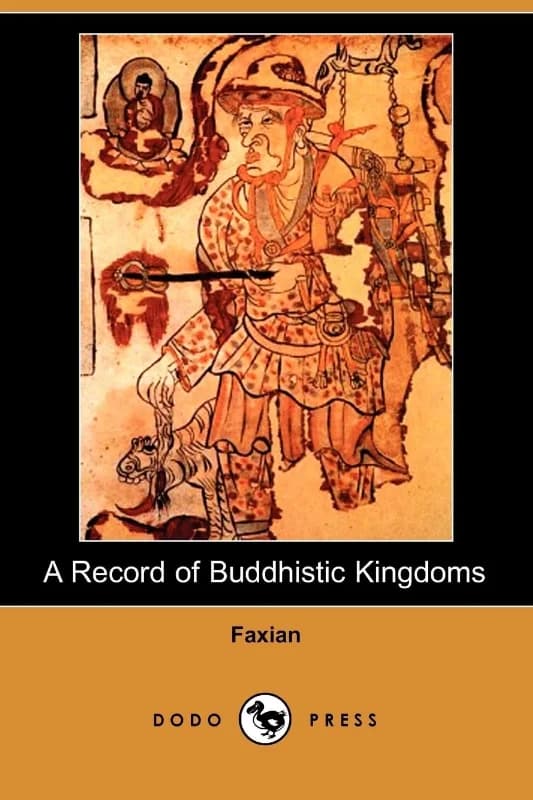
A Record of Buddhistic Kingdoms
Fa-Hien (Faxian); James Legge (Trans)
English
Book
Dodo Press
1886
224 pages
1.0 MB
Introduction
The volume begins with a Preface by James Legge. He explains the difficulty of translating Fa-Hien’s record because of Sanskrit names, Chinese phonetic renderings, Buddhist terminology, and textual variation. Legge states that the work consists of three major components: the English translation of Fa-Hien’s narrative, extensive notes, and the Chinese text based on a Japanese/Corean recension.
The Introduction discusses the life of Fa-Hien, the authenticity and integrity of the text, and the broader question of Buddhist numbers and distribution. It explains that Fa-Hien’s clerical name means “Illustrious in the Law” or “Illustrious Master of the Law.” The introduction also discusses Chinese catalogues, earlier textual witnesses, and the relationship between the titles Record of Buddhistic Kingdoms and Narrative of Fa-Hien’s Travels.
The book includes a Sketch Map of Fa-Hien’s Travels, showing his route from China across Central Asia into India, then to Ceylon, Java, and back to China. The map is important because the narrative is fundamentally geographic: it follows Fa-Hien’s movement across Buddhist Asia in search of Vinaya texts.
Chapter I: From Ch’ang-gan to the Sandy Desert
Fa-Hien begins his journey from Ch’ang-gan with several companions. Their purpose is to obtain complete Buddhist disciplinary rules. The chapter describes the early stages of the journey through Chinese frontier regions and the approach to the great desert.
Chapter II: On to Shen-shen and Thence to Khoten
The pilgrims cross difficult desert terrain and arrive at Shen-shen and then Khoten. Fa-Hien records the presence of monks, the practice of the Hīnayāna, and the difficulties of travel through barren lands.
Chapter III: Khoten; Processions of Images; The King’s New Monastery
This chapter describes Khoten as a prosperous Buddhist kingdom. Fa-Hien records Mahāyāna monasteries, communal monastic discipline, image processions, royal patronage, and richly decorated Buddhist institutions.
Chapter IV: Through the Ts’ung or “Onion” Mountains to K’eeh-ch’a
The pilgrims cross dangerous mountain routes toward K’eeh-ch’a, probably connected with the Ladakh or Skardo region. The chapter emphasizes the difficulty of Himalayan travel and the Buddhist presence in frontier regions.
Chapter V: Great Quinquennial Assembly of Monks; Relics of Buddha
Fa-Hien describes a major five-yearly Buddhist assembly, relic veneration, and the products of the country. This chapter is valuable for understanding Buddhist public ritual and royal patronage.
Chapter VI: On Towards North India; Darada; Image of Maitreya Bodhisattva
The pilgrims continue toward North India. Fa-Hien records Buddhist images, especially an image of Maitreya, showing the devotional and artistic importance of bodhisattva worship.
Chapter VII: Crossing of the Indus
This chapter marks a major geographic and religious transition as the pilgrims cross the Indus. Fa-Hien reflects on the movement of Buddhism across the river toward the East.
Chapter VIII: Woo-chang / Udyana; Monasteries and Traces of Buddha
Fa-Hien describes Udyana as a Buddhist region rich in monasteries and sacred traces associated with the Buddha. The chapter records monastic customs and local religious memory.
Chapter IX: Soo-ho-to; Legend of Buddha
This chapter presents Buddhist legends connected with Soo-ho-to. Fa-Hien’s account shows how sacred geography was interpreted through stories of the Buddha’s past deeds.
Chapter X: Gandhara; Legends of Buddha
Fa-Hien enters Gandhara, a major Buddhist cultural region. The chapter records legends and memorials connected with the Buddha, indicating Gandhara’s importance in Buddhist art and narrative tradition.
Chapter XI: Takshasila; Legends; The Four Great Topes
The chapter describes Takshasila and its Buddhist monuments. The four great topes are connected with major religious memories and acts of veneration.
Chapter XII: Purushapura / Peshawur; King Kanishka’s Tope; Buddha’s Alms-Bowl
Fa-Hien records traditions surrounding King Kanishka, his great stūpa, and the Buddha’s alms-bowl. The chapter also notes the death of Fa-Hien’s companion Hwuy-ying.
Chapter XIII: Nagara; Festival of Buddha’s Skull-Bone
This chapter describes relic worship centered on the Buddha’s skull-bone, as well as other relics and the Buddha’s shadow. It is especially important for the history of Buddhist relic cults.
Chapter XIV: Death of Hwuy-king; Crossing the Indus Eastward
Fa-Hien records the death of another companion in the Little Snowy Mountains. The chapter continues the journey through Lo-e and Pohna before crossing the Indus again.
Chapter XV: Bhida; Sympathy of Monks with the Pilgrims
The monks of Bhida welcome and support the pilgrims. The chapter highlights transregional Buddhist solidarity and the hospitality extended to travelling monks.
Chapter XVI: Mathura; Customs of Central India
This chapter gives an important description of Central India, including the condition of monks, vihāras, monasteries, and social customs. It is one of the key ethnographic sections of the book.
Chapter XVII: Sankasya; Buddha’s Ascent and Descent from Trāyastriṃśa Heaven
Fa-Hien records the sacred site associated with the Buddha’s ascent to and descent from heaven after teaching his mother. The chapter includes related legends and monuments.
Chapter XVIII: Kanyakubja / Canouge; Buddha’s Preaching
This chapter records traditions of the Buddha’s preaching at Kanyakubja and associated memorials.
Chapter XIX: Sha-che; Legend of Buddha’s Danta-kāṣṭha
Fa-Hien records a legend related to the Buddha’s tooth-cleaning stick, showing how even minor objects associated with the Buddha became sacred memorials.
Chapter XX: Kosala and Śrāvastī; Jetavana Vihāra
This chapter is one of the most important sections of the work. Fa-Hien describes Śrāvastī, the Jetavana monastery, and many memorials and legends connected with the Buddha’s teaching career.
Chapter XXI: The Three Predecessors of Śākyamuni in Buddhahood
Fa-Hien records sites and traditions associated with the Buddhas who preceded Śākyamuni, reflecting the broader Buddhist cosmological and sacred-historical framework.
Chapter XXII: Kapilavastu; Legends of Buddha’s Birth
This chapter describes Kapilavastu as desolate but sacred. Fa-Hien records traditions connected with the Buddha’s birth, childhood, and early life.
Chapter XXIII: Rāma and Its Tope
The chapter describes Rāma and its stūpa, continuing the record of Buddhist memorial sites.
Chapter XXIV: Where Buddha Finally Renounced the World and Where He Died
Fa-Hien records places associated with the Buddha’s renunciation and final passing. The chapter connects sacred geography with key turning points in the Buddha’s life.
Chapter XXV: Vaiśālī; Weapons Laid Down; Council of Vaiśālī
This chapter describes Vaiśālī, the stūpa called “Weapons Laid Down,” and traditions associated with the Buddhist council held there.
Chapter XXVI: Remarkable Death of Ānanda
Fa-Hien records the story of Ānanda’s death. The chapter contributes to the narrative memory of the Buddha’s close disciples.
Chapter XXVII: Pāṭaliputra / Patna; Aśoka’s Palace; Hospitals
This chapter provides a major account of Magadha and Pāṭaliputra. Fa-Hien records Aśoka’s spirit-built palace, Buddhist institutions, and dispensaries or hospitals, making this section important for Buddhist social history.
Chapter XXVIII: Rājagṛha, New and Old
Fa-Hien describes old and new Rājagṛha and records legends and incidents connected with the Buddha’s time.
Chapter XXIX: Gṛdhrakūṭa Hill
Fa-Hien visits Vulture Peak and spends a night there. The chapter includes his reflections at one of the most important Buddhist sacred sites.
Chapter XXX: Saptaparṇa Cave; Cave of the First Council
This chapter records the cave associated with the First Buddhist Council. It also includes legends and the story of a bhikṣu’s suicide.
Chapter XXXI: Gaya; Śākyamuni’s Attainment of Buddhahood
Fa-Hien visits the region associated with the Buddha’s enlightenment. The chapter records sacred places and legends around Gaya and the Bodhi site.
Chapter XXXII: Legend of King Aśoka in a Former Birth
This chapter presents a karmic legend of King Aśoka and his hell, showing how Aśoka’s memory was integrated into Buddhist moral narrative.
Chapter XXXIII: Mount Gurupada; Kāśyapa Buddha’s Skeleton
Fa-Hien records traditions connected with Kāśyapa Buddha and his remains, extending the narrative beyond Śākyamuni to the wider lineage of Buddhas.
Chapter XXXIV: Vārāṇasī / Benares; First Acts After Enlightenment
This chapter describes the region associated with the Buddha’s first teaching after enlightenment. It is central for Buddhist sacred geography because of its connection to the first turning of the Dharma wheel.
Chapter XXXV: Dakṣiṇa and the Pigeon Monastery
Fa-Hien records Dakṣiṇa and a monastery associated with the pigeon legend, preserving local Buddhist narrative traditions.
Chapter XXXVI: Patna; Transcription of Manuscripts and Indian Studies
Fa-Hien stays in Patna for three years, copying manuscripts and studying Indian Buddhist texts. This chapter directly reflects the central purpose of his journey: recovering authoritative Buddhist disciplinary literature.
Chapter XXXVII: Champā and Tāmralipti; Departure for Ceylon
Fa-Hien travels to Champā and Tāmralipti, where he stays and works for three more years before taking ship to Ceylon.
Chapter XXXVIII: Ceylon; Topes, Monasteries, Bo Tree, Tooth Festival
This chapter gives an important account of Buddhism in Ceylon. Fa-Hien records the rise of the kingdom, Buddhist monuments, a jade Buddha image, the Bodhi tree, and the festival of the Buddha’s tooth.
Chapter XXXIX: Cremation of an Arhat; Sermon of a Devotee
Fa-Hien describes the cremation of an arhat and records a sermon, providing evidence for ritual, devotion, and monastic ideals in Ceylon.
Chapter XL: Return by Sea; Java and China
After two years in Ceylon, Fa-Hien sails for China. The voyage is dangerous, involving storms, a difficult passage to Java, and eventual arrival at Shan-tung before going to Nanking. The chapter closes the pilgrimage with a conclusion by another writer.
Copyright Notice
This material is provided solely for academic research, study, and religious practice purposes under Article 25 of Vietnam's Intellectual Property Law. Reproduction, distribution, or commercial use is strictly prohibited.
If you are the author, translator, publisher, or rights holder and believe this content has been posted without proper authorization, please contact us and we will promptly review and remove or restrict access.
Documents
A Record of Buddhistic Kingdoms
1.0 MB
Keywords
Fa-HienBuddhist PilgrimageBuddhist KingdomsVinayaSacred Geography.
Sách đọc nhiều nhất
The Buddha’s Ancient Path
Piyadassi Thera
Book·10.7 MB
229 pages1979223
The Questions of King Milinda, Part II
F. Max Müller (Editor)
Book·20.8 MB
427 pages1894208

A Taste of Freedom
Venerable Ajahn Chah / Phra Bodhinyana Thera
Book·1.2 MB
104 pages1980207
Buddhist Meditation: An Anthology of Texts from the Pāli Canon
Sarah Shaw (General Editors: Charles S. Prebish and Damien Keown)
Book·17.5 MB
253 pages2006204