English
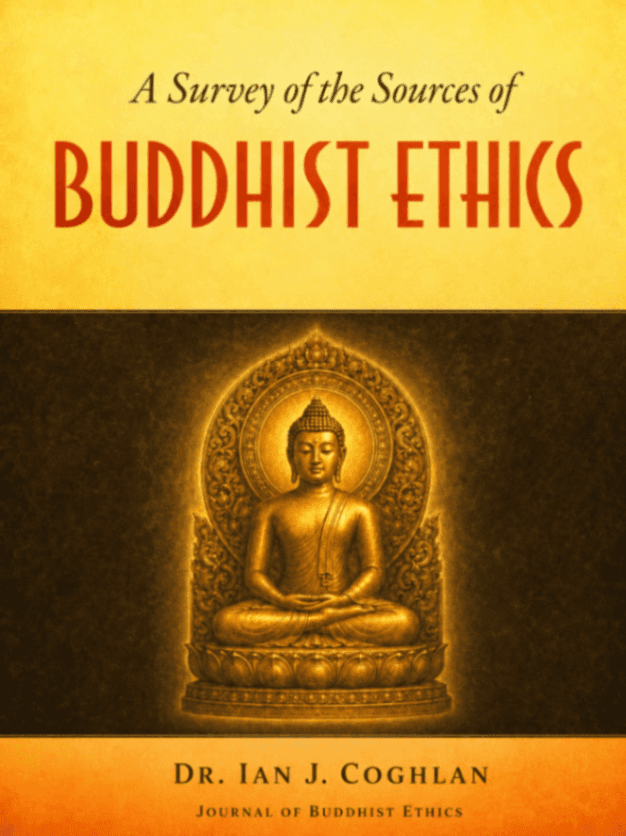
A Survey of the Sources of Buddhist Ethics
Dr. Ian J. Coghlan
English
Journal
Journal of Buddhist Ethics, Volume 11, pp. 143-166
2004
25 pages
158 KB
Introduction
The article begins by surveying the textual sources of Buddhist ethics in the Theravāda Vinaya, especially the Suttavibhaṅga, Mahāvagga, Cullavagga, and Parivāra-pāṭha. It then explains the structure of the pātimokkha and the way rules were proclaimed in response to specific incidents within the early saṅgha. Coghlan discusses the conditions that made rule-making necessary, noting that the early community initially functioned without a full formal code because many early disciples had attained high levels of realization. As the saṅgha expanded and became more socially complex, formal discipline became necessary to preserve both the religious life and public confidence in the monastic order. The article then examines the relative severity of vows, the social and institutional logic behind their classification, and the concrete cases that led to their proclamation. Its central analytical movement is from textual source study to ethical diagnosis: the Vinaya is read as a structured response to the ways bodily and verbal actions arise from attachment, aversion, and ignorance, with attachment identified as the dominant practical obstacle to monastic training.
Copyright Notice
This material is provided solely for academic research, study, and religious practice purposes under Article 25 of Vietnam's Intellectual Property Law. Reproduction, distribution, or commercial use is strictly prohibited.
If you are the author, translator, publisher, or rights holder and believe this content has been posted without proper authorization, please contact us and we will promptly review and remove or restrict access.
Documents
A Survey of the Sources of Buddhist Ethics
158 KB
Keywords
Buddhist ethicsTheravāda VinayaPātimokkhaSuttavibhaṅgaMonastic disciplineAttachmentIan J. Coghlan.
Sách đọc nhiều nhất
The Buddha’s Ancient Path
Piyadassi Thera
Book·10.7 MB
229 pages1979223
The Questions of King Milinda, Part II
F. Max Müller (Editor)
Book·20.8 MB
427 pages1894208

A Taste of Freedom
Venerable Ajahn Chah / Phra Bodhinyana Thera
Book·1.2 MB
104 pages1980207
Buddhist Meditation: An Anthology of Texts from the Pāli Canon
Sarah Shaw (General Editors: Charles S. Prebish and Damien Keown)
Book·17.5 MB
253 pages2006204