
English
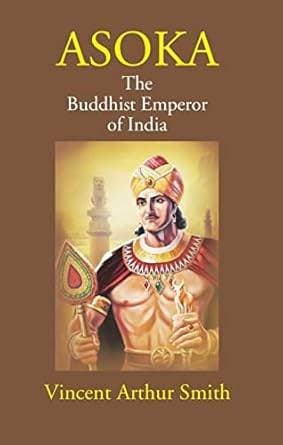
Asoka: The Buddhist Emperor of India
Vincent E. Smith
English
Book
Oxford: Clarendon Press
1920
291 pages
17.7 MB
Introduction
Chapter I: The History of Asoka
This chapter reconstructs the political background of Aśoka’s reign. Smith begins with the aftermath of Alexander’s death in 323 BCE and the weakening of Macedonian authority in northwestern India. He then describes the rise of Chandragupta Maurya, who overthrew the Nanda dynasty, established his capital at Pāṭaliputra, and became the first historically documented emperor of India. The chapter also discusses Chandragupta’s conflict and treaty with Seleukos Nikator, through which the Maurya Empire gained territories west of the Indus.
Smith next turns to Bindusara, Chandragupta’s successor, and then to Aśoka, son of Bindusara and third sovereign of the Maurya dynasty. Aśoka’s accession is dated by Smith to around 273 BCE, with his formal coronation four years later. The chapter pays special attention to the Kalinga War, dated to Aśoka’s ninth regnal year. According to Smith, the conquest of Kalinga was a decisive turning point: the suffering caused by war produced deep remorse and led Aśoka toward active protection, teaching, and propagation of dharma.
Chronology of the Maurya Period
Following Chapter I, Smith provides a chronological framework for the Maurya period. This section helps situate Aśoka within the succession from Chandragupta to Bindusara and then to Aśoka. It also supports Smith’s broader historical reconstruction of Aśoka’s reign, including the dates of accession, consecration, Kalinga conquest, and inscriptional activity.
Chapter II: Extent and Administration of the Empire
This chapter examines the territorial reach and administrative structure of the Maurya Empire under Aśoka. Smith studies the empire as a large and complex political formation extending over much of the Indian subcontinent. The chapter considers imperial provinces, viceroyalties, officers, frontier administration, and the machinery through which Aśoka communicated his moral and administrative policies. It is important for understanding Aśoka not only as a Buddhist ruler, but also as an imperial administrator governing a vast and diverse population.
Chapter III: The Monuments
This chapter surveys the material remains associated with Aśoka’s reign. Smith discusses the architectural and archaeological evidence, including pillars, inscriptions, and Buddhist monuments. The frontispiece of the book shows Aśoka’s pillar at Lauriya-Nandangarh, indicating the importance of monumental pillars in the visual and political representation of Aśokan kingship. The chapter also prepares the reader for Smith’s later detailed analysis of inscribed pillars and edicts.
Inscribed Pillars of Asoka
This section focuses specifically on the inscribed pillars attributed to Aśoka. These pillars are among the most significant monuments of ancient India because they combine imperial authority, polished stone craftsmanship, ethical proclamation, and religious symbolism. Smith treats them as major evidence for Aśoka’s statecraft and public moral program.
Chapter IV: The Rock Edicts
This chapter is devoted to Aśoka’s rock edicts. Smith analyzes the major rock edicts as primary historical documents. These inscriptions reveal Aśoka’s concern with dharma, moral reform, non-violence, respect for religious communities, administrative responsibility, humane treatment of subjects, and welfare policies. The Kalinga-related edict is especially significant because it records Aśoka’s remorse after the conquest and his conviction that true conquest should be conquest by dharma, not by military violence.
Chapter V: The Pillar and Miscellaneous Inscriptions
This chapter studies the pillar edicts and other inscriptions not covered in the rock edict section. Smith pays attention to their wording, location, historical setting, and administrative implications. The chapter includes discussion of inscriptions such as those related to Lumbinī/Rummindei, where Aśoka is associated with pilgrimage to the Buddha’s birthplace. The contents page also notes an illustration of the inscription on the Rummindei pillar, showing its importance within the book’s evidential framework.
Chapter VI: The Ceylonese Legend of Asoka
This chapter examines Sri Lankan Buddhist traditions concerning Aśoka. Smith treats these traditions cautiously, separating legendary narrative from what he considers historically reliable. The chapter discusses stories associated with Aśoka’s Buddhist conversion, the Buddhist council tradition, and the transmission of Buddhism to Ceylon. Smith’s approach is critical: he does not reject the importance of these legends for Buddhist memory, but he does not treat them as straightforward historical evidence.
Chapter VII: The Indian Legends of Asoka
This chapter turns to Indian legendary materials about Aśoka. These narratives often portray Aśoka’s moral transformation from a cruel ruler into a pious Buddhist king. Smith regards such stories as religious romances rather than strict history, but they remain important for understanding how Buddhist communities remembered and reimagined Aśoka as an exemplary ruler, patron, and defender of the Dharma.
Copyright Notice
This material is provided solely for academic research, study, and religious practice purposes under Article 25 of Vietnam's Intellectual Property Law. Reproduction, distribution, or commercial use is strictly prohibited.
If you are the author, translator, publisher, or rights holder and believe this content has been posted without proper authorization, please contact us and we will promptly review and remove or restrict access.
Documents
Asoka: The Buddhist Emperor of India
17.7 MB
Keywords
AśokaMaurya EmpireBuddhist Kingship
Sách đọc nhiều nhất
The Buddha’s Ancient Path
Piyadassi Thera
Book·10.7 MB
229 pages1979223
The Questions of King Milinda, Part II
F. Max Müller (Editor)
Book·20.8 MB
427 pages1894208

A Taste of Freedom
Venerable Ajahn Chah / Phra Bodhinyana Thera
Book·1.2 MB
104 pages1980207
Buddhist Meditation: An Anthology of Texts from the Pāli Canon
Sarah Shaw (General Editors: Charles S. Prebish and Damien Keown)
Book·17.5 MB
253 pages2006204