English
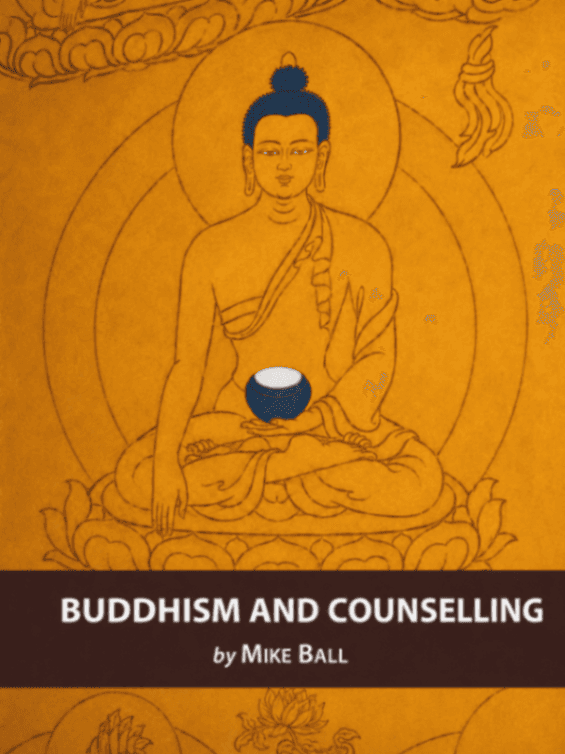
Buddhism and Counselling
Mike Ball
English
Book
2007
113 pages
516 KB
Introduction
The book is structured as a practical dialogue between Buddhism and counselling, beginning with the author’s aim to reinterpret Buddhism as a rational, experiential path for reducing mental suffering. It introduces the core Buddhist framework—especially the Four Noble Truths, the Eightfold Path, dukkha, anicca, anatta, dependent origination, mindfulness, ethics, compassion, and self-acceptance—then places these ideas beside major counselling approaches such as person-centred counselling, cognitive-behavioural therapy, and cognitive analytic therapy.
Across the later chapters, the work develops a psychological reading of Buddhist concepts through discussions of perception, the self, emotions, thought patterns, projection, rejection, self-criticism, and self-esteem. The concluding section directly compares Buddhism and counselling, arguing that Buddhist practice can strengthen therapeutic work by offering a disciplined framework of non-judgement, compassion, mindfulness, ethical conduct, and acceptance, culminating in the proposal of a “therapy of compassion and self-acceptance.”
Copyright Notice
This material is provided solely for academic research, study, and religious practice purposes under Article 25 of Vietnam's Intellectual Property Law. Reproduction, distribution, or commercial use is strictly prohibited.
If you are the author, translator, publisher, or rights holder and believe this content has been posted without proper authorization, please contact us and we will promptly review and remove or restrict access.
Documents
Buddhism and Counselling
516 KB
Keywords
CounsellingBuddhist psychologyCompassionSelf-acceptanceMindfulnessPerson-centred counsellingCognitive-behavioural therapyAnattaDukkha.
Sách đọc nhiều nhất
The Buddha’s Ancient Path
Piyadassi Thera
Book·10.7 MB
229 pages1979223
The Questions of King Milinda, Part II
F. Max Müller (Editor)
Book·20.8 MB
427 pages1894208

A Taste of Freedom
Venerable Ajahn Chah / Phra Bodhinyana Thera
Book·1.2 MB
104 pages1980207
Buddhist Meditation: An Anthology of Texts from the Pāli Canon
Sarah Shaw (General Editors: Charles S. Prebish and Damien Keown)
Book·17.5 MB
253 pages2006204