
English
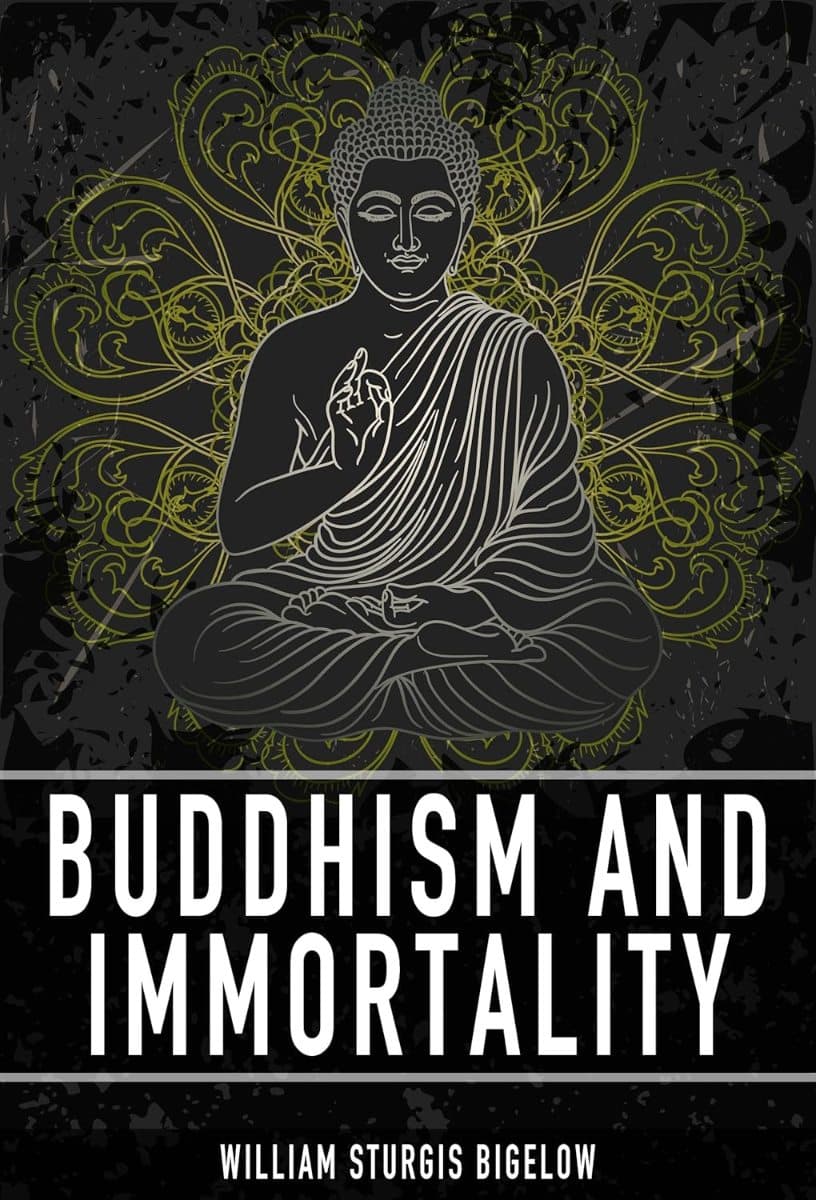
Buddhism and Immortality
William Sturgis Bigelow
English
Book
Houghton Mifflin Company, Boston and New York
1908
92 pages
2.5 MB
Introduction
The lecture opens by identifying its subject as the Buddhist view of human immortality, with special attention to Northern Buddhism and the Tendai and Shingon traditions in Japan. Bigelow argues that Buddhism should not be confined within simple Western categories such as pantheism, polytheism, monotheism, materialism, or idealism, because its understanding of reality and consciousness exceeds these conventional labels.
The main body develops a philosophical analysis of man as “states of consciousness.” Bigelow examines the relationship between body, soul, will, sensation, memory, imagination, dreams, and pain, then contrasts the separateness of matter with the unity of consciousness. Through this framework, the lecture reframes immortality not as the survival of a fixed personal soul, but as a deeper inquiry into the persistence, origin, and nature of consciousness.
Copyright Notice
This material is provided solely for academic research, study, and religious practice purposes under Article 25 of Vietnam's Intellectual Property Law. Reproduction, distribution, or commercial use is strictly prohibited.
If you are the author, translator, publisher, or rights holder and believe this content has been posted without proper authorization, please contact us and we will promptly review and remove or restrict access.
Documents
Buddhism and Immortality
2.5 MB
Keywords
ImmortalityWilliam Sturgis BigelowIngersoll LectureNorthern BuddhismTendaiShingonConsciousnessBuddhist philosophySoul and self.
Sách đọc nhiều nhất
The Buddha’s Ancient Path
Piyadassi Thera
Book·10.7 MB
229 pages1979223
The Questions of King Milinda, Part II
F. Max Müller (Editor)
Book·20.8 MB
427 pages1894208

A Taste of Freedom
Venerable Ajahn Chah / Phra Bodhinyana Thera
Book·1.2 MB
104 pages1980207
Buddhist Meditation: An Anthology of Texts from the Pāli Canon
Sarah Shaw (General Editors: Charles S. Prebish and Damien Keown)
Book·17.5 MB
253 pages2006204