
English
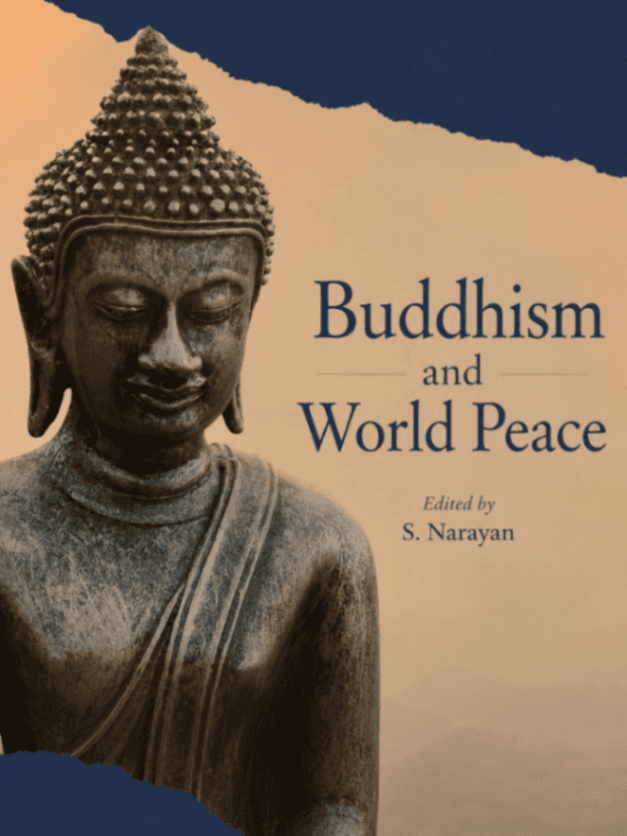
Buddhism and World Peace
S. Narayan
English
Book
Inter-India Publications
1990
68 pages
141.1 MB
Introduction
The volume begins by framing Buddhism as a practical theory of existence that diagnoses human suffering and proposes a path of moral purification, meditation, wisdom, compassion, and non-violence. Its chapters connect Buddhist peace ethics with concrete social questions: declining values in Indian society, equality and ethnicity, the role of youth in peace-building, village-level awareness of world peace, human responsibility, tribal development, and the rise of ahiṃsā in warlike contexts.
Taken together, the essays argue that world peace requires more than political negotiation or technological progress. It requires an ethical restructuring of society through justice, equality, restraint, compassion, and social responsibility—values that Buddhism can contribute to modern global civilization.
Copyright Notice
This material is provided solely for academic research, study, and religious practice purposes under Article 25 of Vietnam's Intellectual Property Law. Reproduction, distribution, or commercial use is strictly prohibited.
If you are the author, translator, publisher, or rights holder and believe this content has been posted without proper authorization, please contact us and we will promptly review and remove or restrict access.
Documents
Buddhism and World Peace
141.1 MB
Keywords
World peaceS. NarayanAhiṃsāBuddhist ethicsSocial justiceEqualityYouth and peaceIndian societyCompassion.
Sách đọc nhiều nhất

The Buddha’s Ancient Path
Piyadassi Thera
Book·10.7 MB
229 pages1979223
The Questions of King Milinda, Part II
F. Max Müller (Editor)
Book·20.8 MB
427 pages1894208

A Taste of Freedom
Venerable Ajahn Chah / Phra Bodhinyana Thera
Book·1.2 MB
104 pages1980207

Buddhist Meditation: An Anthology of Texts from the Pāli Canon
Sarah Shaw (General Editors: Charles S. Prebish and Damien Keown)
Book·17.5 MB
253 pages2006204