
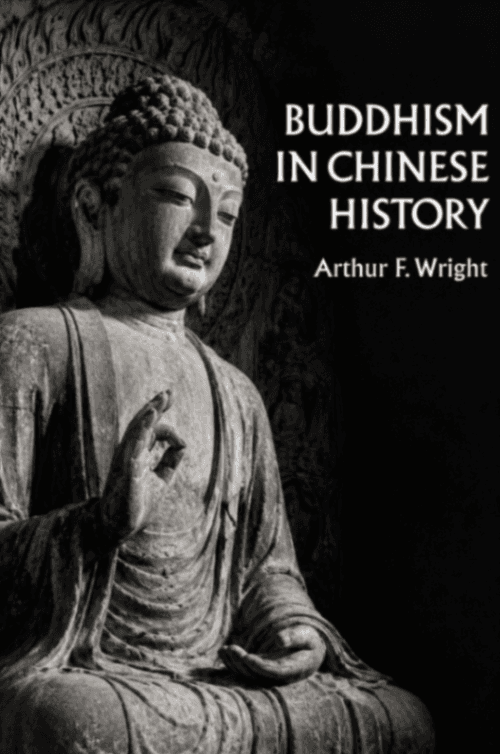
English
Buddhism in Chinese History
Arthur F. Wright
English
Book
Stanford University Press, Stanford, California
1971
139 pages
12.6 MB
Introduction
The book is structured into six main chapters. Chapter One, “The Thought and Society of Han China,” establishes the social, political, and intellectual background of early imperial China before Buddhism became influential. Chapter Two, “The Period of Preparation,” discusses the decline of the Han order, the rise of religious and philosophical alternatives, and the early conditions that allowed Buddhism to spread. Chapter Three, “The Period of Domestication,” examines how Buddhism was gradually translated, interpreted, and accommodated within Chinese cultural frameworks. Chapter Four, “The Period of Independent Growth,” studies the phase in which Chinese Buddhism developed its own institutional strength, doctrinal creativity, and social presence. Chapter Five, “The Period of Appropriation,” analyzes the ways Buddhism was absorbed, reshaped, and used within later Chinese religious and cultural life. Chapter Six, “The Legacy of Buddhism in China,” evaluates Buddhism’s long-term influence on Chinese civilization, including thought, art, social institutions, religious practice, and cultural identity.
Copyright Notice
This material is provided solely for academic research, study, and religious practice purposes under Article 25 of Vietnam's Intellectual Property Law. Reproduction, distribution, or commercial use is strictly prohibited.
If you are the author, translator, publisher, or rights holder and believe this content has been posted without proper authorization, please contact us and we will promptly review and remove or restrict access.
Documents
Buddhism in Chinese History
12.6 MB
Keywords
Chinese BuddhismHan ChinaBuddhist transmissionreligious acculturationChinese civilizationBuddhist institutionsBuddhism and culture.
Sách đọc nhiều nhất
The Buddha’s Ancient Path
Piyadassi Thera
Book·10.7 MB
229 pages1979223
The Questions of King Milinda, Part II
F. Max Müller (Editor)
Book·20.8 MB
427 pages1894208

A Taste of Freedom
Venerable Ajahn Chah / Phra Bodhinyana Thera
Book·1.2 MB
104 pages1980207
Buddhist Meditation: An Anthology of Texts from the Pāli Canon
Sarah Shaw (General Editors: Charles S. Prebish and Damien Keown)
Book·17.5 MB
253 pages2006204