
English
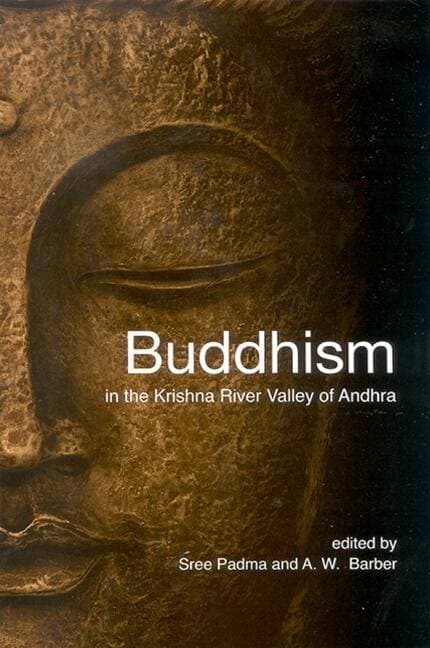
Buddhism in the Krishna River Valley of Andhra
Sree Padma and A. W. Barber
English
Book
State University of New York Press
2008
232 pages
3.4 MB
Introduction
The introduction repositions the Krishna River Valley of Andhra within the wider history of Buddhism, arguing that the region played a pivotal role from at least the third century BCE through later periods of decline and transformation. The chapters examine the emergence of urban Buddhism in Andhra, the role of material culture and stūpa worship, Mahāsāṃghika and Abhidharma traditions, Amaravati’s ritual and visual culture, and Andhra’s impact on Sri Lankan Buddhism.
The later chapters expand the discussion to South Indian political and philosophical contexts, including Candrakīrti’s critique of military culture, Mahāyāna developments along the Krishna River, and Buddhist politics in post-Buddhist Andhra. Together, the essays present Andhra as a dynamic Buddhist landscape where art, doctrine, ritual, urban life, and political power intersected to produce a legacy of wider Asian significance.
Copyright Notice
This material is provided solely for academic research, study, and religious practice purposes under Article 25 of Vietnam's Intellectual Property Law. Reproduction, distribution, or commercial use is strictly prohibited.
If you are the author, translator, publisher, or rights holder and believe this content has been posted without proper authorization, please contact us and we will promptly review and remove or restrict access.
Documents
Buddhism in the Krishna River Valley of Andhra
3.4 MB
Keywords
Buddhism in AndhraKrishna River ValleySree PadmaA. W. BarberAmaravatiNagarjunakondaMahāsāṃghikaBuddhist material cultureMahāyānaSouth Indian Buddhism.
Sách đọc nhiều nhất
The Buddha’s Ancient Path
Piyadassi Thera
Book·10.7 MB
229 pages1979223
The Questions of King Milinda, Part II
F. Max Müller (Editor)
Book·20.8 MB
427 pages1894208

A Taste of Freedom
Venerable Ajahn Chah / Phra Bodhinyana Thera
Book·1.2 MB
104 pages1980207
Buddhist Meditation: An Anthology of Texts from the Pāli Canon
Sarah Shaw (General Editors: Charles S. Prebish and Damien Keown)
Book·17.5 MB
253 pages2006204