English
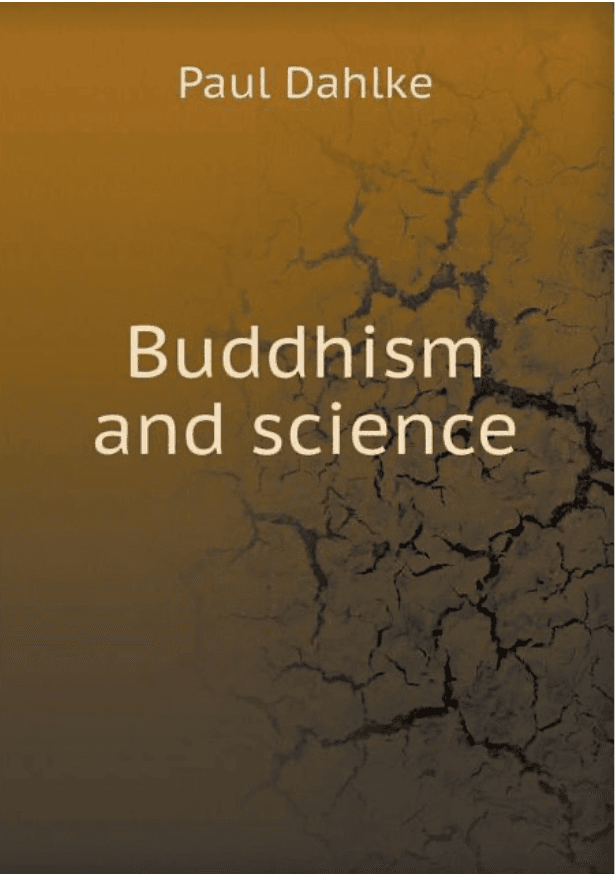
Buddhism & Science
Paul Dahlke
English
Book
Macmillan and Co., Limited, London
1913
280 pages
9.0 MB
Introduction
The book first discusses the meaning and necessity of a world-theory, arguing that human beings require a comprehensive understanding of existence in order to ground morality, religion, and conduct. It then contrasts faith and science as two major approaches to explaining the world, showing the limitations of faith when it appeals to transcendence and the limitations of science when it seeks a world-conception without adequately accounting for the experiencing subject. The work then introduces the thought-world of Buddha Gotama and explains the central doctrine of the Buddha as a practical and cognitive path rather than a speculative metaphysical system. Subsequent chapters develop Buddhism as a working hypothesis and place it in relation to the problems of physics, physiology, biology, cosmology, and thought. Across these discussions, Dahlke treats Buddhism as a disciplined framework for understanding reality as process, causality, and conditioned becoming, while also addressing the ethical and existential problem of how one should live. The concluding movement of the book reinforces the claim that Buddhism offers a more adequate answer than either faith or science alone because it links cognition, conduct, and liberation within one coherent vision.
Copyright Notice
This material is provided solely for academic research, study, and religious practice purposes under Article 25 of Vietnam's Intellectual Property Law. Reproduction, distribution, or commercial use is strictly prohibited.
If you are the author, translator, publisher, or rights holder and believe this content has been posted without proper authorization, please contact us and we will promptly review and remove or restrict access.
Documents
Buddhism & Science
9.0 MB
Keywords
Buddhism and scienceworld-theoryPaul DahlkecausalitykarmaBuddhist philosophyscientific materialism.
Sách cùng tác giả
Sách đọc nhiều nhất
The Buddha’s Ancient Path
Piyadassi Thera
Book·10.7 MB
229 pages1979221
The Questions of King Milinda, Part II
F. Max Müller (Editor)
Book·20.8 MB
427 pages1894207

A Taste of Freedom
Venerable Ajahn Chah / Phra Bodhinyana Thera
Book·1.2 MB
104 pages1980206
Buddhist Meditation: An Anthology of Texts from the Pāli Canon
Sarah Shaw (General Editors: Charles S. Prebish and Damien Keown)
Book·17.5 MB
253 pages2006204