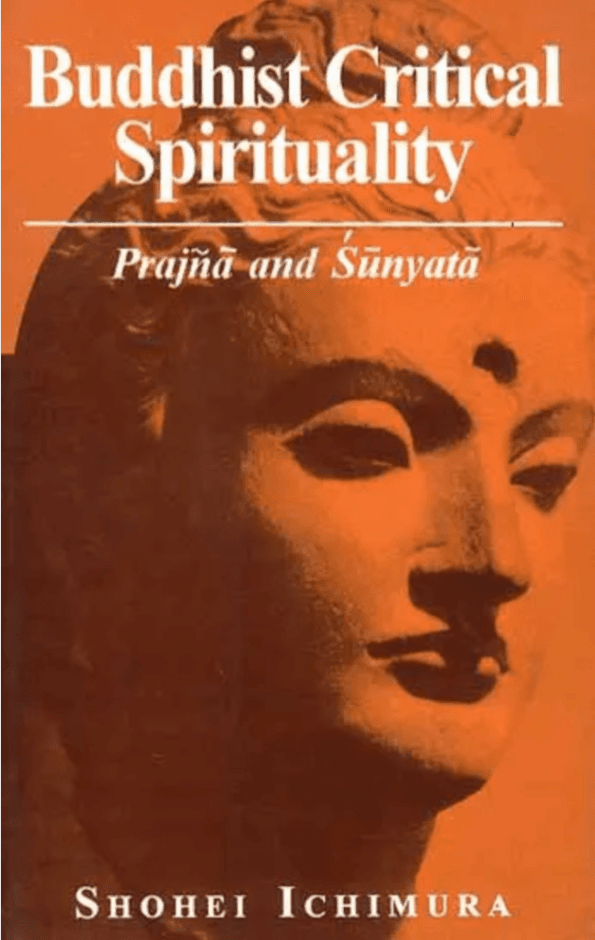
Buddhist Critical Spirituality: Prajñā and Śūnyatā
Introduction
In the Introduction, Ichimura explains that the volume brings together essays written over several decades and organizes them into four major sections. The underlying concern is the meaning of spirituality in Buddhism, especially a form of spirituality that is neither dogmatic nor merely devotional, but self-critical, dialogical, and open to historical, philosophical, and cultural examination.
The first section explores Buddhist critical spirituality in history and culture. It begins with an analysis of Śākyamuni’s renunciation as a historical breakthrough and then turns to the early Buddhist Saṅgha, caste, Indian social structures, religious pluralism, the decline of Buddhism in India, and the development of the Kuan-yin cult in China. A major theme is that Buddhist spirituality should be understood as a critical force capable of confronting entrenched social, religious, and cultural assumptions. The essays also situate Buddhism in relation to broader questions of communication, reconciliation, social conflict, and religious coexistence.
The second major section focuses on Nāgārjuna and the Mādhyamika dialectic of critical spirituality. Ichimura examines Nāgārjuna’s historical context, the Suhṛllekha and Ratnāvalī, the logical structure of the Mādhyamika dialectic, the use of anvaya-vyatireka, the relationship between Buddhist logic and Mādhyamika reasoning, and the philosophical implications of śūnyatā. The author is especially concerned with how emptiness functions not as nihilism, but as a critical tool for dismantling conceptual fixation and overcoming reified categories.
The third and fourth sections, as indicated in the Contents, move into Chinese Buddhist critical spirituality and its relevance to the contemporary world. These include discussions of Chinese Buddhist philosophy, Seng-chao, the Heart Sūtra, Kuan-yin devotion, doctrinal classification, Buddhist spirituality in India and the modern world, natural law, and Buddhist universal ethics. The volume therefore combines historical studies, Buddhist philosophy, textual interpretation, comparative thought, and contemporary ethical reflection.
Copyright Notice
This material is provided solely for academic research, study, and religious practice purposes under Article 25 of Vietnam's Intellectual Property Law. Reproduction, distribution, or commercial use is strictly prohibited.
If you are the author, translator, publisher, or rights holder and believe this content has been posted without proper authorization, please contact us and we will promptly review and remove or restrict access.
Documents
Buddhist Critical Spirituality: Prajñā and Śūnyatā
173.2 MB
Keywords
Sách đọc nhiều nhất
The Buddha’s Ancient Path
Piyadassi Thera
The Questions of King Milinda, Part II
F. Max Müller (Editor)

A Taste of Freedom
Venerable Ajahn Chah / Phra Bodhinyana Thera
Buddhist Meditation: An Anthology of Texts from the Pāli Canon
Sarah Shaw (General Editors: Charles S. Prebish and Damien Keown)