English
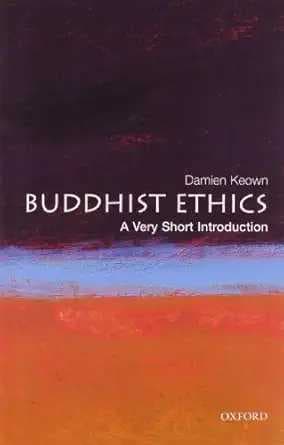
Buddhist Ethics: A Very Short Introduction
Damien Keown
English
Book
Oxford University Press, Oxford; New York.
2005
166 pages
2.5 MB
Introduction
The Preface explains the purpose of the book. Keown states that the volume is written for a broad readership, including Buddhists interested in ethical questions, ethicists interested in Buddhism, students studying world religions, and general readers who want to know whether Buddhism can illuminate modern moral problems. He identifies six applied issues as the book’s main focus: animals and the environment, sexuality, war and terrorism, abortion, suicide and euthanasia, and cloning.
Keown also clarifies that the book does not focus on one Buddhist school, culture, or historical period. Instead, it works with what he calls “mainstream Buddhism”, a broad analytical category used to represent shared Buddhist moral principles across traditions. He acknowledges that ethical issues are controversial and presents his own approach as that of a “sympathetic critic.”
Chapter 1: Buddhist Morality
This chapter lays the foundation for the entire book. Keown argues that morality is woven into the fabric of Buddhist teachings and that all major Buddhist traditions emphasize the moral life. He begins with Dharma, which he interprets as a universal law governing both the physical and moral order of the universe. Dharma is not created by God; rather, it is discovered and taught by awakened beings such as the Buddha.
The chapter then explains karma as the moral dimension of Dharma. Keown stresses that karma is not divine reward and punishment, but a natural moral law. Karma means intentional action, and moral choices shape both character and future experience. This leads to a discussion of merit, especially the role of merit-making in Buddhist lay practice, including support for the Saṅgha.
Keown next presents the Five Precepts as the basic moral commitments of lay Buddhists: refraining from harming living creatures, taking what is not given, sexual misconduct, false speech, and intoxicants. He also introduces the Vinaya, the monastic discipline governing monks and nuns, and explains the Prātimokṣa as the formal code of monastic offences.
A major part of the chapter is devoted to virtues. Keown emphasizes that Buddhist morality is not merely rule-following. It involves the cultivation of wholesome dispositions such as non-attachment, benevolence, understanding, generosity, non-violence, and compassion. The chapter gives special attention to dāna, or generosity, as one of the most important virtues for lay Buddhists. It also discusses ahiṃsā, non-harming or non-violence, as a central Buddhist moral principle.
The chapter concludes with Mahāyāna morality, especially the bodhisattva ideal, the Six Perfections, compassion, and skilful means (upāya-kauśalya). Keown notes that Mahāyāna ethics expands early Buddhist morality by emphasizing altruistic conduct and the compassionate service of all beings, while still retaining the basic precepts.
Chapter 2: Ethics East and West
This chapter reflects theoretically on Buddhist ethics in comparison with Western moral philosophy. Keown introduces three major Western ethical frameworks: deontology, utilitarianism, and virtue ethics. Deontology emphasizes duty and obligation; utilitarianism emphasizes consequences; virtue ethics emphasizes the cultivation of character.
Keown argues that Buddhist ethics has similarities with all three models, but most closely resembles virtue ethics. Buddhism is fundamentally a path of self-transformation: it seeks to remove negative states such as greed, hatred, and delusion and cultivate virtues such as wisdom, compassion, and non-attachment. The goal is not simply obedience to rules or maximization of pleasure, but the transformation of the person.
The chapter also discusses the apparent absence of a fully developed tradition of philosophical ethics in Buddhism comparable to Western ethical theory. Keown observes that Buddhism has rich moral teachings but relatively little explicit metaethical reflection. He then introduces engaged Buddhism, a modern movement applying Buddhist values to social, political, environmental, and humanitarian issues.
Chapter 3: Animals and the Environment
This chapter applies Buddhist ethics to animals, vegetarianism, ecology, and environmental responsibility. Keown relates these themes to the principle of ahiṃsā, compassion, karma, rebirth, and interdependence. Since sentient beings fear pain and death, Buddhism discourages harming animals and supports attitudes of respect and compassion toward living creatures.
The environmental discussion builds on Buddhist ideas of interdependence and non-harming. Although classical Buddhism did not develop modern environmental theory, Keown shows that its moral principles can support ecological responsibility. The chapter is important for contemporary applied ethics because it connects Buddhist compassion with animal welfare and environmental concern.
Chapter 4: Sexuality
This chapter considers Buddhist teachings on sexuality, desire, celibacy, marriage, sexual misconduct, and modern sexual ethics. Keown explains that Buddhism does not see sexuality as inherently sinful in a theistic sense, but it does view desire and attachment as sources of suffering. Monastics undertake celibacy, while lay Buddhists are expected to observe responsible sexual conduct.
The chapter discusses the third precept and its implications for issues such as adultery, exploitation, sexual harm, and moral responsibility. Keown’s treatment shows that Buddhist sexual ethics is less concerned with divine prohibition than with harm, intention, attachment, self-control, and the cultivation of wholesome character.
Chapter 5: War and Terrorism
This chapter examines Buddhist attitudes toward violence, war, pacifism, and terrorism. Keown begins from the first precept and the principle of non-harming. Buddhism strongly condemns intentional killing, and its scriptures repeatedly praise non-violence and compassion.
At the same time, the chapter recognizes that Buddhist societies have not always been free from war. Keown therefore explores the tension between Buddhist ideals and historical realities. The chapter is especially relevant to modern debates about whether Buddhism permits any form of just war, self-defense, or political violence. Keown’s analysis suggests that mainstream Buddhist ethics has great difficulty justifying intentional killing, even for supposedly noble ends.
Chapter 6: Abortion
This chapter applies Buddhist ethics to abortion, one of the most difficult issues in modern bioethics. Keown examines Buddhist views of conception, rebirth, sentience, karma, and the first precept. Since Buddhism generally regards life as beginning at conception, abortion is morally serious because it involves the destruction of developing human life.
The chapter also discusses the emotional and social complexity of abortion, including the Japanese practice of mizuko kuyō, a memorial rite for aborted or miscarried fetuses. Keown does not reduce the issue to simple condemnation but shows how Buddhist ethics balances respect for life, compassion for women, karmic responsibility, and ritual responses to grief and remorse.
Chapter 7: Suicide and Euthanasia
This chapter discusses suicide, assisted dying, and euthanasia. Keown analyzes whether suicide can be reconciled with Buddhist teachings on suffering, compassion, intention, and non-harming. He considers scriptural cases of monks who took their own lives and asks how such cases should be interpreted.
The chapter argues that Buddhism generally does not support suicide or euthanasia as morally acceptable solutions to suffering. Since the underlying problem is not merely physical pain but craving, ignorance, and karmic continuity, death does not automatically end suffering. The Buddhist response is therefore more likely to emphasize compassionate care, mental cultivation, and support for dying persons rather than intentional life-ending.
Chapter 8: Cloning
The final chapter addresses cloning and modern biotechnology. Keown considers reproductive cloning, identity, personhood, karma, individuality, and Buddhist views of rebirth. Buddhism does not define personhood through an eternal soul, so cloning raises different questions than it does in some theistic traditions.
Keown examines whether a clone would be a distinct karmic individual and how Buddhist doctrines of non-self and dependent origination might interpret biological reproduction by cloning. The chapter shows the flexibility of Buddhist moral reasoning when applied to new technological developments. It also demonstrates that Buddhist ethics can engage contemporary bioethics without relying on the concept of a creator God or immortal soul.
The book concludes with References, Further Reading, Glossary, and Index, making it a practical introductory resource for students and researchers. Overall, Buddhist Ethics: A Very Short Introduction is a compact but intellectually strong work that bridges classical Buddhist moral teachings and modern applied ethics.
Copyright Notice
This material is provided solely for academic research, study, and religious practice purposes under Article 25 of Vietnam's Intellectual Property Law. Reproduction, distribution, or commercial use is strictly prohibited.
If you are the author, translator, publisher, or rights holder and believe this content has been posted without proper authorization, please contact us and we will promptly review and remove or restrict access.
Documents
Buddhist Ethics: A Very Short Introduction
2.5 MB
Keywords
Buddhist EthicsKarmaFive PreceptsApplied Ethics.
Sách cùng tác giả
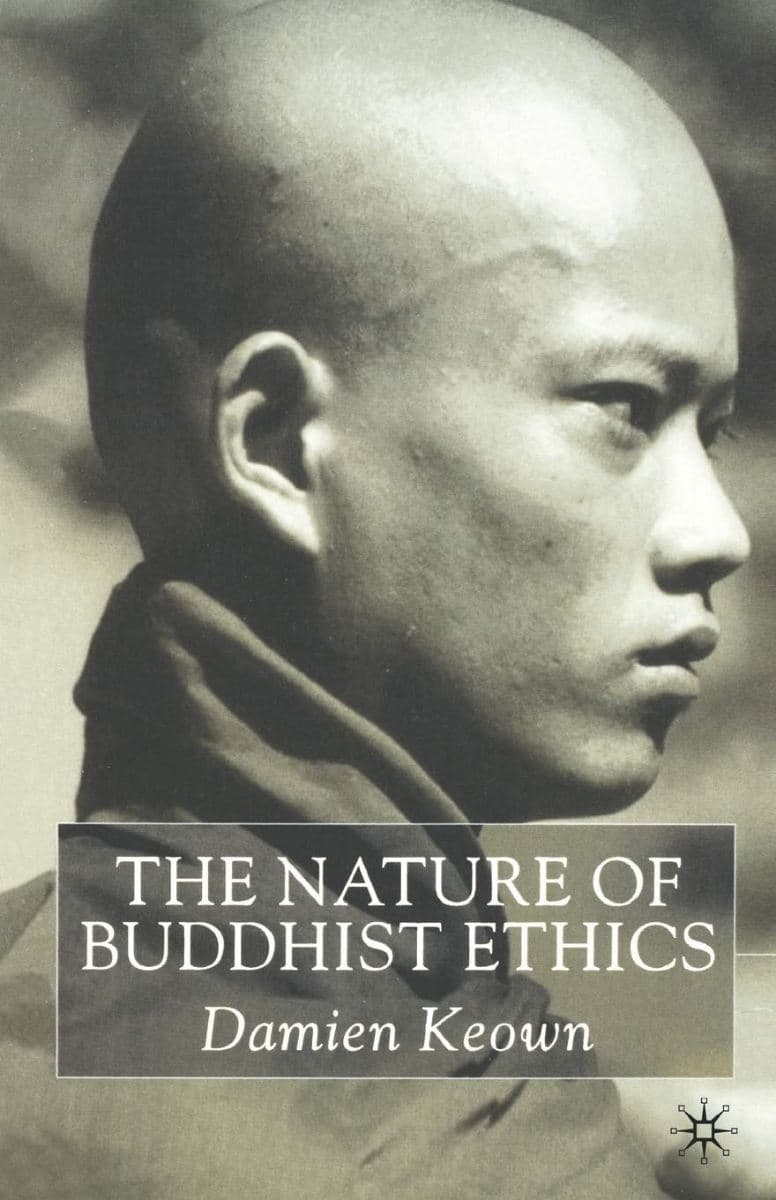
Sách đọc nhiều nhất
The Buddha’s Ancient Path
Piyadassi Thera
Book·10.7 MB
229 pages1979223
The Questions of King Milinda, Part II
F. Max Müller (Editor)
Book·20.8 MB
427 pages1894208

A Taste of Freedom
Venerable Ajahn Chah / Phra Bodhinyana Thera
Book·1.2 MB
104 pages1980207
Buddhist Meditation: An Anthology of Texts from the Pāli Canon
Sarah Shaw (General Editors: Charles S. Prebish and Damien Keown)
Book·17.5 MB
253 pages2006204