English
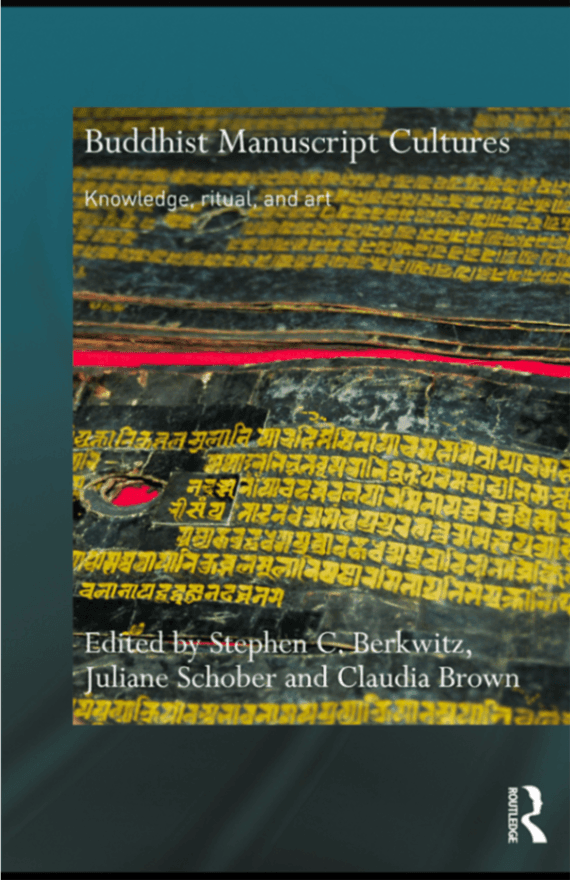
Buddhist Manuscript Cultures: Knowledge, Ritual, and Art
Stephen C. Berkwitz, Juliane Schober, and Claudia Brown
English
Book
Routledge, Taylor & Francis Group
2009
230 pages
11.1 MB
Introduction
The introduction rethinks Buddhist manuscript cultures by emphasizing that Buddhist manuscripts functioned both as sources of religious knowledge and as sacred material objects. It explains the transition from oral transmission to written forms, the diversity of manuscript media such as palm leaf, birch bark, paper, silk, cloth, and metal plates, and the role of manuscripts in devotion, merit-making, education, ritual consecration, artistic production, and the preservation of the Buddha’s word.
The chapters are organized into four parts: Ideologies, Production, Curating, and Art and Architecture. Together, they show how Buddhist manuscripts shaped religious life across Asia through their production, circulation, preservation, visual design, ritual power, and institutional use. The volume therefore presents manuscripts as living cultural artifacts situated at the intersection of knowledge, ritual, aesthetics, technology, and Buddhist community life.
Copyright Notice
This material is provided solely for academic research, study, and religious practice purposes under Article 25 of Vietnam's Intellectual Property Law. Reproduction, distribution, or commercial use is strictly prohibited.
If you are the author, translator, publisher, or rights holder and believe this content has been posted without proper authorization, please contact us and we will promptly review and remove or restrict access.
Documents
Buddhist Manuscript Cultures: Knowledge, Ritual, and Art
11.1 MB
Keywords
IdeologiesProductionCuratingArt and ArchitectureBuddhist manuscriptsManuscript culturesBuddhist material cultureRitual objectsBuddhist artPalm-leaf manuscriptsTextual transmission.
Sách đọc nhiều nhất
The Buddha’s Ancient Path
Piyadassi Thera
Book·10.7 MB
229 pages1979223
The Questions of King Milinda, Part II
F. Max Müller (Editor)
Book·20.8 MB
427 pages1894208

A Taste of Freedom
Venerable Ajahn Chah / Phra Bodhinyana Thera
Book·1.2 MB
104 pages1980207
Buddhist Meditation: An Anthology of Texts from the Pāli Canon
Sarah Shaw (General Editors: Charles S. Prebish and Damien Keown)
Book·17.5 MB
253 pages2006204