
English
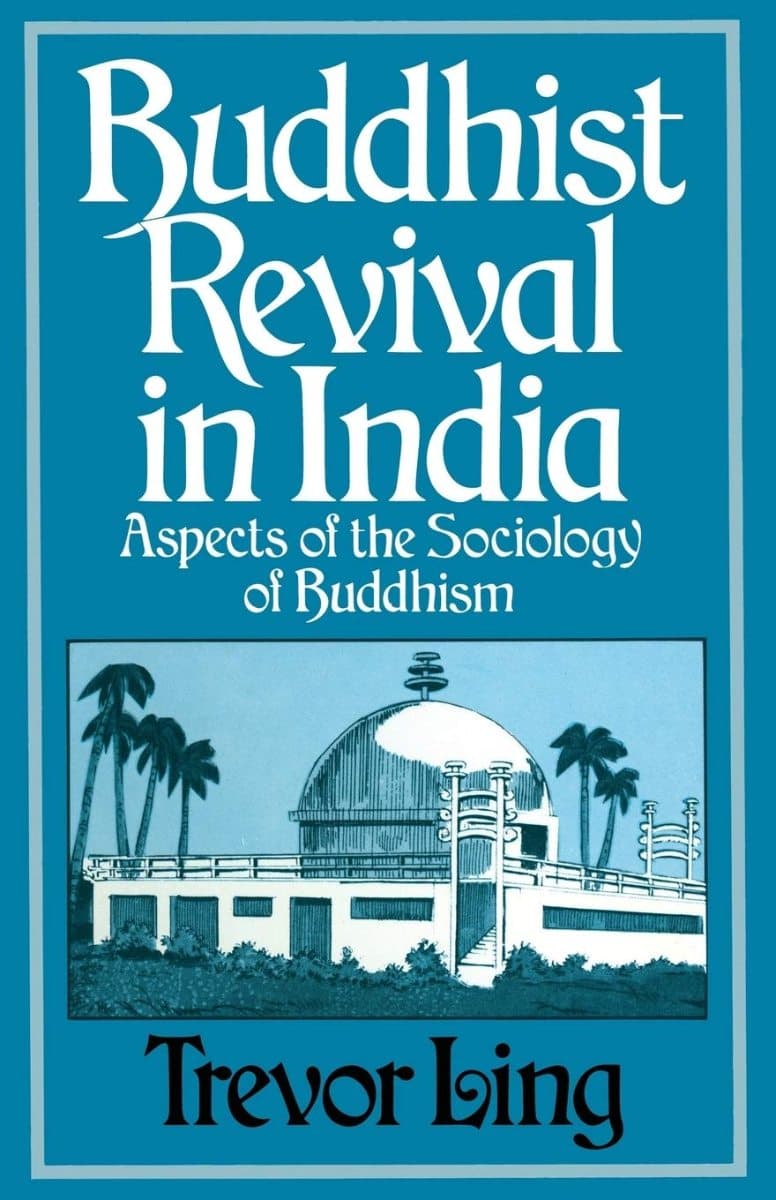
Buddhist Revival in India: Aspects of the Sociology of Buddhism
Trevor Ling
English
Book
St. Martin’s Press, New York
21980
147 pages
13.9 MB
Introduction
The book is organized into two principal parts. Part One, “Buddhism and Brahmanism,” contains four chapters: “Alienated Hindus,” which studies the Buddhist way for India’s Untouchables, the Hindu social order, and the growth of dissent; “Buddhist Popularity in India,” which asks what became of Indian Buddhism, examines varieties of Buddhist culture, Max Weber’s study of Buddhism, and the relationship between Buddhists and the political order; “Buddhist Decline in India,” which surveys explanations of decline, Buddhism in Bengal, Chinese pilgrim evidence, Buddhism and popular cults, and Brahmanical hostility; and “Buddhism in India Today,” which discusses the secular Republic of India, modern Indian Buddhism, Tibetan and Burmese Buddhist communities in north-east India, and the potential for Buddhist resurgence. Part Two, “Anti-Brahmanism and Neo-Buddhism,” examines the Hindu social order in the early twentieth century, Ambedkar’s critique of Brahmanism, Ambedkar’s position between Marxism and Buddhism, Buddhist economic values, and neo-Buddhism as a social and religious movement among former Untouchables.
Copyright Notice
This material is provided solely for academic research, study, and religious practice purposes under Article 25 of Vietnam's Intellectual Property Law. Reproduction, distribution, or commercial use is strictly prohibited.
If you are the author, translator, publisher, or rights holder and believe this content has been posted without proper authorization, please contact us and we will promptly review and remove or restrict access.
Documents
Buddhist Revival in India: Aspects of the Sociology of Buddhism
13.9 MB
Keywords
Buddhist revivalNeo-BuddhismAmbedkarBuddhism and Brahmanismcaste and religionBuddhist declinesociology of Buddhism.
Sách cùng tác giả
Sách đọc nhiều nhất
The Buddha’s Ancient Path
Piyadassi Thera
Book·10.7 MB
229 pages1979223
The Questions of King Milinda, Part II
F. Max Müller (Editor)
Book·20.8 MB
427 pages1894208

A Taste of Freedom
Venerable Ajahn Chah / Phra Bodhinyana Thera
Book·1.2 MB
104 pages1980207
Buddhist Meditation: An Anthology of Texts from the Pāli Canon
Sarah Shaw (General Editors: Charles S. Prebish and Damien Keown)
Book·17.5 MB
253 pages2006204