English
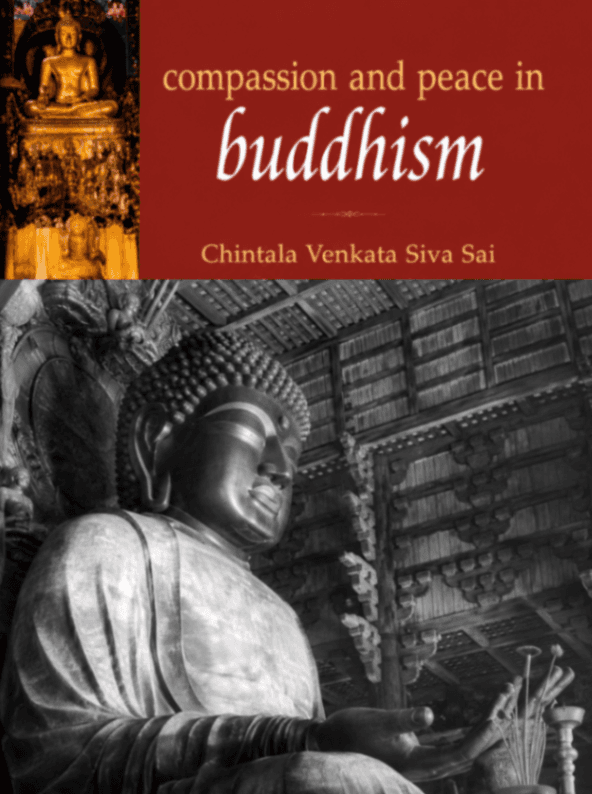
Compassion and Peace in Buddhism
Dr. Chintala Venkata Siva Sai
English
Book
Sonali Publications, New Delhi
2006
165 pages
89.8 MB
Introduction
The book is organized into six main chapters. Chapter 1, “Concept of Dukkha or Universal Suffering,” introduces the Four Noble Truths and analyzes dukkha through its physical, psychological, and philosophical dimensions, including birth, ageing, death, sorrow, lamentation, grief, despair, separation, unsatisfied desire, and the five aggregates of clinging. Chapter 2, “Namarupa and Kamma,” examines ignorance, the individual as nāma-rūpa, the five aggregates, the working of kamma, and the relationship between kamma and suffering. Chapter 3, “Concept of Causation,” explains dependent origination (pratītyasamutpāda) as the principle through which repeated birth, suffering, moral causation, causes, and conditions are understood. Chapter 4, “Brahmavihara and the Concept of Karuna,” studies the four divine abidings—mettā, karuṇā, muditā, and upekkhā—with special attention to the meaning, function, and significance of compassion in Pāli texts and Jātaka literature. Chapter 5, “Peace,” discusses internal and external peace, peace of mind, purification of consciousness, meditative states, arūpa-jhāna, and Nibbāna as supreme peace. Chapter 6, “Survey,” synthesizes the study by showing that compassion and peace are inseparable in the Buddhist path toward meaningful life and liberation.
Copyright Notice
This material is provided solely for academic research, study, and religious practice purposes under Article 25 of Vietnam's Intellectual Property Law. Reproduction, distribution, or commercial use is strictly prohibited.
If you are the author, translator, publisher, or rights holder and believe this content has been posted without proper authorization, please contact us and we will promptly review and remove or restrict access.
Documents
Compassion and Peace in Buddhism
89.8 MB
Keywords
CompassionPeaceKaruṇāBrahmavihāraDukkhaKammaDependent originationNibbāna.
Sách đọc nhiều nhất
The Buddha’s Ancient Path
Piyadassi Thera
Book·10.7 MB
229 pages1979223
The Questions of King Milinda, Part II
F. Max Müller (Editor)
Book·20.8 MB
427 pages1894208

A Taste of Freedom
Venerable Ajahn Chah / Phra Bodhinyana Thera
Book·1.2 MB
104 pages1980207
Buddhist Meditation: An Anthology of Texts from the Pāli Canon
Sarah Shaw (General Editors: Charles S. Prebish and Damien Keown)
Book·17.5 MB
253 pages2006204