English
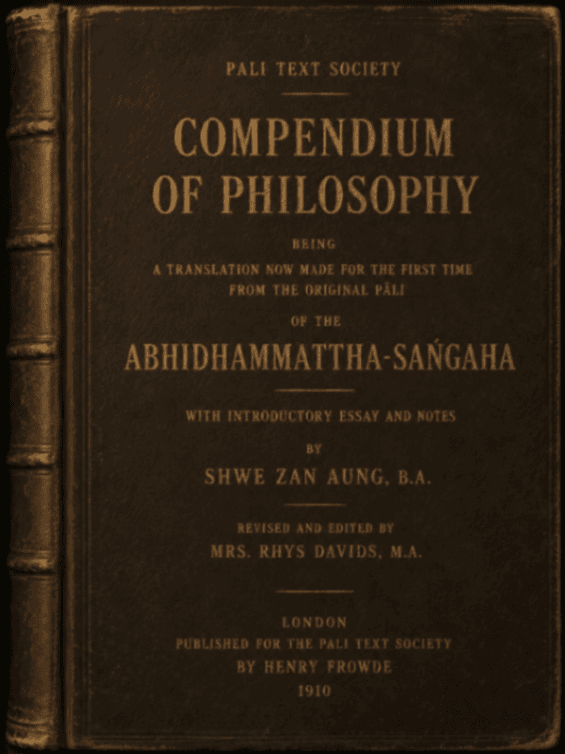
Compendium of Philosophy
Translated by Shwe Zan Aung; edited by Mrs. Rhys Davids, M.A.
English
Book
The Pali Text Society
1910
353 pages
17.1 MB
Introduction
The work begins with an introductory essay that frames the Abhidhammattha-Saṅgaha as a concise exposition of Buddhist philosophy from a psychological standpoint, especially through the analysis of mind and mental processes. The main body proceeds through the core architecture of Abhidhamma. It studies consciousness and its classifications, then examines the mental properties or concomitants that arise with consciousness. It explains processes of thought, including how cognition operates through sense experience and mental activity. It then turns to consciousness not subject to process, including realms of existence, rebirth, karma, death, and the stream of becoming. The work further analyzes matter and Nibbāna, treating material qualities, their origins, groupings, and the unconditioned goal of liberation. Later sections classify doctrinal categories, including evil, mixed categories, and factors related to enlightenment. The final part studies relations, especially the law of conditional happening, the structure of correlation, mind and body as mutually related, and conceptual designation. Through this progression, the book presents Abhidhamma as an analytical system that explains experience, ethical causality, mental purification, and the path toward Nibbāna.
Copyright Notice
This material is provided solely for academic research, study, and religious practice purposes under Article 25 of Vietnam's Intellectual Property Law. Reproduction, distribution, or commercial use is strictly prohibited.
If you are the author, translator, publisher, or rights holder and believe this content has been posted without proper authorization, please contact us and we will promptly review and remove or restrict access.
Documents
Compendium of Philosophy
17.1 MB
Keywords
Abhidhammattha-SaṅgahaAbhidhammaBuddhist philosophyBuddhist psychologyConsciousnessMental factorsNibbāna
Sách đọc nhiều nhất
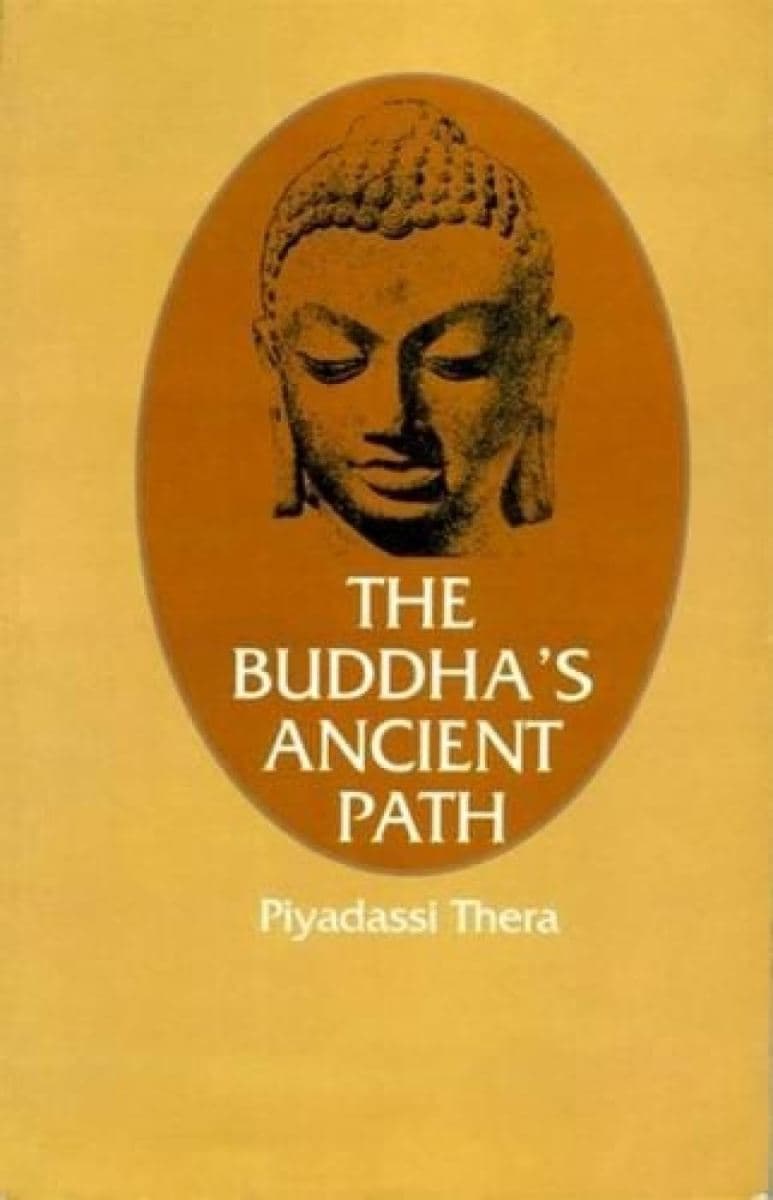
The Buddha’s Ancient Path
Piyadassi Thera
Book·10.7 MB
229 pages1979223
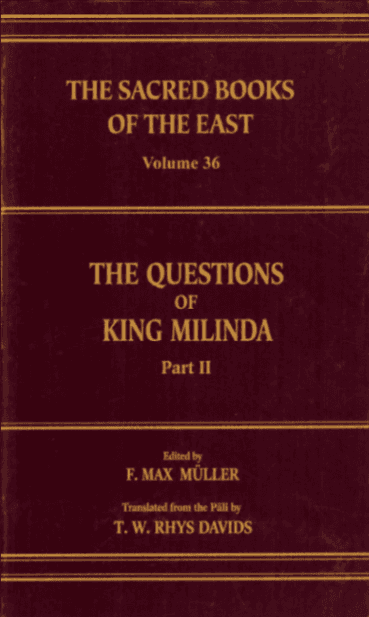
The Questions of King Milinda, Part II
F. Max Müller (Editor)
Book·20.8 MB
427 pages1894208

A Taste of Freedom
Venerable Ajahn Chah / Phra Bodhinyana Thera
Book·1.2 MB
104 pages1980207
Buddhist Meditation: An Anthology of Texts from the Pāli Canon
Sarah Shaw (General Editors: Charles S. Prebish and Damien Keown)
Book·17.5 MB
253 pages2006204