
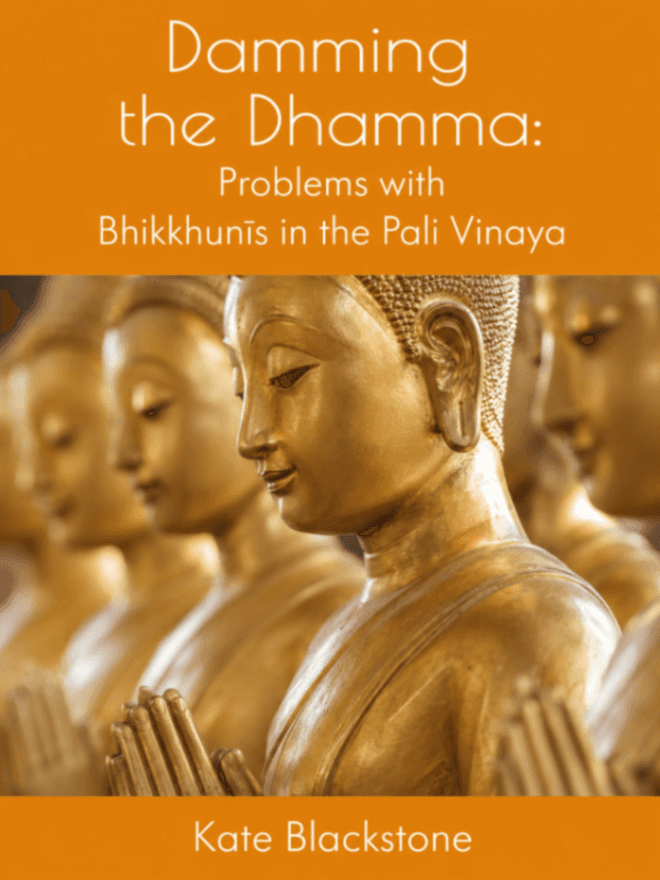
English
Damming the Dhamma: Problems with Bhikkhunīs in the Pali Vinaya
Kate Blackstone
English
Journal
Journal of Buddhist Ethics, Vol. 6, pp. 292-312
1999
21 pages
174 KB
Introduction
The article develops its argument by reading the Pāli Vinaya as a coherent narrative system with a beginning, middle, and end, framed by the Buddha’s enlightenment, teaching career, and final passing away. Blackstone first examines how the Vinaya transfers the Buddha’s authority to the saṅgha as a corporate body, emphasizing the ideals of purity, separation from worldly defilement, and hierarchical order. She then analyzes the role of monastic rules, ordination procedures, uposatha rituals, and communal boundaries as mechanisms for preserving the integrity of the saṅgha. Against this background, the story of Mahāpajāpatī’s request for ordination becomes a critical case: women’s entry into the order is depicted not merely as a social issue but as a symbolic rupture in the masculine structure of monastic authority. The article concludes that the garudhammas function within the Vinaya narrative as a disciplinary and institutional mechanism to contain this rupture and preserve the saṅgha’s imagined purity and hierarchy.
Copyright Notice
This material is provided solely for academic research, study, and religious practice purposes under Article 25 of Vietnam's Intellectual Property Law. Reproduction, distribution, or commercial use is strictly prohibited.
If you are the author, translator, publisher, or rights holder and believe this content has been posted without proper authorization, please contact us and we will promptly review and remove or restrict access.
Documents
Damming the Dhamma: Problems with Bhikkhunīs in the Pali Vinaya
174 KB
Keywords
BhikkhunīPāli VinayaMahāpajāpatī GotamīGarudhammaBuddhist MonasticismGender and BuddhismJournal of Buddhist Ethics.
Sách đọc nhiều nhất
The Buddha’s Ancient Path
Piyadassi Thera
Book·10.7 MB
229 pages1979223
The Questions of King Milinda, Part II
F. Max Müller (Editor)
Book·20.8 MB
427 pages1894208

A Taste of Freedom
Venerable Ajahn Chah / Phra Bodhinyana Thera
Book·1.2 MB
104 pages1980207
Buddhist Meditation: An Anthology of Texts from the Pāli Canon
Sarah Shaw (General Editors: Charles S. Prebish and Damien Keown)
Book·17.5 MB
253 pages2006204