English
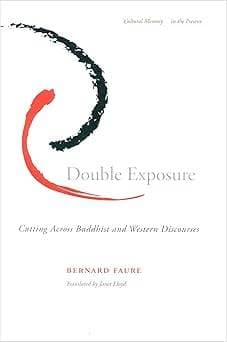
Double Exposure: Cutting Across Buddhist and Western Discourses
Bernard Faure (translated by Janet Lloyd)
English
Book
Stanford University Press
2004
208 pages
12.0 MB
Introduction
Prologue: Frames Buddhism as philosophy, religion, psychosomatic discipline, symbolic system, and ideology.
1. Do We Know What Buddhism Is?: Critiques Western misunderstandings, Orientalism, Neobuddhism, and reductionist definitions of Buddhism.
2. Buddhism and Rationalities: Discusses logic, reason, language, and alternative forms of rationality.
3. Buddhism and Chinese Thought: Examines Buddhism’s interaction with Confucianism, Daoism, Chan, Tantrism, and yin-yang cosmology.
4. A Hybrid Teaching: Presents Buddhism as a hybrid tradition negotiating transcendence, immanence, ritual, mysticism, and popular religion.
5. The Major Schools: Introduces key Buddhist formations, especially Chan/Zen and Tantric/Vajrayāna traditions.
6. “Transcendental” Concepts: Analyzes major Buddhist concepts such as no-self and emptiness.
7. Twofold Truth: Discusses conventional and ultimate truth as central to Buddhist philosophical reasoning.
8. External Thought: Reflects on language, thought, expression, and Chan modes of discourse.
Epilogue: After All …: Reconsiders major binaries such as faith/reason, philosophy/religion, and East/West.
Copyright Notice
This material is provided solely for academic research, study, and religious practice purposes under Article 25 of Vietnam's Intellectual Property Law. Reproduction, distribution, or commercial use is strictly prohibited.
If you are the author, translator, publisher, or rights holder and believe this content has been posted without proper authorization, please contact us and we will promptly review and remove or restrict access.
Documents
Double Exposure: Cutting Across Buddhist and Western Discourses
12.0 MB
Keywords
BuddhismWestern philosophyOrientalismChan/ZenBuddhist rationalitytwofold truthemptiness.
Sách đọc nhiều nhất
The Buddha’s Ancient Path
Piyadassi Thera
Book·10.7 MB
229 pages1979223
The Questions of King Milinda, Part II
F. Max Müller (Editor)
Book·20.8 MB
427 pages1894208

A Taste of Freedom
Venerable Ajahn Chah / Phra Bodhinyana Thera
Book·1.2 MB
104 pages1980207
Buddhist Meditation: An Anthology of Texts from the Pāli Canon
Sarah Shaw (General Editors: Charles S. Prebish and Damien Keown)
Book·17.5 MB
253 pages2006204