
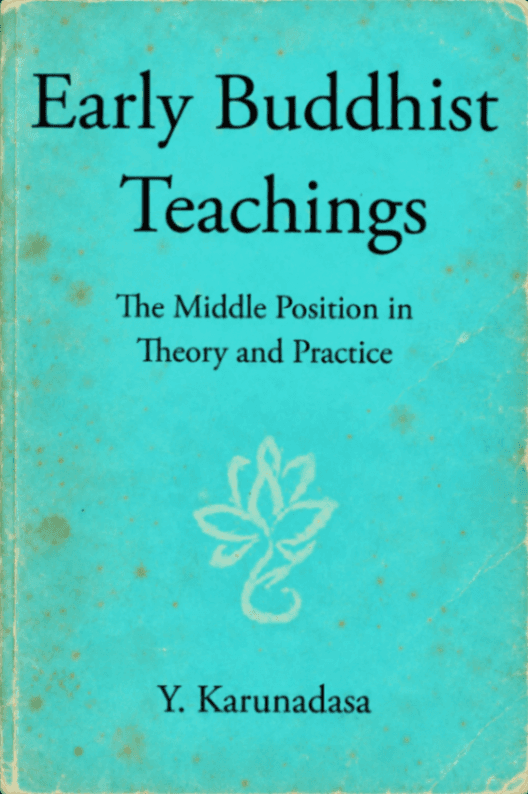
English
Early Buddhist Teachings - The Middle Position in Theory and Practice
Y. Karunadasa
English
Book
Buddhist Publication Society
2015
209 pages
4.7 MB
Introduction
Y. Karunadasa’s Early Buddhist Teachings: The Middle Position in Theory and Practice offers a systematic and philosophically informed study of the central doctrines of early Buddhism. The book is organized around the thesis that early Buddhist thought can best be understood as a “middle position” that transcends two opposing worldviews: spiritual eternalism (sassatavāda) and materialist annihilationism (ucchedavāda). Karunadasa emphasizes that this “middle” is neither moderation nor a compromise between two extremes; rather, it represents a position that avoids the assumptions underlying both. Within this framework, dependent arising (paṭiccasamuppāda) functions as the “middle doctrine,” while the Noble Eightfold Path constitutes the “middle path” in practice.
Drawing primarily on the Sutta Piṭaka of the Pāli Canon, while occasionally consulting post-canonical commentarial literature, Karunadasa examines a wide range of foundational Buddhist teachings. These include dependent arising, non-self (anattā), the analysis of mind, the nature of suffering (dukkha), Buddhist ethics and kamma, the Noble Eightfold Path, the pursuit of happiness, and Nibbāna as the final goal. The later chapters also investigate the Buddha’s refusal to answer certain metaphysical questions and the Buddhist attitude toward the idea of God.
A distinctive feature of the work is its effort to demonstrate the thematic unity of early Buddhist philosophy: doctrines that may at first appear separate are interpreted as interconnected expressions of a dynamic, non-substantialist understanding of reality. The book therefore serves as an accessible yet rigorous introduction to early Buddhist philosophy and is especially valuable for students, teachers, and researchers in Buddhist Studies, philosophy, religion, and Pāli studies.
Copyright Notice
This material is provided solely for academic research, study, and religious practice purposes under Article 25 of Vietnam's Intellectual Property Law. Reproduction, distribution, or commercial use is strictly prohibited.
If you are the author, translator, publisher, or rights holder and believe this content has been posted without proper authorization, please contact us and we will promptly review and remove or restrict access.
Documents
Early Buddhist Teachings - The Middle Position in Theory and Practice
4.7 MB
Keywords
Early BuddhismBuddhist PhilosophyY. KarunadasaMiddle WayMiddle PositionPāli CanonSutta PiṭakaDhammaPaṭiccasamuppādaDependent ArisingAnattāNon-selfDukkhaFour Noble TruthsNoble Eightfold PathKammaBuddhist EthicsBuddhist PsychologyMindNibbānaEternalismAnnihilationismSassatavādaUcchedavādaBuddhist EpistemologyReligious PluralismEarly Buddhist Thought.
Sách đọc nhiều nhất
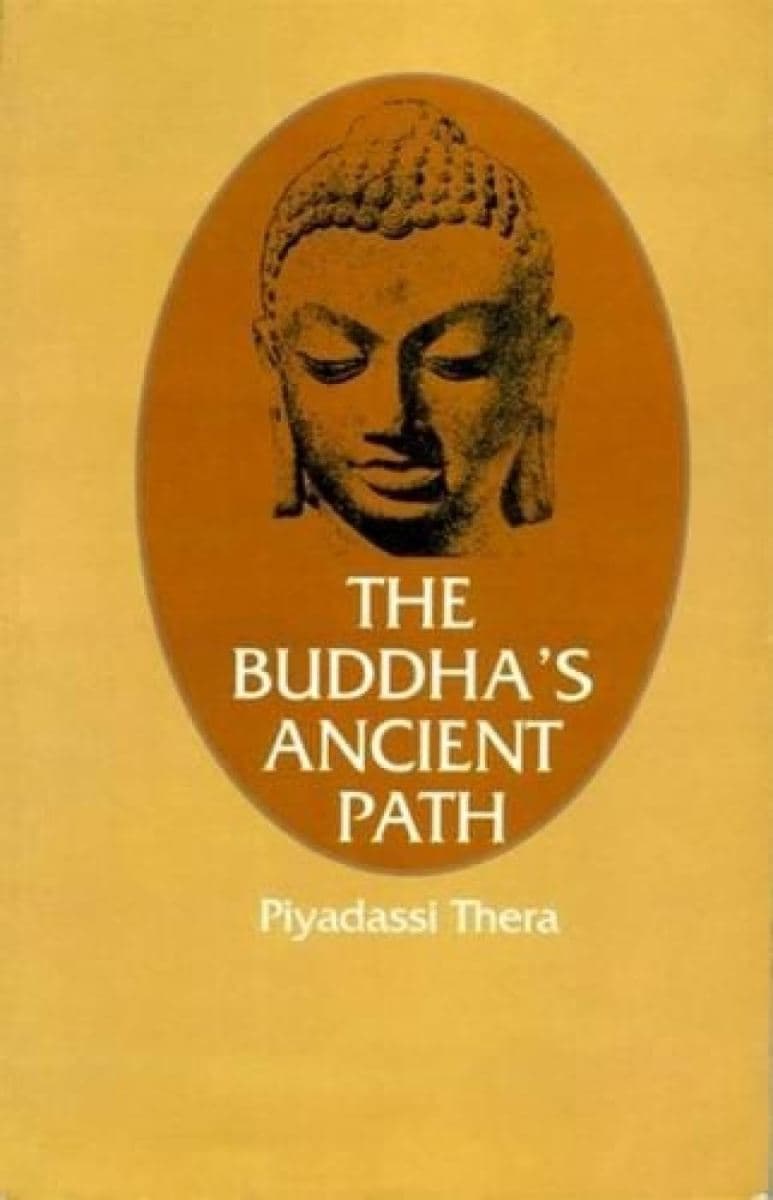
The Buddha’s Ancient Path
Piyadassi Thera
Book·10.7 MB
229 pages1979223
The Questions of King Milinda, Part II
F. Max Müller (Editor)
Book·20.8 MB
427 pages1894208

A Taste of Freedom
Venerable Ajahn Chah / Phra Bodhinyana Thera
Book·1.2 MB
104 pages1980207
Buddhist Meditation: An Anthology of Texts from the Pāli Canon
Sarah Shaw (General Editors: Charles S. Prebish and Damien Keown)
Book·17.5 MB
253 pages2006204