
English
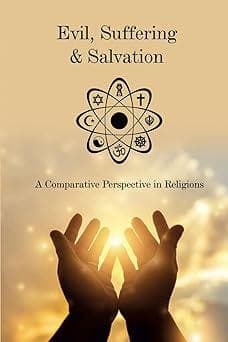
Evil, Suffering & Salvation: A Comparative Perspective in Religions
Nitin Vyas
English
Book
Vishwamanav Sanskar Sikshan Trust
1982
232 pages
252.0 MB
Introduction
The work is organized around one of the most enduring questions in philosophy of religion: how human beings are to understand evil, suffering, and the possibility of salvation within a meaningful spiritual order. The author begins by grounding the discussion in the nature of religion itself. Religion is described as more than belief, ritual, or doctrine; it is a comprehensive response of the human person to the call of the supreme reality. It includes metaphysical reflection, moral discipline, faith, intuition, self-transcendence, and the search for ultimate value. In this framework, the problem of evil arises because human beings do not merely suffer as biological organisms; they interpret suffering, evaluate it morally, and seek its ultimate meaning. Evil therefore becomes a religious and philosophical problem because it challenges the human conviction that life is ordered toward truth, goodness, freedom, and fulfilment.
The book then develops a comparative inquiry into how different religions understand the metaphysical setting of evil. The traditions of Indian origin and the Semitic traditions, together with Zoroastrianism, are examined in relation to their views of reality, human nature, bondage, sin, ignorance, divine order, and salvation. The study does not simply list doctrinal positions; it compares how each religious system explains the origin of evil, whether through ignorance, egoism, karma, fallenness, misuse of freedom, demonic power, alienation from God, or disorder in relation to the ultimate. It also considers the nature of evil in multiple dimensions: physical suffering, natural calamity, moral failure, mental conflict, intellectual error, and deeper spiritual estrangement. The author is especially concerned with the fact that evil is not reducible to bodily pain or external misfortune; it becomes most acute when it is connected with human freedom, guilt, responsibility, and the failure to realize the higher destiny of life.
The later part of the book turns toward the solution of evil. Here salvation is treated as the religious answer to suffering and disorder. Different traditions may formulate salvation as liberation, union with God, purification, moral transformation, overcoming ignorance, redemption from sin, or participation in supreme good; nevertheless, all aim at resolving the fractured condition of human existence. The concluding remarks synthesize these comparative perspectives and evaluate whether evil can receive a complete solution. The book does not present an easy final answer; rather, it shows that the problem of evil is multidimensional and requires metaphysical, moral, psychological, and spiritual interpretation. Its core contribution lies in demonstrating that the religious response to evil is not only theoretical explanation, but also practical transformation of the human person toward goodness, freedom, and ultimate fulfilment.
Copyright Notice
This material is provided solely for academic research, study, and religious practice purposes under Article 25 of Vietnam's Intellectual Property Law. Reproduction, distribution, or commercial use is strictly prohibited.
If you are the author, translator, publisher, or rights holder and believe this content has been posted without proper authorization, please contact us and we will promptly review and remove or restrict access.
Documents
Evil, Suffering & Salvation: A Comparative Perspective in Religions
252.0 MB
Keywords
Problem of evilSufferingSalvationComparative religionMoral evilReligious philosophyTheodicy.
Sách đọc nhiều nhất
The Buddha’s Ancient Path
Piyadassi Thera
Book·10.7 MB
229 pages1979223
The Questions of King Milinda, Part II
F. Max Müller (Editor)
Book·20.8 MB
427 pages1894208

A Taste of Freedom
Venerable Ajahn Chah / Phra Bodhinyana Thera
Book·1.2 MB
104 pages1980207
Buddhist Meditation: An Anthology of Texts from the Pāli Canon
Sarah Shaw (General Editors: Charles S. Prebish and Damien Keown)
Book·17.5 MB
253 pages2006204