
English
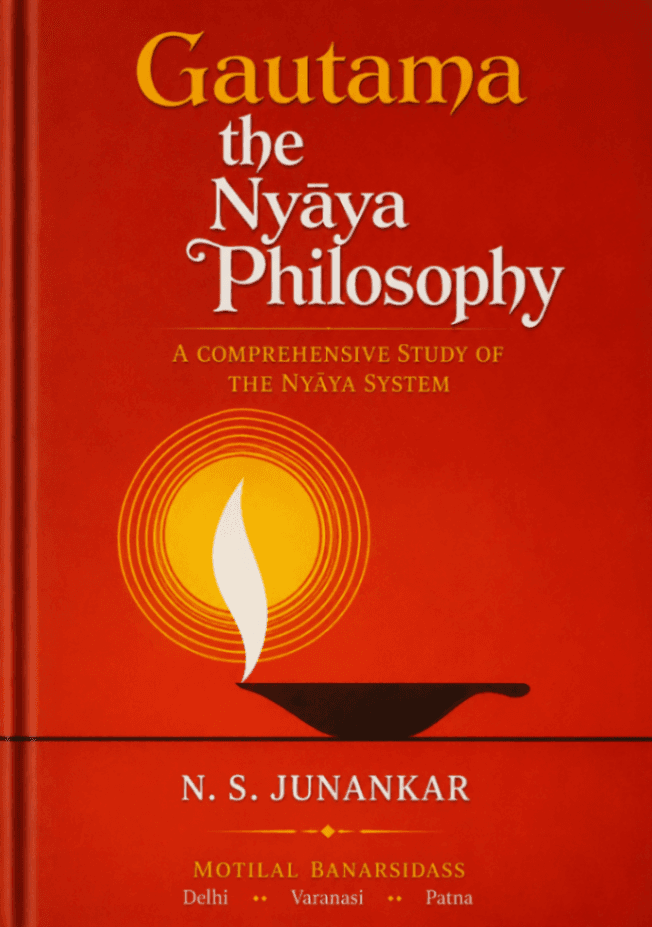
Gautama: The Nyāya Philosophy
N. S. Junankar
English
Book
Motilal Banarsidass, Delhi
1978
649 pages
105.6 MB
Introduction
The book is organized into seven major parts. The first part presents the central theme of Nyāya through its categories (padārtha). The second part develops the theory of cognition by examining pramāṇa, perception (pratyakṣa), inference (anumāna), analogy (upamāna), and word/testimony (śabda). The third part discusses the concept of proof, including doubt, objective, established tenet, syllogistic members, fallacious reasons, disputation, and ascertainment. The fourth part turns to the technique of refutation, covering discourse, quibble, legitimate objection, deficiency, and rival philosophical doctrines. The fifth part studies the objects of cognition, especially the self (ātman), body, cognition, activity, defect, life after death, result, pain, and release. The sixth part analyzes the source of saṃsāra through misapprehension and knowledge of the true nature of things. The final part offers reflections on the Nyāya system as a whole.
Copyright Notice
This material is provided solely for academic research, study, and religious practice purposes under Article 25 of Vietnam's Intellectual Property Law. Reproduction, distribution, or commercial use is strictly prohibited.
If you are the author, translator, publisher, or rights holder and believe this content has been posted without proper authorization, please contact us and we will promptly review and remove or restrict access.
Documents
Gautama: The Nyāya Philosophy
105.6 MB
Keywords
Nyāya PhilosophyGautamaPramāṇaInferenceIndian LogicĀtmanBuddhist Critique.
Sách đọc nhiều nhất
The Buddha’s Ancient Path
Piyadassi Thera
Book·10.7 MB
229 pages1979223
The Questions of King Milinda, Part II
F. Max Müller (Editor)
Book·20.8 MB
427 pages1894208

A Taste of Freedom
Venerable Ajahn Chah / Phra Bodhinyana Thera
Book·1.2 MB
104 pages1980207

Buddhist Meditation: An Anthology of Texts from the Pāli Canon
Sarah Shaw (General Editors: Charles S. Prebish and Damien Keown)
Book·17.5 MB
253 pages2006204