English
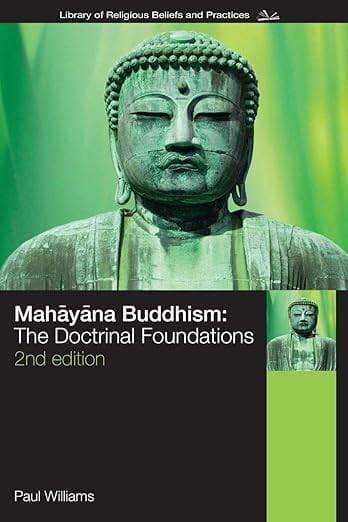
Mahāyāna Buddhism: The Doctrinal Foundations
Paul Williams
English
Book
Routledge
2009
456 pages
3.2 MB
Introduction
Chapter 1. Introduction
Explains Buddhism as a tradition marked by doctrinal diversity but relative moral unity.
Discusses the Indian background, early Buddhist sects, Vinaya traditions, Abhidharma, Mahāsāṃghika ideas, Lokottaravāda, and possible factors behind Mahāyāna development.
Examines the origins of Mahāyāna, the role of laity, early Mahāyāna sūtras, and the question of how Mahāyāna texts justified their authority.
Chapter 2. The Perfection of Wisdom (Prajñāpāramitā) Sūtras
Studies the origins and development of Prajñāpāramitā literature.
Explains wisdom, emptiness, absence of self, and the bodhisattva ideal.
Chapter 3. Mādhyamika
Presents Nāgārjuna, Āryadeva, and the Indian Madhyamaka tradition.
Discusses emptiness, intrinsic existence, causation, self, nirvāṇa, two truths, and meditation on emptiness.
Chapter 4. Yogācāra
Introduces Yogācāra thinkers and texts.
Explains the three natures, mind, substratum consciousness, and debates within the Yogācāra school.
Chapter 5. The Tathāgatagarbha
Examines Buddha-nature sūtras and the Ratnagotravibhāga.
Discusses tathāgatagarbha in Tibet and East Asia, including the Dasheng qixinlun, Dōgen, Critical Buddhism, and debates on not-self.
Chapter 6. Huayan — The Flower Garland Tradition
Introduces Buddhism in China and the Avataṃsaka Sūtra.
Explains Huayan thought, Fazang’s “Golden Lion,” Huayan practice, Vairocana, and Buddhist art.
Chapter 7. The Saddharmapuṇḍarīka (Lotus) Sūtra and Its Influences
Studies the Lotus Sūtra and its impact.
Includes Tiantai/Tendai and Nichiren traditions.
Chapter 8. On the Bodies of the Buddha
Explains Mahāyāna theories of Buddha bodies.
Discusses emptiness, Yogācāra developments, the dGe lugs schema, nonabiding nirvāṇa, and the Buddha’s lifespan.
Chapter 9. The Path of the Bodhisattva
Discusses the spread of Buddhism to Tibet, eighth-century debates, compassion, bodhicitta, bodhisattva stages, paths, and perfections.
Chapter 10. Trust, Self-Abandonment and Devotion: The Cults of Buddhas and Bodhisattvas
Examines devotional Mahāyāna practice.
Covers recollection of the Buddha, Buddha fields, Maitreya, Avalokiteśvara, Tārā, Mañjuśrī, Kṣitigarbha, Akṣobhya, Bhaiṣajyaguru, Amitābha/Amitāyus, Pure Land Buddhism, Hōnen, and Shinran.
Copyright Notice
This material is provided solely for academic research, study, and religious practice purposes under Article 25 of Vietnam's Intellectual Property Law. Reproduction, distribution, or commercial use is strictly prohibited.
If you are the author, translator, publisher, or rights holder and believe this content has been posted without proper authorization, please contact us and we will promptly review and remove or restrict access.
Documents
Mahāyāna Buddhism: The Doctrinal Foundations
3.2 MB
Keywords
Mahāyāna BuddhismPrajñāpāramitāMadhyamakaYogācāraTathāgatagarbhaBodhisattva pathPure Land.
Sách cùng tác giả
Buddhism: Critical Concepts in Religious Studies, Volume VIII
Paul Williams
Book·20.3 MB
458 pages200557
Buddhism: Critical Concepts in Religious Studies, Volume VII
Paul Williams
Book·8.4 MB
193 pages200587
Buddhism: Critical Concepts in Religious Studies, Volume VI
Paul Williams
Book·21.4 MB
488 pages200575
Buddhism: Critical Concepts in Religious Studies, Volume IV
Paul Williams
Book·16.0 MB
368 pages200589
Sách đọc nhiều nhất
The Buddha’s Ancient Path
Piyadassi Thera
Book·10.7 MB
229 pages1979223
The Questions of King Milinda, Part II
F. Max Müller (Editor)
Book·20.8 MB
427 pages1894208

A Taste of Freedom
Venerable Ajahn Chah / Phra Bodhinyana Thera
Book·1.2 MB
104 pages1980207
Buddhist Meditation: An Anthology of Texts from the Pāli Canon
Sarah Shaw (General Editors: Charles S. Prebish and Damien Keown)
Book·17.5 MB
253 pages2006204