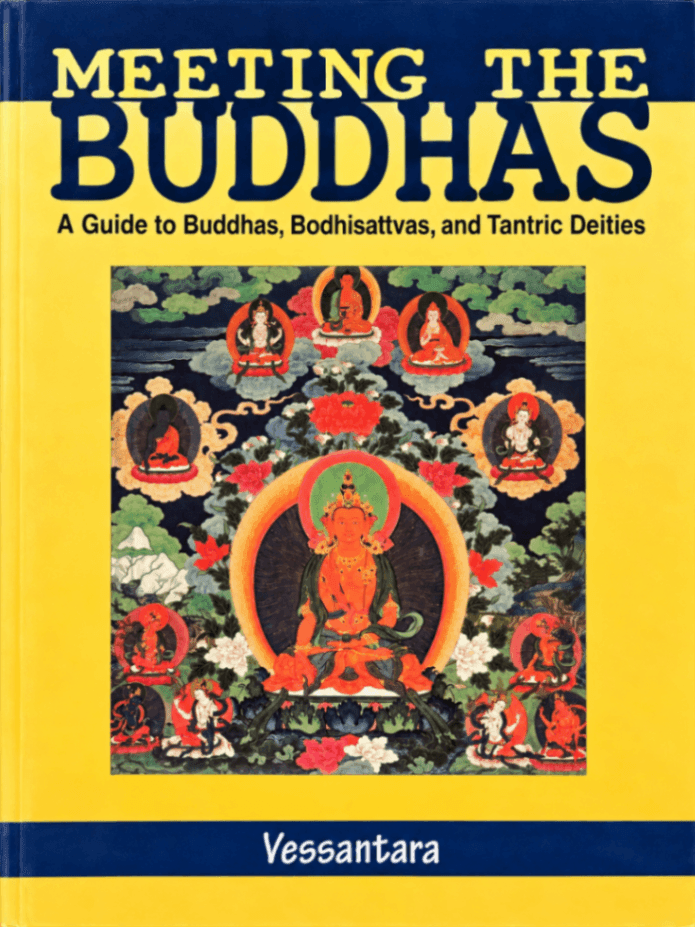
Meeting the Buddhas: A Guide to Buddhas, Bodhisattvas, and Tantric Deities
Introduction
Vessantara presents Buddhist visualization as a method for engaging with the symbolic language of Enlightenment. The book argues that Buddhas and Bodhisattvas can be understood as expressions of awakened qualities that communicate through colour, form, posture, mudra, mantra, and symbolic attributes. Through meditation on these figures, practitioners are invited to cultivate qualities such as wisdom, compassion, courage, generosity, and spiritual integration.
The opening section introduces Shakyamuni Buddha, the development of Buddhist visualization, the benefits of visualization, and the practical foundations required for undertaking such practices.
The second major section explores the Mandala of the Five Buddhas. Akshobhya, Ratnasambhava, Amitabha, Amoghasiddhi, and Vairocana are each associated with specific colours, directions, symbols, wisdoms, mental poisons, families, and aspects of Buddhist practice. The correlation tables on printed pages 54–55 present this symbolic system in a particularly clear and structured form.
The later parts of the book turn to major Bodhisattvas and Tantric figures, including Avalokiteshvara, Manjushri, Vajrapani, Green Tara, White Tara, Prajnaparamita, Vajrasattva, and various protective deities. The author repeatedly emphasizes that these figures represent transformative spiritual qualities such as compassion, wisdom, fearlessness, purity, generosity, and enlightened activity. The book therefore functions both as an introduction to Buddhist iconography and as a practical guide to the symbolic and meditative world of Mahayana and Vajrayana Buddhism.
Table of Contents — Main Headings:
Part One — Meeting the Buddha
The Fountainhead of Buddhism
The Development of Buddhist Visualization
The Benefits of Visualization
Taking Up the Practice of Visualization
Part Two — The Mandala of the Five Buddhas
5. Entering the Mandala
6. Touching the Earth in the Eastern Realm
7. The Wish-Fulfilling Jewel in the South
8. The Red Buddha and the Mudra of Meditation
9. Crossed Thunderbolts and the Buddha of Action
10. At the Centre of the Mandala
Part Three — The Great Bodhisattvas
11. For the Sake of All That Lives
12. The Thousand Arms of Compassion
13. The Soft-Voiced Prince and the Flaming Sword
14. Vajrapani—The Path of Heroic Transformation
15. Green Tara—The Quick Way to Wisdom
16. White Tara—Cheating Death
17. The Eight Great Bodhisattvas
Part Four — Tantra and Tantric Deities
18. The Tantric Vision
19. Prajnaparamita—The Book That Became a Goddess
20. Vajrasattva—Prince of Purity
21. The Esoteric Buddhas and the Lotus-Born Guru
22. The Oath-Bound Deities
23. Dancing in the Sky
24. The Dark Armies of the Dharma
25. The Refuge Tree and Its Future Growth
Copyright Notice
This material is provided solely for academic research, study, and religious practice purposes under Article 25 of Vietnam's Intellectual Property Law. Reproduction, distribution, or commercial use is strictly prohibited.
If you are the author, translator, publisher, or rights holder and believe this content has been posted without proper authorization, please contact us and we will promptly review and remove or restrict access.
Documents
Meeting the Buddhas: A Guide to Buddhas, Bodhisattvas, and Tantric Deities
103.0 MB
Keywords
Sách đọc nhiều nhất
The Buddha’s Ancient Path
Piyadassi Thera
The Questions of King Milinda, Part II
F. Max Müller (Editor)

A Taste of Freedom
Venerable Ajahn Chah / Phra Bodhinyana Thera

Buddhist Meditation: An Anthology of Texts from the Pāli Canon
Sarah Shaw (General Editors: Charles S. Prebish and Damien Keown)