
English
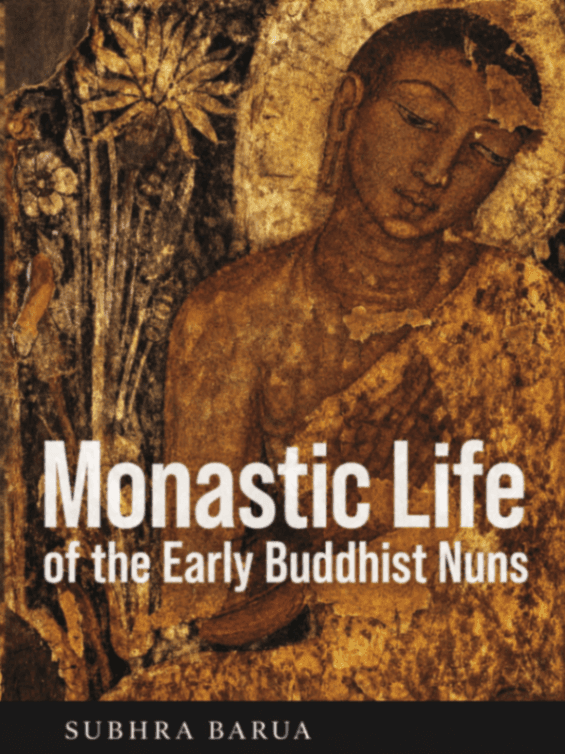
Monastic Life of the Early Buddhist Nuns
Subhra Barua
English
Book
Atisha Memorial Publishing Society
1997
264 pages
139.6 MB
Introduction
The book begins by surveying women recluses before the rise of Buddhism. It discusses female seers, philosophers, teachers, and ascetics represented in early Indian literature, including figures such as Maitreyī, Gārgī, Sulabhā, and the women composers of Vedic hymns. This historical background demonstrates that traditions of female learning, religious inquiry, celibacy, and renunciation existed before the Buddhist period, although women’s social and religious opportunities changed considerably over time.
The central analysis then turns to the formation of the Buddhist monastic community and the admission of women into the Saṅgha. It examines how Buddhist women overcame social and institutional barriers, entered monastic life from different social classes, and claimed equality with men in the attainment of spiritual emancipation. The study integrates institutional history, Vinaya analysis, biography, and literary evidence to present the Bhikkhunī Saṅgha as a major force in the religious and cultural history of Buddhism.
Copyright Notice
This material is provided solely for academic research, study, and religious practice purposes under Article 25 of Vietnam's Intellectual Property Law. Reproduction, distribution, or commercial use is strictly prohibited.
If you are the author, translator, publisher, or rights holder and believe this content has been posted without proper authorization, please contact us and we will promptly review and remove or restrict access.
Documents
Monastic Life of the Early Buddhist Nuns
139.6 MB
Keywords
Bhikkhunī SaṅghaBuddhist nunsfemale renunciationBhikkhunī PātimokkhaTherīgāthāSaṅghamittāBuddhist monasticismEquality.
Sách đọc nhiều nhất

The Buddha’s Ancient Path
Piyadassi Thera
Book·10.7 MB
229 pages1979223
The Questions of King Milinda, Part II
F. Max Müller (Editor)
Book·20.8 MB
427 pages1894208

A Taste of Freedom
Venerable Ajahn Chah / Phra Bodhinyana Thera
Book·1.2 MB
104 pages1980207
Buddhist Meditation: An Anthology of Texts from the Pāli Canon
Sarah Shaw (General Editors: Charles S. Prebish and Damien Keown)
Book·17.5 MB
253 pages2006204