English
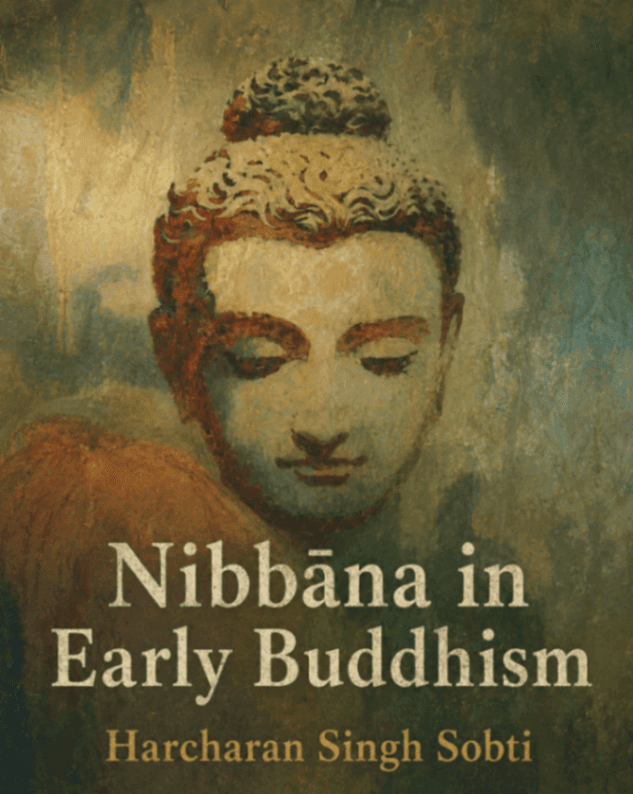
Nibbāna in Early Buddhism: Based on Pāli Sources
Harcharan Singh Sobti
English
Book
Eastern Book Linkers, Delhi, India
1985
102 pages
56.1 MB
Introduction
The book is organized around six core chapters. The first chapter examines dukkha, including its meaning, domain, and the question of whether Buddhism should be interpreted pessimistically. The second chapter introduces Nibbāna by discussing its Buddhist meaning, its relation to the cessation of saṃsāra, the five nīvaraṇas, the purification of the khandhas, and Nibbāna as a state of bliss. The third chapter turns to sīla as the first step of the path, explaining its meaning, its role as the foundation of the holy life, the precepts, its varieties, and its fruits. The fourth chapter studies samādhi through its definition, varieties, meditation objects, impediments, the role of the kalyāṇamitta, temperament-based practice, suitable places for meditation, rūpa-samādhi, arūpa-samādhi, and supernormal attainments. The fifth chapter analyzes paññā, including its substance, classification, proper foundation, paṭicca-samuppāda, and stages of purification. The sixth chapter returns to Nibbāna in greater doctrinal depth, discussing its stages, realization, relation to the laity, unity, negative and positive descriptions, indescribability, attributes, and the distinction between sa-upādisesa and anupādisesa Nibbāna.
Copyright Notice
This material is provided solely for academic research, study, and religious practice purposes under Article 25 of Vietnam's Intellectual Property Law. Reproduction, distribution, or commercial use is strictly prohibited.
If you are the author, translator, publisher, or rights holder and believe this content has been posted without proper authorization, please contact us and we will promptly review and remove or restrict access.
Documents
Nibbāna in Early Buddhism: Based on Pāli Sources
56.1 MB
Keywords
NibbānaEarly BuddhismPāli sourcesDukkhaSīlaSamādhiPaññā.
Sách đọc nhiều nhất
The Buddha’s Ancient Path
Piyadassi Thera
Book·10.7 MB
229 pages1979223
The Questions of King Milinda, Part II
F. Max Müller (Editor)
Book·20.8 MB
427 pages1894208

A Taste of Freedom
Venerable Ajahn Chah / Phra Bodhinyana Thera
Book·1.2 MB
104 pages1980207
Buddhist Meditation: An Anthology of Texts from the Pāli Canon
Sarah Shaw (General Editors: Charles S. Prebish and Damien Keown)
Book·17.5 MB
253 pages2006204