English
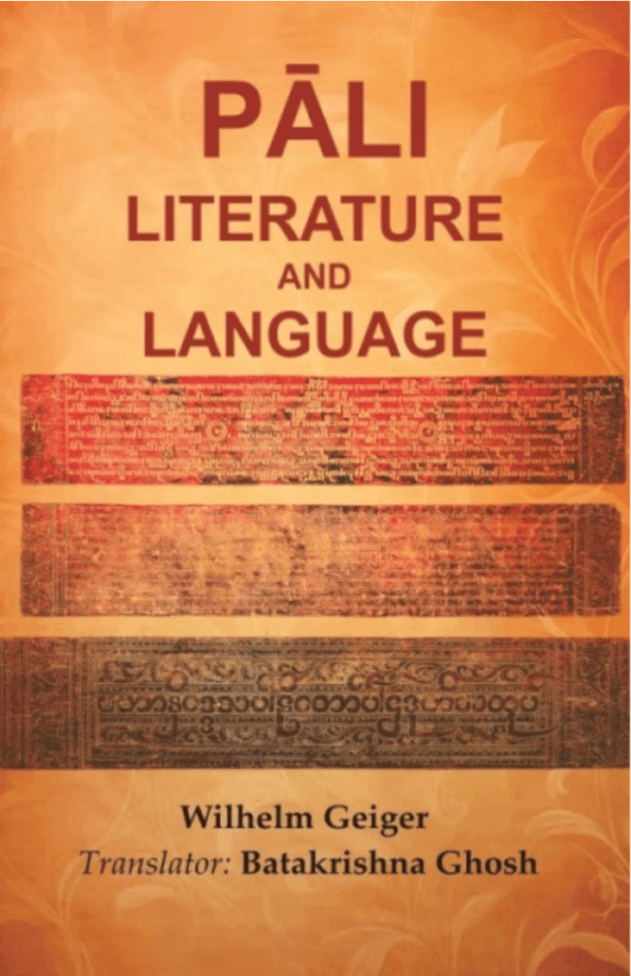
Pāli Literature and Language
Wilhelm Geiger;
English
Book
Oriental Books Reprint Corporation, New Delhi
1978
135 pages
10.3 MB
Introduction
The work is divided into two principal parts. The opening section explains the nature of Pāli, including its linguistic strata, its status as an artificial literary language, its probable place of origin, and the question of whether it should be connected with Māgadhī.
Part I: Pāli Literature surveys the canonical and non-canonical traditions. The canonical section discusses the origin and authenticity of the canon, its classification, the Vinaya Piṭaka, Sutta Piṭaka, Nikāyas, Khuddaka texts, Abhidhamma Piṭaka, individual works, and the Paritta collection. The non-canonical section treats post-canonical literature from the completion of the canon to later periods, including commentaries, chronicles, poetic works, grammatical writings, and later literary productions.
Part II: Grammar of Pāli gives a systematic linguistic analysis of the language. It covers phonology, accent, mora, vowels, diphthongs, consonantal changes, sandhi, nominal and adjectival forms, declension, pronouns, numerals, verbal conjugation, aorist, passive, causative, desiderative, intensive and denominative formations, participles, infinitives, and gerunds.
Copyright Notice
This material is provided solely for academic research, study, and religious practice purposes under Article 25 of Vietnam's Intellectual Property Law. Reproduction, distribution, or commercial use is strictly prohibited.
If you are the author, translator, publisher, or rights holder and believe this content has been posted without proper authorization, please contact us and we will promptly review and remove or restrict access.
Documents
Pāli Literature and Language
10.3 MB
Keywords
Pāli literaturePāli grammarTipiṭakaMiddle Indo-AryanBuddhist canonTheravāda textsPāli philology.
Sách đọc nhiều nhất
The Buddha’s Ancient Path
Piyadassi Thera
Book·10.7 MB
229 pages1979223
The Questions of King Milinda, Part II
F. Max Müller (Editor)
Book·20.8 MB
427 pages1894208
A Taste of Freedom
Venerable Ajahn Chah / Phra Bodhinyana Thera
Book·1.2 MB
104 pages1980207
Buddhist Meditation: An Anthology of Texts from the Pāli Canon
Sarah Shaw (General Editors: Charles S. Prebish and Damien Keown)
Book·17.5 MB
253 pages2006204