English
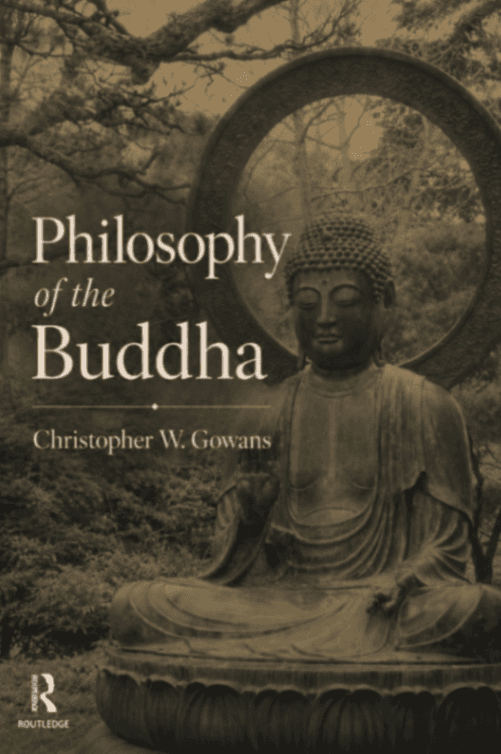
Philosophy of the Buddha
Christopher W. Gowans
English
Book
Routledge, London and New York
2003
227 pages
19.7 MB
Introduction
The book is organized into four major parts. Part One, “The Buddha’s teaching as a philosophy,” frames the Buddha’s teaching as a legitimate subject of philosophical analysis, introduces the historical life of the Buddha, summarizes the core teaching, and distinguishes its practical and theoretical dimensions. Part Two, “The not-self doctrine,” develops a sustained analysis of anattā by interpreting the denial of a substance-self, examining whether persons should be understood as substance-selves or process-selves, and addressing how kamma and rebirth can be understood without a permanent self. Part Three, “The nature, origin, and cessation of suffering,” focuses on dukkha, craving, the cessation of suffering, and the meanings of Nibbāna both in life and after death. Part Four, “The way to the cessation of suffering,” explains the Noble Eightfold Path through the threefold framework of wisdom, virtue, and concentration, concluding with the Buddha’s invitation to live selflessly. Across these parts, Gowans presents early Buddhist philosophy as a disciplined inquiry into reality, moral transformation, and liberation.
Copyright Notice
This material is provided solely for academic research, study, and religious practice purposes under Article 25 of Vietnam's Intellectual Property Law. Reproduction, distribution, or commercial use is strictly prohibited.
If you are the author, translator, publisher, or rights holder and believe this content has been posted without proper authorization, please contact us and we will promptly review and remove or restrict access.
Documents
Philosophy of the Buddha
19.7 MB
Keywords
Buddhist philosophyFour Noble TruthsEightfold Pathnot-selfkammarebirthNibbāna.
Sách đọc nhiều nhất
The Buddha’s Ancient Path
Piyadassi Thera
Book·10.7 MB
229 pages1979223
The Questions of King Milinda, Part II
F. Max Müller (Editor)
Book·20.8 MB
427 pages1894208

A Taste of Freedom
Venerable Ajahn Chah / Phra Bodhinyana Thera
Book·1.2 MB
104 pages1980207
Buddhist Meditation: An Anthology of Texts from the Pāli Canon
Sarah Shaw (General Editors: Charles S. Prebish and Damien Keown)
Book·17.5 MB
253 pages2006204