English
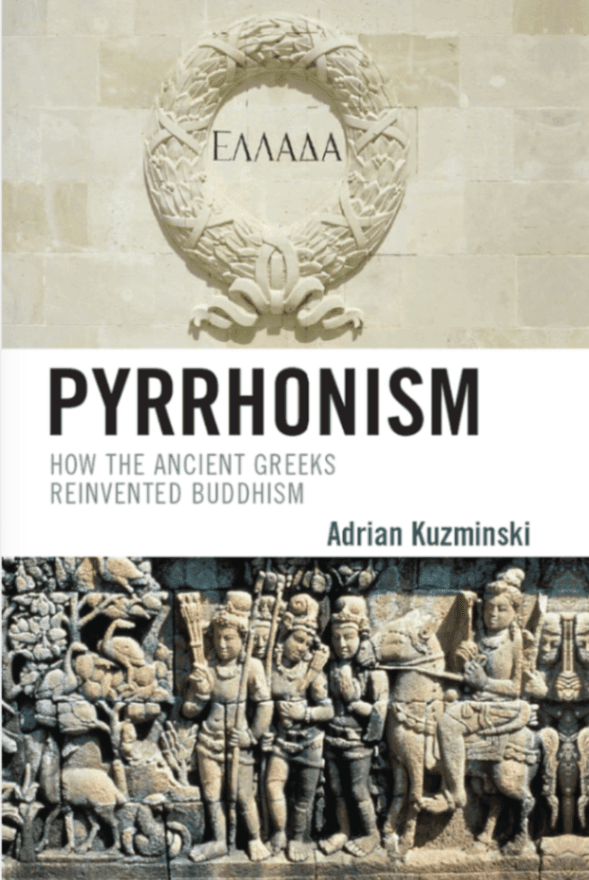
Pyrrhonism: How the Ancient Greeks Reinvented Buddhism
Adrian Kuzminski
English
Book
Lexington Books
2008
173 pages
1.9 MB
Introduction
The book is organized into four chapters. Chapter 1, “Why Pyrrhonism is Not Scepticism,” distinguishes Pyrrhonism from Academic scepticism and presents it as a way of life rather than a negative doctrine. Chapter 2, “Pyrrhonism and Buddhism,” compares Pyrrhonian suspension of judgment with Buddhist and especially Madhyamaka approaches to nonattachment, emptiness, and liberation from suffering. Chapter 3, “The Evident and the Nonevident,” analyzes Pyrrhonian epistemology, focusing on appearances, direct experience, and the limits of belief. Chapter 4, “Modern Pyrrhonism,” examines later resonances of Pyrrhonian insight, especially in modern philosophy and Wittgensteinian approaches.
Copyright Notice
This material is provided solely for academic research, study, and religious practice purposes under Article 25 of Vietnam's Intellectual Property Law. Reproduction, distribution, or commercial use is strictly prohibited.
If you are the author, translator, publisher, or rights holder and believe this content has been posted without proper authorization, please contact us and we will promptly review and remove or restrict access.
Documents
Pyrrhonism: How the Ancient Greeks Reinvented Buddhism
1.9 MB
Keywords
PyrrhonismAdrian KuzminskiBuddhism and Greek philosophyMadhyamakaNāgārjunaPyrrho of ElisScepticismSuspension of judgmentAtaraxiaThe evident and nonevidentComparative philosophyWittgensteinAlexander the GreatBuddhist philosophy.
Sách đọc nhiều nhất
The Buddha’s Ancient Path
Piyadassi Thera
Book·10.7 MB
229 pages1979223
The Questions of King Milinda, Part II
F. Max Müller (Editor)
Book·20.8 MB
427 pages1894208

A Taste of Freedom
Venerable Ajahn Chah / Phra Bodhinyana Thera
Book·1.2 MB
104 pages1980207
Buddhist Meditation: An Anthology of Texts from the Pāli Canon
Sarah Shaw (General Editors: Charles S. Prebish and Damien Keown)
Book·17.5 MB
253 pages2006204