English
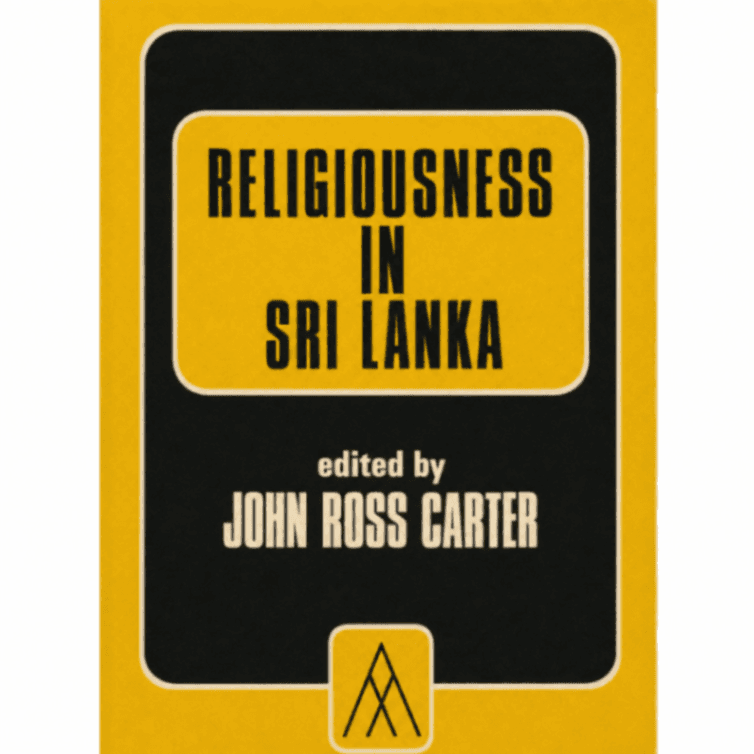
Religiousness in Sri Lanka
Edited by John Ross Carter
English
Book
Marga Institute
1979
273 pages
58.2 MB
Introduction
The book is structured as a multi-tradition study of Sri Lankan religious life. It opens with John Ross Carter’s framing of Sri Lanka as a religiously plural society shaped by Buddhist, Hindu, Islamic, and Christian traditions, then proceeds through major essays on Buddhist belief and practice, pilgrimage into Dharma as Buddhist religiousness, literature in Buddhist religious life, the significance of the Saṅgha for laypeople, “reaching out” as an expression of renunciation, the need to review and refine Theravāda interpretation, and the place of Dhamma in contemporary and future Sri Lankan society. The volume then turns to Hindu religious and social change, Śaiva village religiousness, Muslim belief and practice, Muslim ritual practices in manifestation and meaning, Catholic presence through history, belief, and faith, and Christian community within communities. Overall, the work presents religiousness as an integrated field of doctrine, ritual, ethical orientation, communal identity, education, cultural memory, and interreligious coexistence in Sri Lanka.
Copyright Notice
This material is provided solely for academic research, study, and religious practice purposes under Article 25 of Vietnam's Intellectual Property Law. Reproduction, distribution, or commercial use is strictly prohibited.
If you are the author, translator, publisher, or rights holder and believe this content has been posted without proper authorization, please contact us and we will promptly review and remove or restrict access.
Documents
Religiousness in Sri Lanka
58.2 MB
Keywords
ReligiousnessSri LankaJohn Ross CarterBuddhist PracticeTheravāda BuddhismInterreligious StudiesReligious Pluralism.
Sách đọc nhiều nhất
The Buddha’s Ancient Path
Piyadassi Thera
Book·10.7 MB
229 pages1979223
The Questions of King Milinda, Part II
F. Max Müller (Editor)
Book·20.8 MB
427 pages1894208

A Taste of Freedom
Venerable Ajahn Chah / Phra Bodhinyana Thera
Book·1.2 MB
104 pages1980207
Buddhist Meditation: An Anthology of Texts from the Pāli Canon
Sarah Shaw (General Editors: Charles S. Prebish and Damien Keown)
Book·17.5 MB
253 pages2006204