English
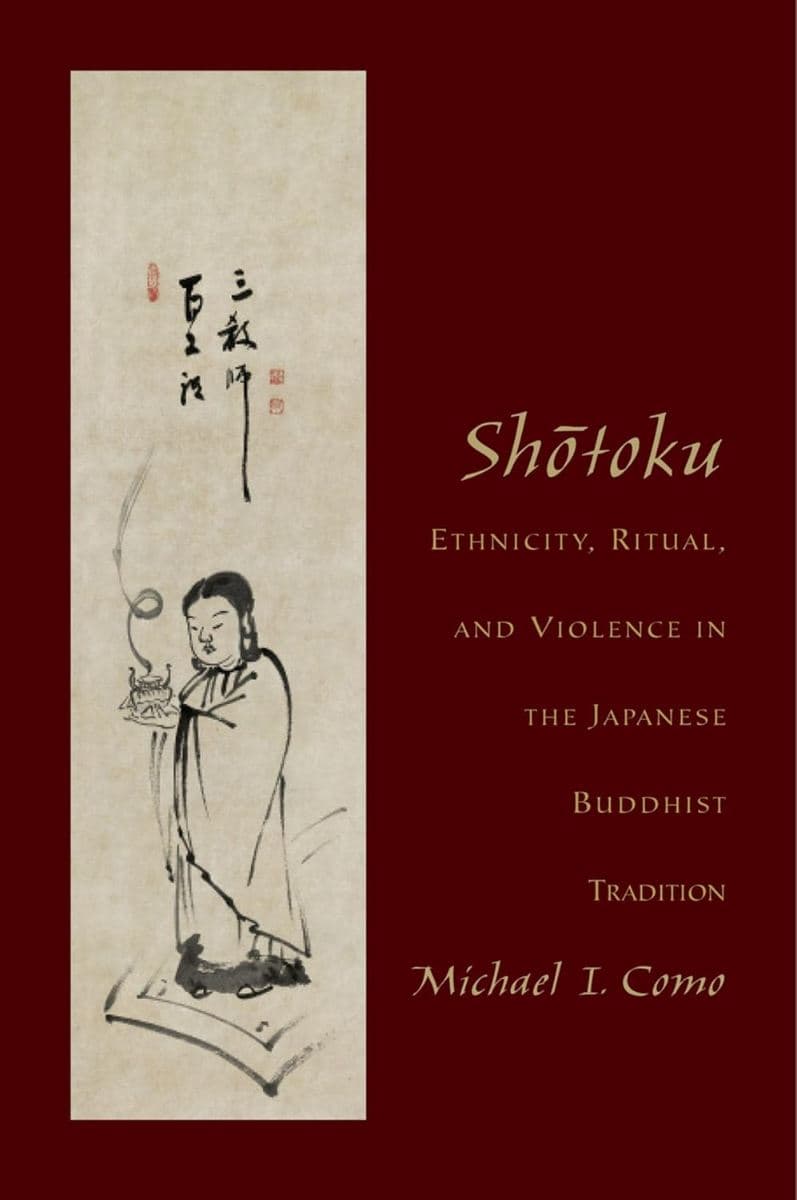
Shōtoku: Ethnicity, Ritual, and Violence in the Japanese Buddhist Tradition
Michael I. Como
English
Book
Oxford University Press
2008
254 pages
3.2 MB
Introduction
The book investigates the making of the Shōtoku cult as a major case study in the formation of Japanese Buddhism and early Japanese cultural identity. Como argues that the legendary image of Shōtoku as founder of Japanese Buddhism, sage ruler, Dharma king, and cultural hero was not simply inherited from the life of a historical prince, but was constructed through ritual, textual, political, and ethnic processes after his death. The chapters examine the founding legend of Japanese Buddhism, Pure Land and millennial expectations, ancestral and royal cults, the politics of literacy, rites of violence and purification, the relationship between Shōtoku and Gyōki, and the later adoption of Shōtoku by Nara and early Heian Buddhist institutions. Through this structure, the book presents Shōtoku as a strategic religious symbol through which immigrant kinship groups, Buddhist institutions, and the Yamato court negotiated authority, legitimacy, memory, and identity in early Japan.
Copyright Notice
This material is provided solely for academic research, study, and religious practice purposes under Article 25 of Vietnam's Intellectual Property Law. Reproduction, distribution, or commercial use is strictly prohibited.
If you are the author, translator, publisher, or rights holder and believe this content has been posted without proper authorization, please contact us and we will promptly review and remove or restrict access.
Documents
Shōtoku: Ethnicity, Ritual, and Violence in the Japanese Buddhist Tradition
3.2 MB
Keywords
ShōtokuJapanese Buddhismethnicityritualviolenceimmigrant kinship groupsSillaShitennōjiroyal cultearly Japan.
Sách đọc nhiều nhất
The Buddha’s Ancient Path
Piyadassi Thera
Book·10.7 MB
229 pages1979223
The Questions of King Milinda, Part II
F. Max Müller (Editor)
Book·20.8 MB
427 pages1894208

A Taste of Freedom
Venerable Ajahn Chah / Phra Bodhinyana Thera
Book·1.2 MB
104 pages1980207
Buddhist Meditation: An Anthology of Texts from the Pāli Canon
Sarah Shaw (General Editors: Charles S. Prebish and Damien Keown)
Book·17.5 MB
253 pages2006204