
English
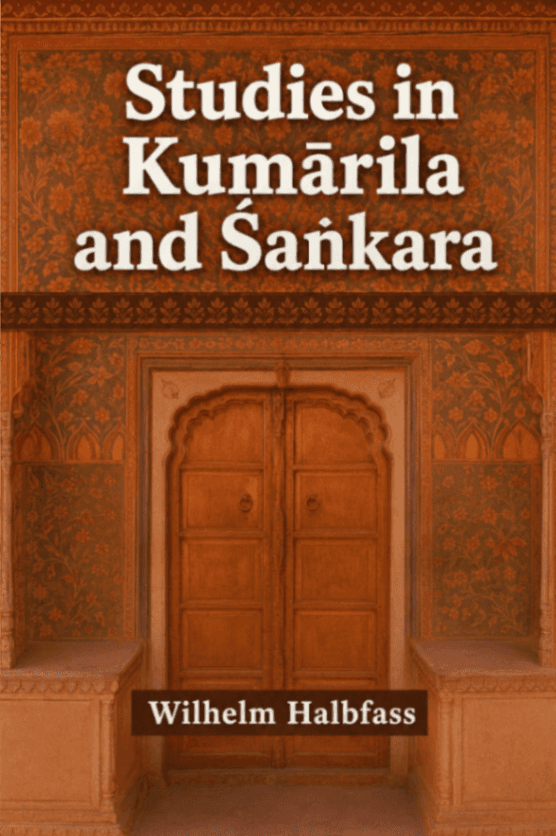
Studies in Kumārila and Śaṅkara
Wilhelm Halbfass
English
Book
Verlag für Orientalistische Fachpublikationen
1983
135 pages
3.9 MB
Introduction
The book is organized around three core studies. “Kumārila on Ahiṃsā and Dharma” investigates the tension between non-violence and Vedic ritual obligation, with particular attention to sacrificial violence, Buddhist and Jaina critiques, and Kumārila’s insistence that dharma cannot be reduced to a universal moral rule. “Human Reason and Vedic Revelation in the Philosophy of Śaṅkara” examines how Śaṅkara establishes the authority of the Upaniṣads while still granting reason a disciplined role in clarification, refutation, and doctrinal defense. “Śaṅkara and Kumārila on the Plurality of Religious Traditions” analyzes the intellectual strategies by which classical Hindu thinkers respond to religious diversity, including the limits of tolerance, inclusivism, orthodoxy, and the status of non-Vedic traditions. Together, these studies present Kumārila and Śaṅkara not simply as isolated philosophers, but as two complementary figures through whom the structure, resilience, and ambiguity of Hindu orthodoxy become philosophically visible.
Copyright Notice
This material is provided solely for academic research, study, and religious practice purposes under Article 25 of Vietnam's Intellectual Property Law. Reproduction, distribution, or commercial use is strictly prohibited.
If you are the author, translator, publisher, or rights holder and believe this content has been posted without proper authorization, please contact us and we will promptly review and remove or restrict access.
Documents
Studies in Kumārila and Śaṅkara
3.9 MB
Keywords
Indian PhilosophyVedic RevelationDharmaAhiṃsāPūrva-MīmāṃsāAdvaita VedāntaReligious Plurality
Sách đọc nhiều nhất
The Buddha’s Ancient Path
Piyadassi Thera
Book·10.7 MB
229 pages1979223
The Questions of King Milinda, Part II
F. Max Müller (Editor)
Book·20.8 MB
427 pages1894208

A Taste of Freedom
Venerable Ajahn Chah / Phra Bodhinyana Thera
Book·1.2 MB
104 pages1980207
Buddhist Meditation: An Anthology of Texts from the Pāli Canon
Sarah Shaw (General Editors: Charles S. Prebish and Damien Keown)
Book·17.5 MB
253 pages2006204