English
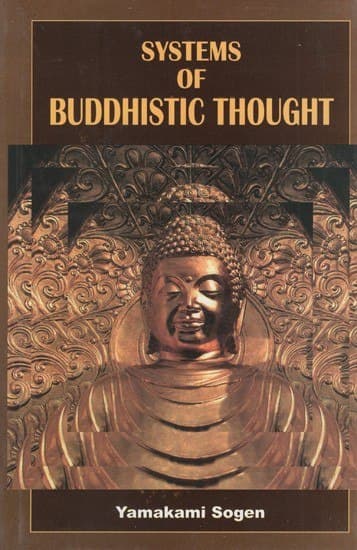
Systems of Buddhistic Thought
S. Yamakami
English
Book
Calcutta University Press
1912
383 pages
11.1 MB
Introduction
The book first lays out several strategic classifications of Buddhism, including the distinction between Mahāyāna and Hīnayāna, the “difficult path” and “easy path,” and the doctrinal divisions grounded in the Buddhist canon. It then develops the core philosophical infrastructure of Buddhism through universal impermanence, anātman, nirvāṇa, and karma, showing how these principles govern ethical life, causality, rebirth, and liberation. The discussion moves into a comparative study of Buddhist schools: the Sarvāstivādins are examined through their doctrine of dharmas and causality; the Satyasiddhi school through its critique of substantialist Abhidharma tendencies; the Madhyamaka school through śūnyatā, the Middle Path, and the two truths; Yogācāra through Ālaya-vijñāna, mental functions, cognition, and the transformation of consciousness; Bhūtatathatā thought through suchness, enlightenment, ignorance, and perfuming; Tien-Tai through the three principles of emptiness, conventionality, and the Middle Path; and Avataṃsaka through the interpenetration of all phenomena within the Dharma-loka. The work closes by emphasizing Buddhist faith, ethical cultivation, and the integration of wisdom and altruistic conduct as the practical realization of Buddhist philosophy.
Copyright Notice
This material is provided solely for academic research, study, and religious practice purposes under Article 25 of Vietnam's Intellectual Property Law. Reproduction, distribution, or commercial use is strictly prohibited.
If you are the author, translator, publisher, or rights holder and believe this content has been posted without proper authorization, please contact us and we will promptly review and remove or restrict access.
Documents
Systems of Buddhistic Thought
11.1 MB
Keywords
Buddhist philosophyMahāyānaHīnayānaKarmaSarvāstivādaMadhyamakaYogācāra.
Sách đọc nhiều nhất
The Buddha’s Ancient Path
Piyadassi Thera
Book·10.7 MB
229 pages1979223
The Questions of King Milinda, Part II
F. Max Müller (Editor)
Book·20.8 MB
427 pages1894208

A Taste of Freedom
Venerable Ajahn Chah / Phra Bodhinyana Thera
Book·1.2 MB
104 pages1980207
Buddhist Meditation: An Anthology of Texts from the Pāli Canon
Sarah Shaw (General Editors: Charles S. Prebish and Damien Keown)
Book·17.5 MB
253 pages2006204