English
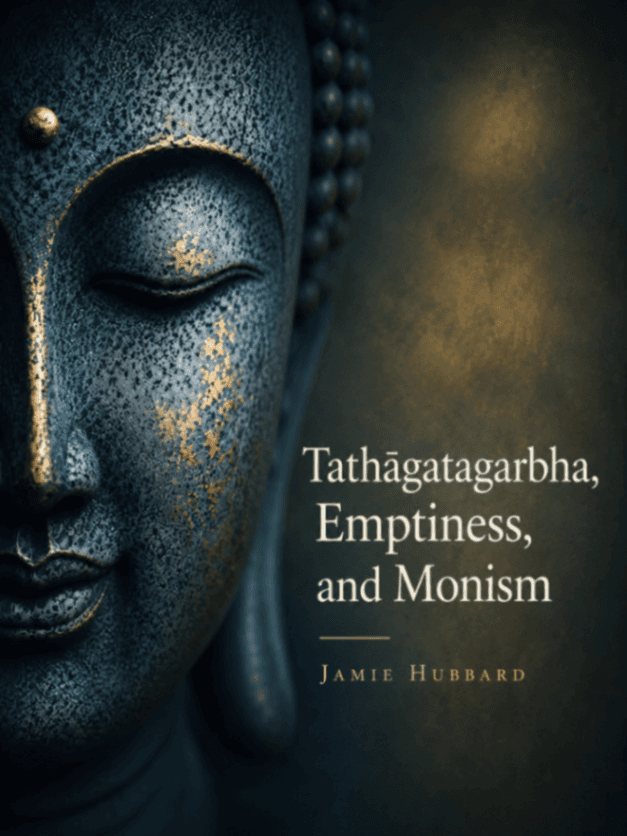
Tathāgatagarbha, Emptiness, and Monism
Jamie Hubbard
English
Article
2009
23 pages
223 KB
Introduction
The article begins by situating tathāgatagarbha as a major Buddhist doctrine that raises fundamental questions about the nature of the Buddhist absolute, the meaning of emptiness, and the boundary between Buddhist thought and substantialist metaphysics. Hubbard first reviews interpretations by scholars such as Yamaguchi Susumu, Ogawa Ichijō, Takasaki Jikidō, Obermiller, Lamotte, Frauwallner, Ruegg, Nagao, Johnston, Hakamaya Noriaki, and Matsumoto Shirō. The discussion then defines different forms of monism, especially substantival monism and attributive monism, before turning to pratītyasamutpāda and śūnyatā as the doctrinal background for tathāgatagarbha. The central section analyzes the Ratnagotravibhāga, focusing on its identification of tathāgatagarbha with emptiness while also emphasizing affirmative predicates such as permanence, bliss, self, purity, and the existence of Buddha-qualities. The article concludes that tathāgatagarbha should be treated as a distinctive doctrinal development rather than merely a restatement of emptiness, and that its positive language creates important philosophical and ethical tensions within Buddhist thought.
Copyright Notice
This material is provided solely for academic research, study, and religious practice purposes under Article 25 of Vietnam's Intellectual Property Law. Reproduction, distribution, or commercial use is strictly prohibited.
If you are the author, translator, publisher, or rights holder and believe this content has been posted without proper authorization, please contact us and we will promptly review and remove or restrict access.
Documents
Tathāgatagarbha, Emptiness, and Monism
223 KB
Keywords
TathāgatagarbhaBuddha-natureŚūnyatāPratītyasamutpādaMonismRatnagotravibhāgaBuddhist Philosophy.
Sách đọc nhiều nhất
The Buddha’s Ancient Path
Piyadassi Thera
Book·10.7 MB
229 pages1979223
The Questions of King Milinda, Part II
F. Max Müller (Editor)
Book·20.8 MB
427 pages1894208
A Taste of Freedom
Venerable Ajahn Chah / Phra Bodhinyana Thera
Book·1.2 MB
104 pages1980207
Buddhist Meditation: An Anthology of Texts from the Pāli Canon
Sarah Shaw (General Editors: Charles S. Prebish and Damien Keown)
Book·17.5 MB
253 pages2006204