English
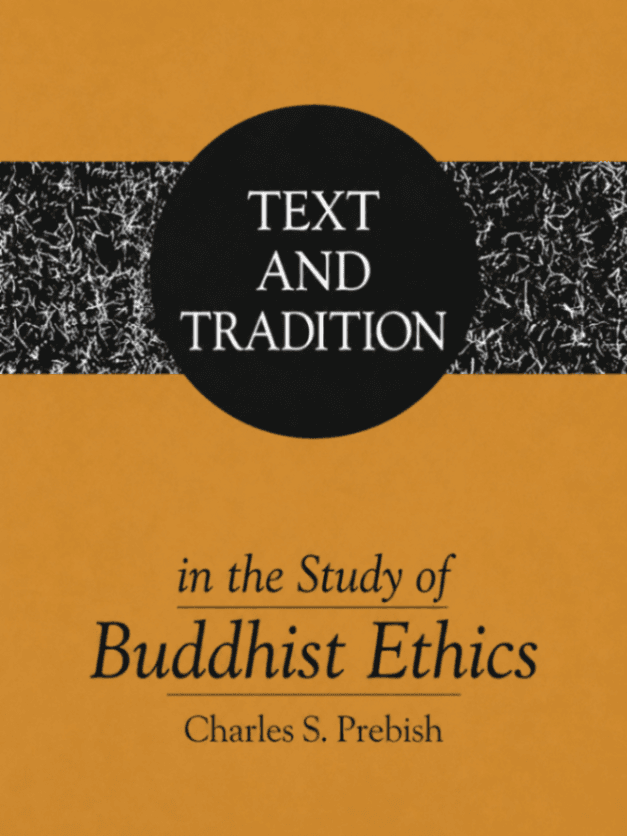
Text and Tradition in the Study of Buddhist Ethics
Charles S. Prebish
English
Journal
Pacific World, New Series, No. 9
1993
20 pages
5.3 MB
Introduction
The article begins by noting the relative neglect of Buddhist ethics in modern scholarship, mentioning major earlier works by S. Tachibana, Winston King, H. Saddhatissa, G. S. P. Misra, and Damien Keown. Prebish then analyzes the frequent scholarly confusion between Vinaya and śīla. He argues that Vinaya is primarily connected with the discipline and organization of the monastic community, whereas śīla is the more precise category for understanding Buddhist ethical life. The article next discusses the place of śīla within the Buddhist path, especially its relationship to samādhi and prajñā. Prebish rejects the idea that morality is merely a mundane or preliminary concern and shows that ethics remains integral to liberation. The discussion then surveys important textual sources for Buddhist ethics, including the Dīgha Nikāya, the Sīlakkhandhavagga, the Brahmajāla-sutta, the Sāmaññaphala-sutta, Abhidharma materials, and Mahāyāna ethical texts such as the Śikṣāsamuccaya, Bodhicaryāvatāra, Bodhisattvabhūmi, and Upāliparipṛcchā-sūtra. The article concludes by pointing toward the relevance of Buddhist ethics for contemporary socially engaged Buddhism.
Copyright Notice
This material is provided solely for academic research, study, and religious practice purposes under Article 25 of Vietnam's Intellectual Property Law. Reproduction, distribution, or commercial use is strictly prohibited.
If you are the author, translator, publisher, or rights holder and believe this content has been posted without proper authorization, please contact us and we will promptly review and remove or restrict access.
Documents
Text and Tradition in the Study of Buddhist Ethics
5.3 MB
Keywords
Buddhist EthicsŚīlaVinayaSamādhiPrajñāBodhisattva EthicsSocially Engaged Buddhism.
Sách cùng tác giả
Sách đọc nhiều nhất
The Buddha’s Ancient Path
Piyadassi Thera
Book·10.7 MB
229 pages1979223
The Questions of King Milinda, Part II
F. Max Müller (Editor)
Book·20.8 MB
427 pages1894208

A Taste of Freedom
Venerable Ajahn Chah / Phra Bodhinyana Thera
Book·1.2 MB
104 pages1980207
Buddhist Meditation: An Anthology of Texts from the Pāli Canon
Sarah Shaw (General Editors: Charles S. Prebish and Damien Keown)
Book·17.5 MB
253 pages2006204