English
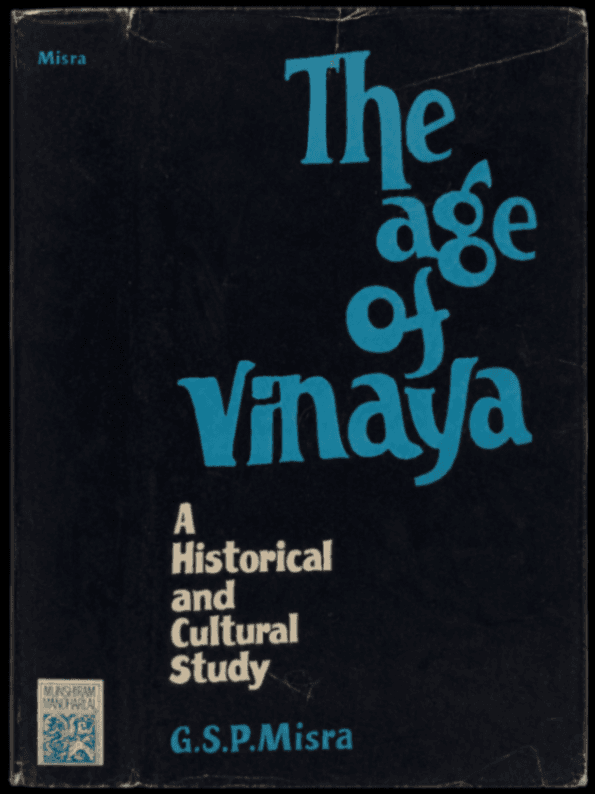
The Age of Vinaya
G. S. P. Misra
English
Book
Munshiram Manoharlal, Delhi.
1972
298 pages
60.2 MB
Introduction
The study begins by distinguishing Dhamma from Vinaya: Dhamma concerns the Buddha’s teaching and the inner spiritual development of his followers, while Vinaya regulates the external conduct and collective life of monks and nuns. Misra compares the Buddhist disciplinary system with Brahmanical and Jain ascetic traditions and identifies the distinctive corporate character of the Buddhist Saṅgha. Unlike more dispersed ascetic communities, the Buddhist Order developed an extensive body of rules covering individual behaviour, institutional offices, legal procedures, communal administration, and the circumstances surrounding the formulation of each precept.
The subsequent analysis reconstructs the first period of Buddhist history through the Vinaya record. It surveys the surviving Pāli, Sanskrit, Chinese, and Tibetan Vinaya traditions; examines the role of the first Buddhist Councils in the formation and transmission of disciplinary literature; and studies the evolution of monastic practices in relation to Buddhist doctrine. The later sections broaden the inquiry to education, social organization, political history, art, architecture, economic conditions, and material culture, thereby presenting a comprehensive account of ancient Indian civilization as reflected in Pāli Vinaya literature.
Copyright Notice
This material is provided solely for academic research, study, and religious practice purposes under Article 25 of Vietnam's Intellectual Property Law. Reproduction, distribution, or commercial use is strictly prohibited.
If you are the author, translator, publisher, or rights holder and believe this content has been posted without proper authorization, please contact us and we will promptly review and remove or restrict access.
Documents
The Age of Vinaya
60.2 MB
Keywords
Vinaya PiṭakaBuddhist monasticismearly BuddhismBuddhist Saṅghaancient Indian societymonastic disciplinematerial culture.
Sách đọc nhiều nhất
The Buddha’s Ancient Path
Piyadassi Thera
Book·10.7 MB
229 pages1979223
The Questions of King Milinda, Part II
F. Max Müller (Editor)
Book·20.8 MB
427 pages1894208

A Taste of Freedom
Venerable Ajahn Chah / Phra Bodhinyana Thera
Book·1.2 MB
104 pages1980207
Buddhist Meditation: An Anthology of Texts from the Pāli Canon
Sarah Shaw (General Editors: Charles S. Prebish and Damien Keown)
Book·17.5 MB
253 pages2006204