English
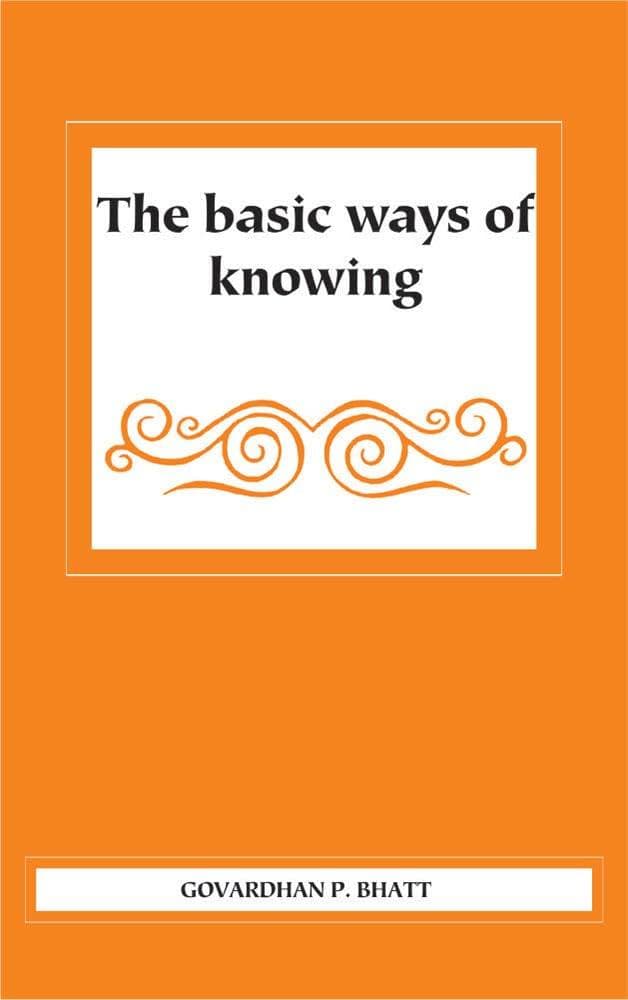
The Basic Ways of Knowing: An In-depth Study of Kumārila’s Contribution to Indian Epistemology
Govardhan P. Bhatt
English
Book
Motilal Banarsidass, Delhi
1989
466 pages
17.7 MB
Introduction
The Basic Ways of Knowing is a comprehensive study of the epistemology of Kumārila Bhaṭṭa and the Bhāṭṭa school of Pūrva-Mīmāṃsā. Govardhan P. Bhatt examines the principal means of valid knowledge accepted by this tradition and situates Kumārila’s theories within the wider philosophical debates of classical India. The work presents Mīmāṃsā not merely as a discipline of Vedic interpretation but as a sophisticated realist and empiricist system concerned with cognition, validity, language, external reality, and religious knowledge.
A central theme is the doctrine of the intrinsic validity of cognition, or svataḥ-prāmāṇya. According to Kumārila, cognition is valid through the same causal conditions that produce it, while error and invalidity arise from additional defects and are recognized subsequently. The book analyzes this position in relation to rival accounts developed by Nyāya, Buddhist epistemology, Vedānta, and other Indian schools.
The volume systematically examines the six means of knowledge accepted by the Bhāṭṭas: perception, inference, comparison, verbal testimony, postulation, and non-apprehension. It discusses Kumārila’s defence of determinate perception, his realist account of substances, qualities, universals, wholes, and external objects, and his criticisms of Buddhist momentariness, idealism, apoha, and the denial of a permanent self. Special attention is also given to arthāpatti as explanatory postulation and anupalabdhi as an independent means of knowing absence.
The treatment of verbal testimony explores the eternality of language, the permanent relation between words and meanings, the impersonality of the Veda, and the authority of scripture regarding supersensible dharma. Through detailed textual and comparative analysis, the study demonstrates Kumārila’s major contribution to Indian epistemology, philosophy of language, metaphysics, and hermeneutics.
Copyright Notice
This material is provided solely for academic research, study, and religious practice purposes under Article 25 of Vietnam's Intellectual Property Law. Reproduction, distribution, or commercial use is strictly prohibited.
If you are the author, translator, publisher, or rights holder and believe this content has been posted without proper authorization, please contact us and we will promptly review and remove or restrict access.
Documents
The Basic Ways of Knowing: An In-depth Study of Kumārila’s Contribution to Indian Epistemology
17.7 MB
Keywords
Kumārila BhaṭṭaPūrva-MīmāṃsāIndian EpistemologyPramāṇaSvataḥ-prāmāṇyaArthāpattiAnupalabdhi
Sách đọc nhiều nhất
The Buddha’s Ancient Path
Piyadassi Thera
Book·10.7 MB
229 pages1979223
The Questions of King Milinda, Part II
F. Max Müller (Editor)
Book·20.8 MB
427 pages1894208

A Taste of Freedom
Venerable Ajahn Chah / Phra Bodhinyana Thera
Book·1.2 MB
104 pages1980207
Buddhist Meditation: An Anthology of Texts from the Pāli Canon
Sarah Shaw (General Editors: Charles S. Prebish and Damien Keown)
Book·17.5 MB
253 pages2006204