English
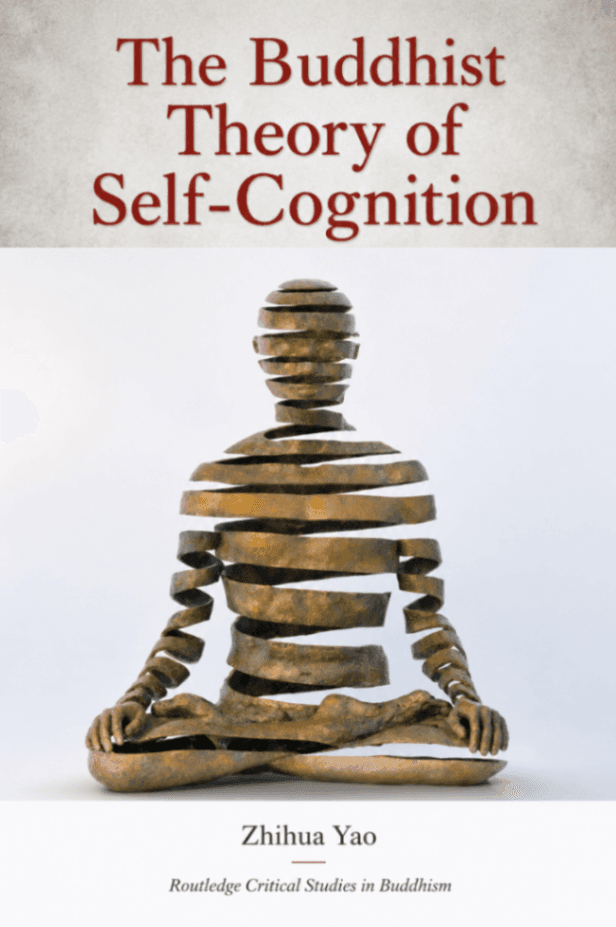
The Buddhist Theory of Self-Cognition
Zhihua Yao; edited by Charles S. Prebish and Damien Keown
English
Book
Routledge, Taylor & Francis Group
2005
190 pages
10.7 MB
Introduction
The book begins by situating self-cognition within both Buddhist epistemology and broader philosophical debates about self-consciousness. Yao explains that although self-awareness is often associated with modern Western philosophy and cognitive science, Buddhist thinkers developed sophisticated discussions of this issue through debates on mind, perception, memory, omniscience, and reflexivity. The study is organized around the historical development of the theory among four Buddhist schools. Chapter 1 introduces the problem and method. Chapter 2 traces the origin of self-cognition to Mahāsāṃghika discussions of all-knowing awareness and the Buddha’s omniscience. Chapter 3 examines Sarvāstivāda refutations of self-awareness, including debates over single-moment awareness, two minds, memory, and self-feeling. Chapter 4 presents the Sautrāntika synthesis, especially through Harivarman and later Sautrāntika arguments. Chapter 5 analyzes Yogācāra systematization, including early Yogācāra, Dignāga’s formulation, Dharmapāla’s theory of the cognition of self-cognition, and later developments. The conclusion summarizes the significance of self-cognition for Buddhist philosophy of mind.
Copyright Notice
This material is provided solely for academic research, study, and religious practice purposes under Article 25 of Vietnam's Intellectual Property Law. Reproduction, distribution, or commercial use is strictly prohibited.
If you are the author, translator, publisher, or rights holder and believe this content has been posted without proper authorization, please contact us and we will promptly review and remove or restrict access.
Documents
The Buddhist Theory of Self-Cognition
10.7 MB
Keywords
Self-CognitionSelf-AwarenessSvasaṃvedanaSvasaṃvittiBuddhist EpistemologyDignāgaYogācāra.
Sách đọc nhiều nhất
The Buddha’s Ancient Path
Piyadassi Thera
Book·10.7 MB
229 pages1979223
The Questions of King Milinda, Part II
F. Max Müller (Editor)
Book·20.8 MB
427 pages1894208

A Taste of Freedom
Venerable Ajahn Chah / Phra Bodhinyana Thera
Book·1.2 MB
104 pages1980207
Buddhist Meditation: An Anthology of Texts from the Pāli Canon
Sarah Shaw (General Editors: Charles S. Prebish and Damien Keown)
Book·17.5 MB
253 pages2006204