English
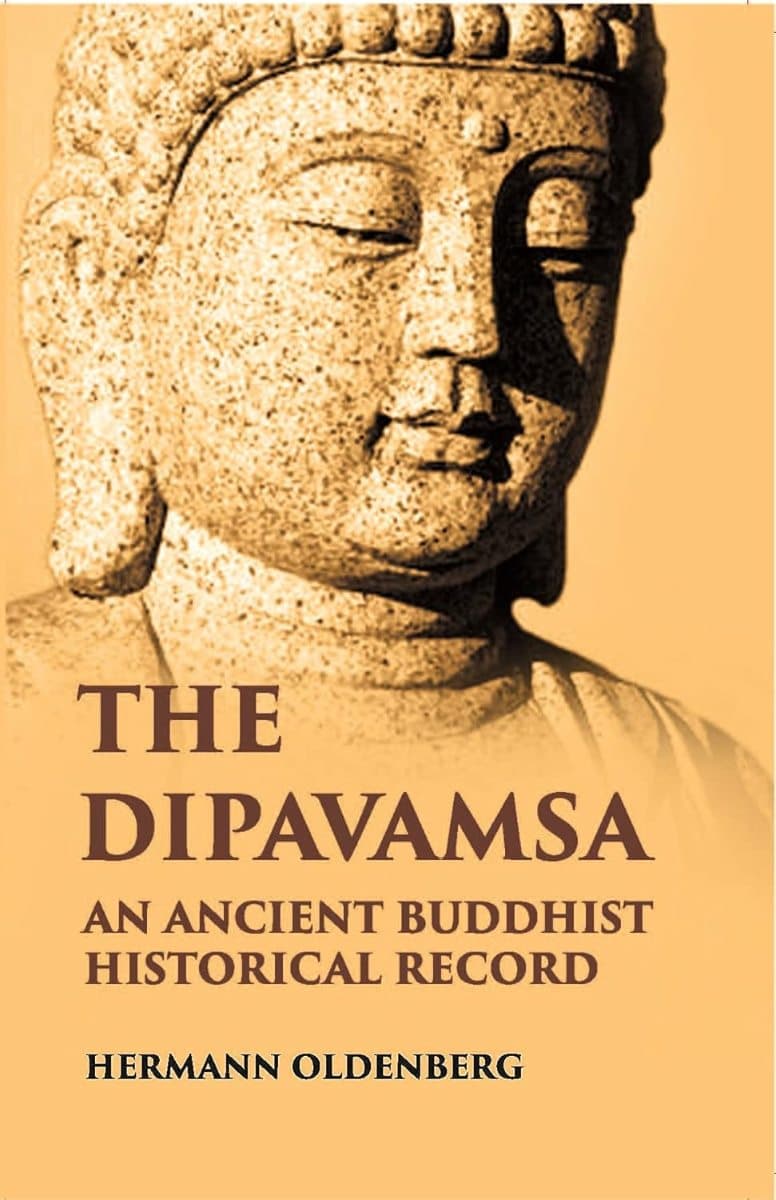
The Dīpavaṃsa: An Ancient Buddhist Historical Record
Hermann Oldenberg
English
Book
Asian Educational Services, New Delhi
1982
116 pages
39.8 MB
Introduction
The work is structured as a historical-religious chronicle in Pāli verse. It opens with accounts relating to the Buddha, sacred geography, and the symbolic importance of Laṅkā within Buddhist history. The narrative then moves through the preservation of the Buddhist teaching, the role of early councils, and the formation of monastic authority.
A major portion of the text concerns royal and monastic lineages, especially the relationship between Buddhism and political power. The chronicle presents kingship as a key mechanism for protecting the sāsana, while the Saṅgha functions as the custodian of doctrinal continuity. The missions associated with Aśoka’s reign and the arrival of Mahinda in Sri Lanka are treated as turning points in the establishment of Buddhism on the island.
The later sections focus on the development of Buddhist institutions in Ceylon, including the transmission of texts, the consolidation of the monastic community, and the religious memory of early Sri Lankan Buddhism. As a whole, the text combines sacred narrative, dynastic history, monastic genealogy, and doctrinal preservation into a foundational record of Theravāda Buddhist identity.
Copyright Notice
This material is provided solely for academic research, study, and religious practice purposes under Article 25 of Vietnam's Intellectual Property Law. Reproduction, distribution, or commercial use is strictly prohibited.
If you are the author, translator, publisher, or rights holder and believe this content has been posted without proper authorization, please contact us and we will promptly review and remove or restrict access.
Documents
The Dīpavaṃsa: An Ancient Buddhist Historical Record
39.8 MB
Sách cùng tác giả

Sách đọc nhiều nhất
The Buddha’s Ancient Path
Piyadassi Thera
Book·10.7 MB
229 pages1979223
The Questions of King Milinda, Part II
F. Max Müller (Editor)
Book·20.8 MB
427 pages1894208

A Taste of Freedom
Venerable Ajahn Chah / Phra Bodhinyana Thera
Book·1.2 MB
104 pages1980207
Buddhist Meditation: An Anthology of Texts from the Pāli Canon
Sarah Shaw (General Editors: Charles S. Prebish and Damien Keown)
Book·17.5 MB
253 pages2006204