English
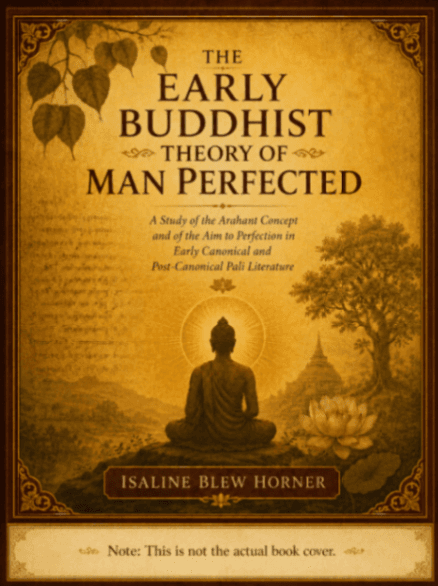
The Early Buddhist Theory of Man Perfected
Isaline Blew Horner
English
Book
Routledge & Kegan Paul Ltd., London
1936
328 pages
11.9 MB
Introduction
Chapter I. Original Sākya and Monastic Buddhism
Historical and doctrinal background of early Sākya Buddhism and monastic formation.
Chapter II. The Arahan Concept in Non-Buddhist Literature
Examination of the term and concept in non-Buddhist Indian religious contexts.
Chapter III. The Arahan Concept: Its Non-Buddhist Use in the Piṭakas
Analysis of non-Buddhist usages preserved within Pāli canonical materials.
Chapter IV. The Buddhist Concept of the Arahan in the Piṭakas
Core Buddhist definition of the arahan in early canonical sources.
Chapter V. The Arahan Concept in Post-Canonical and Mahāyānist Works
Later development and reinterpretation of the arahan ideal.
Chapter VI. The Four Ways and the Four Fruits
Study of the path structure and four stages of Buddhist attainment.
Chapter VII. Oghatiṇṇa: Flood-Crossed: An Aspect of the Arahan
Symbolic interpretation of the arahan as one who has crossed the flood of saṃsāra.
Chapter VIII. Pāra: Beyond
Analysis of “beyond” and “farther shore” imagery in relation to liberation.
Epilogue
Concluding reflections on the arahan as the model of perfected humanity.
Copyright Notice
This material is provided solely for academic research, study, and religious practice purposes under Article 25 of Vietnam's Intellectual Property Law. Reproduction, distribution, or commercial use is strictly prohibited.
If you are the author, translator, publisher, or rights holder and believe this content has been posted without proper authorization, please contact us and we will promptly review and remove or restrict access.
Documents
The Early Buddhist Theory of Man Perfected
11.9 MB
Keywords
ArahanEarly BuddhismPāli CanonMonastic BuddhismFour FruitsNibbānaBuddhist liberation.
Sách đọc nhiều nhất
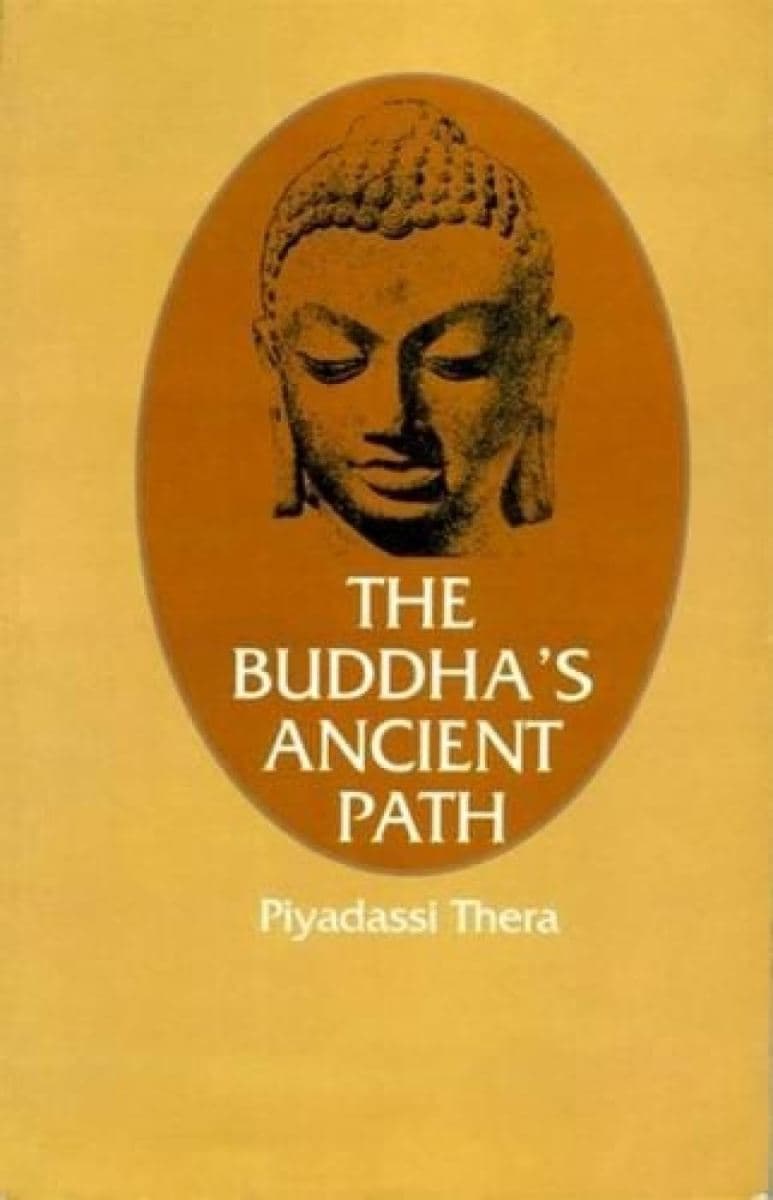
The Buddha’s Ancient Path
Piyadassi Thera
Book·10.7 MB
229 pages1979223
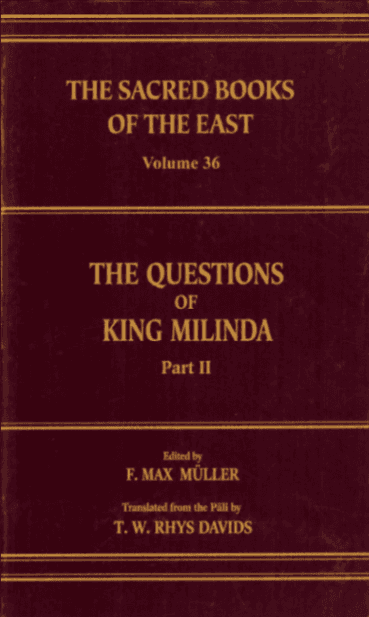
The Questions of King Milinda, Part II
F. Max Müller (Editor)
Book·20.8 MB
427 pages1894208

A Taste of Freedom
Venerable Ajahn Chah / Phra Bodhinyana Thera
Book·1.2 MB
104 pages1980207
Buddhist Meditation: An Anthology of Texts from the Pāli Canon
Sarah Shaw (General Editors: Charles S. Prebish and Damien Keown)
Book·17.5 MB
253 pages2006204