English
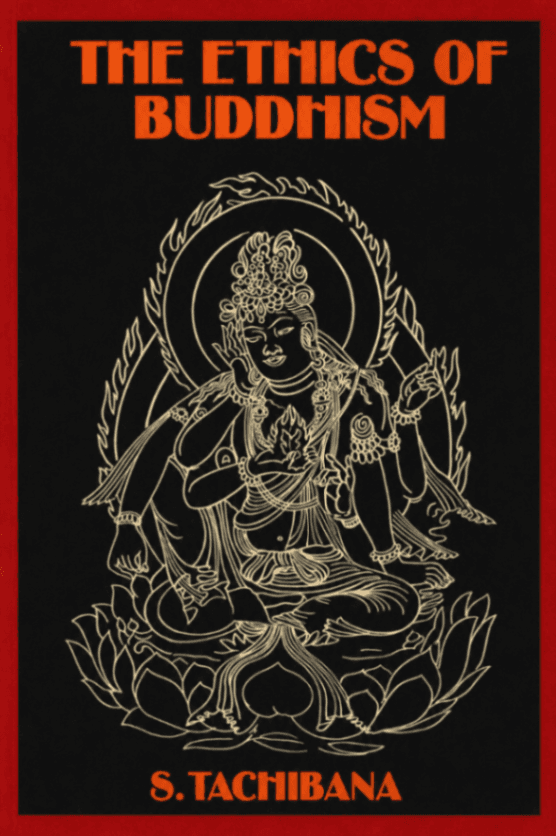
The Ethics of Buddhism
S. Tachibana
English
Book
Cosmo Publications, New Delhi
1926
302 pages
352.2 MB
Introduction
The book is divided into two major parts. Book I establishes the historical, doctrinal, and classificatory foundation of Buddhist ethics. “Introduction” compares the Buddha with other major teachers and highlights Buddhism’s moral orientation. “Short Account of the Buddha’s Life” presents the Buddha’s renunciation, enlightenment, first sermon, missionary activity, major conversions, institutional development, and final passing. “Outlines of Indian Thought previous to the Rise of Buddhism” examines Vedic gods, Brahmanical ritualism, caste, asceticism, philosophical speculation, Upaniṣadic thought, and the Buddhist shift from ceremonialism to moralism. “Classification of Buddhist Morality” arranges Buddhist moral teaching into meaningful categories, while “Characteristics of Buddhist Morality” identifies its practical, rational, universal, and discipline-oriented nature. Book II develops the ethical content through chapters on self-restraint, abstinence, temperance, contentment, patience, celibacy, chastity, purity and purification, humility, benevolence, liberality, reverence, gratitude, toleration, veracity, righteousness, and conclusion. The work also includes a bibliography and index, supporting further academic study of Buddhist moral philosophy.
Copyright Notice
This material is provided solely for academic research, study, and religious practice purposes under Article 25 of Vietnam's Intellectual Property Law. Reproduction, distribution, or commercial use is strictly prohibited.
If you are the author, translator, publisher, or rights holder and believe this content has been posted without proper authorization, please contact us and we will promptly review and remove or restrict access.
Documents
The Ethics of Buddhism
352.2 MB
Keywords
Buddhist ethicsPāli Buddhismmoralityself-restraintkarmanon-selfNoble Eightfold Path.
Sách đọc nhiều nhất
The Buddha’s Ancient Path
Piyadassi Thera
Book·10.7 MB
229 pages1979223
The Questions of King Milinda, Part II
F. Max Müller (Editor)
Book·20.8 MB
427 pages1894208

A Taste of Freedom
Venerable Ajahn Chah / Phra Bodhinyana Thera
Book·1.2 MB
104 pages1980207
Buddhist Meditation: An Anthology of Texts from the Pāli Canon
Sarah Shaw (General Editors: Charles S. Prebish and Damien Keown)
Book·17.5 MB
253 pages2006204