
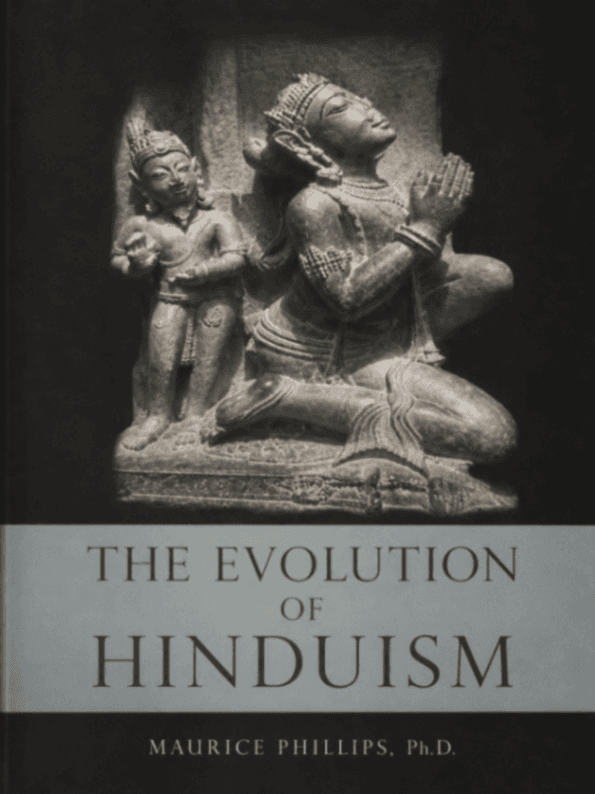
English
The Evolution of Hinduism
Maurice Phillips, Ph.D.
English
Book
M. E. Publishing House
1902
144 pages
11.4 MB
Introduction
The book begins by defining Hinduism as a later and more inclusive religious formation than Vedism. It identifies two principal forces behind its emergence: the weakening and transformation of Vedic religion, and the strategic reaction of the Brahmanical establishment. Phillips attributes this development to the internal evolution of religious ideas, interaction between Aryan and indigenous populations, the expansion of speculative philosophy, and the challenge posed by Buddhism.
The later sections present Hinduism as an “edifice” constructed from diverse theological, ritual, and philosophical elements. The author surveys the major gods and goddesses, the idea of Śakti, forms of worship, priesthood, festivals, and the principal philosophical interpretations of ultimate reality and liberation. Through this structure, the book offers a broad account of how Hinduism absorbed, reorganized, and synthesized multiple religious currents into a durable civilizational tradition.
Copyright Notice
This material is provided solely for academic research, study, and religious practice purposes under Article 25 of Vietnam's Intellectual Property Law. Reproduction, distribution, or commercial use is strictly prohibited.
If you are the author, translator, publisher, or rights holder and believe this content has been posted without proper authorization, please contact us and we will promptly review and remove or restrict access.
Documents
The Evolution of Hinduism
11.4 MB
Keywords
HinduismVedismBrahmanismreligious evolutionTrimūrtiŚaktiHindu philosophy.
Sách đọc nhiều nhất
The Buddha’s Ancient Path
Piyadassi Thera
Book·10.7 MB
229 pages1979223

The Questions of King Milinda, Part II
F. Max Müller (Editor)
Book·20.8 MB
427 pages1894208

A Taste of Freedom
Venerable Ajahn Chah / Phra Bodhinyana Thera
Book·1.2 MB
104 pages1980207

Buddhist Meditation: An Anthology of Texts from the Pāli Canon
Sarah Shaw (General Editors: Charles S. Prebish and Damien Keown)
Book·17.5 MB
253 pages2006204