English
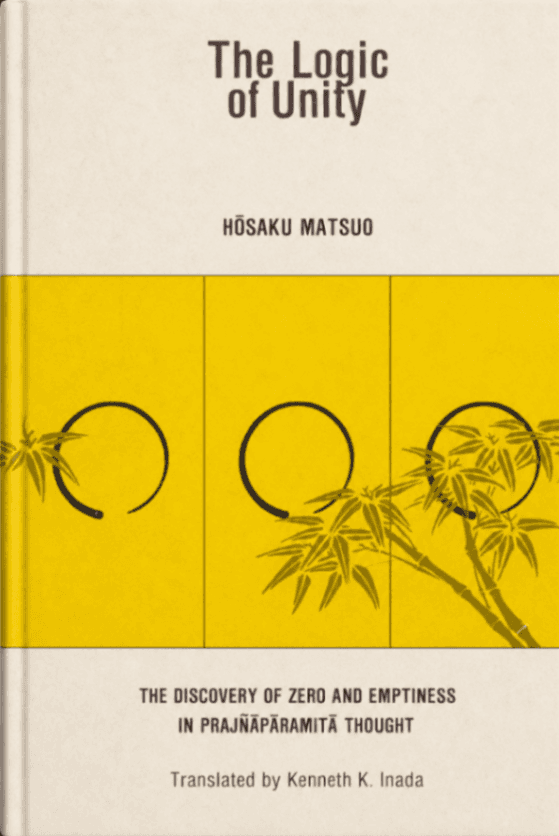
The Logic of Unity: The Discovery of Zero and Emptiness in Prajñāpāramitā Thought
Hōsaku Matsuo
English
Book
State University of New York Press, Albany
1987
162 pages
8.9 MB
Introduction
The book is organized around three main bodies of inquiry. Chapter I, “Methodology of Comparative Philosophy,” establishes the framework for Matsuo’s project by examining the mind-base, intuitive unconsciousness, East-West logic, space and time as modes of intuition, and the need for a disciplined comparative philosophy grounded in self-knowledge. Chapter II, “The Logic of Unity,” develops the book’s core thesis through the discovery of zero and emptiness in Prajñāpāramitā thought, addressing metaphysical bias, the nature of Buddhism, the “ten articles” of the logic of unity, the Kegon Ten Profound Gates, holistic consciousness, dialectical epistemology, philosophical zero, dual truths, unitary and integrative dialectic, and a Buddhist conception of life and worldview. Chapter III, “The Truth in the Heart Sūtra,” applies this logic to the Prajñāpāramitāhṛdaya Sūtra, focusing on Avalokiteśvara, emptiness, Śāriputra’s instruction, the nature of dharmas, śūnyatā, and ignorance, thereby presenting the Heart Sūtra as a compact philosophical expression of the unity of form, emptiness, consciousness, and liberation.
Copyright Notice
This material is provided solely for academic research, study, and religious practice purposes under Article 25 of Vietnam's Intellectual Property Law. Reproduction, distribution, or commercial use is strictly prohibited.
If you are the author, translator, publisher, or rights holder and believe this content has been posted without proper authorization, please contact us and we will promptly review and remove or restrict access.
Documents
The Logic of Unity: The Discovery of Zero and Emptiness in Prajñāpāramitā Thought
8.9 MB
Keywords
Buddhist philosophyPrajñāpāramitāemptinesszerocomparative philosophyHeart SūtraKegon philosophy.
Sách đọc nhiều nhất
The Buddha’s Ancient Path
Piyadassi Thera
Book·10.7 MB
229 pages1979223
The Questions of King Milinda, Part II
F. Max Müller (Editor)
Book·20.8 MB
427 pages1894208

A Taste of Freedom
Venerable Ajahn Chah / Phra Bodhinyana Thera
Book·1.2 MB
104 pages1980207
Buddhist Meditation: An Anthology of Texts from the Pāli Canon
Sarah Shaw (General Editors: Charles S. Prebish and Damien Keown)
Book·17.5 MB
253 pages2006204