
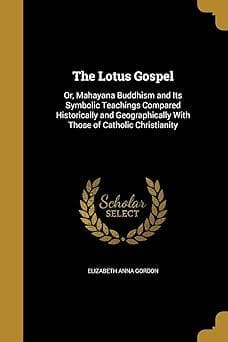
English
The Lotus Gospel; or Mahayana Buddhism and Its Symbolic Teachings: Compared Historically and Geographically with Those of Catholic Christianity
E. A. Gordon, M.J.S
English
Book
N/A
1911
384 pages
41.2 MB
Introduction
Foreword: Explains the two-part structure of the work: comparative history of the first seven centuries and allegorical teaching in East and West.
Chapter I – Influence of the Mahayana Teaching: Traces Mahayana from North-West India to China, Korea, and Japan; compares its development with early Christianity.
Chapter II – Its Influence upon Art: Discusses Buddhist art, images of Buddha, Gandhara influence, Dainichi Nyorai, and symbolic parallels with Christian art.
Chapter III – An Imperial Vision: Examines visions, Maitreya, Ming-ti, and the transmission of Buddhist imagery and doctrine into China.
Chapter IV – Fertilizing Influence of the New Race: Discusses cultural exchange, Jewish and Christian presence in Asia, and symbolic religious transmission.
Chapter V – The Pilgrimage Era: Presents pilgrimage movements, Chinese Buddhist travelers, and Christian missionary expansion.
Chapter VI – The Land of Morning Radiance, Chosen: Describes the coming of Buddhism to Korea and its civilizing and religious impact.
Chapter VII – The Coming of the Mahayana to Japan: Explains the arrival of Mahayana Buddhism in Japan through Korea.
Chapter VIII – Glad Tidings of Great Joy: Discusses early Japanese reception of Buddhist images, sutras, and ritual culture.
Chapter IX – An Imperial Apostle and a Notable Epoch: Focuses on royal and imperial patronage of Buddhism and the consolidation of Buddhist institutions.
Chapter X – The Excellent Rules of Antiquity: Presents moral, institutional, and symbolic frameworks associated with ancient religious discipline.
Chapter XI – Two Wonderful Centuries: Covers a major period of religious and cultural development.
Chapter XII – Ibid: Continues the discussion of the same historical period and its religious significance.
Chapter XIII – Kobo Daishi: Examines Kobo Daishi, Shingon Buddhism, esoteric transmission, and Japanese religious symbolism.
Chapter XIV – Allegorical Teaching: Begins the interpretive section on Buddhist and Christian symbols.
Chapter XV – Allegorical Teaching continued: Continues symbolic and doctrinal comparison.
Chapter XVI – “The Unseen Friend”: Discusses devotional and spiritual symbolism related to unseen divine or salvific presence.
Chapter XVII – “The Great Physician”: Interprets healing, salvation, and compassionate religious imagery.
Chapter XVIII – The Emerald Buddha: Examines Buddhist sacred imagery and symbolic meaning.
Chapter XIX – The Mount of Purification: Discusses mountain symbolism, purification, ascent, and spiritual transformation.
Chapter XX – Signs, Symbols, Numbers: Analyzes religious signs, numerical symbolism, and sacred forms.
Chapter XXI – “The Sign of All The Nyorais”: Concludes with symbolic interpretation of Nyorai imagery and related doctrinal meanings.
Copyright Notice
This material is provided solely for academic research, study, and religious practice purposes under Article 25 of Vietnam's Intellectual Property Law. Reproduction, distribution, or commercial use is strictly prohibited.
If you are the author, translator, publisher, or rights holder and believe this content has been posted without proper authorization, please contact us and we will promptly review and remove or restrict access.
Documents
The Lotus Gospel; or Mahayana Buddhism and Its Symbolic Teachings: Compared Historically and Geographically with Those of Catholic Christianity
41.2 MB
Keywords
Mahayana BuddhismCatholic ChristianityBuddhist symbolismJapanese Buddhismreligious artShingonEast-West comparison.
Sách đọc nhiều nhất

The Buddha’s Ancient Path
Piyadassi Thera
Book·10.7 MB
229 pages1979223
The Questions of King Milinda, Part II
F. Max Müller (Editor)
Book·20.8 MB
427 pages1894208

A Taste of Freedom
Venerable Ajahn Chah / Phra Bodhinyana Thera
Book·1.2 MB
104 pages1980207

Buddhist Meditation: An Anthology of Texts from the Pāli Canon
Sarah Shaw (General Editors: Charles S. Prebish and Damien Keown)
Book·17.5 MB
253 pages2006204