English
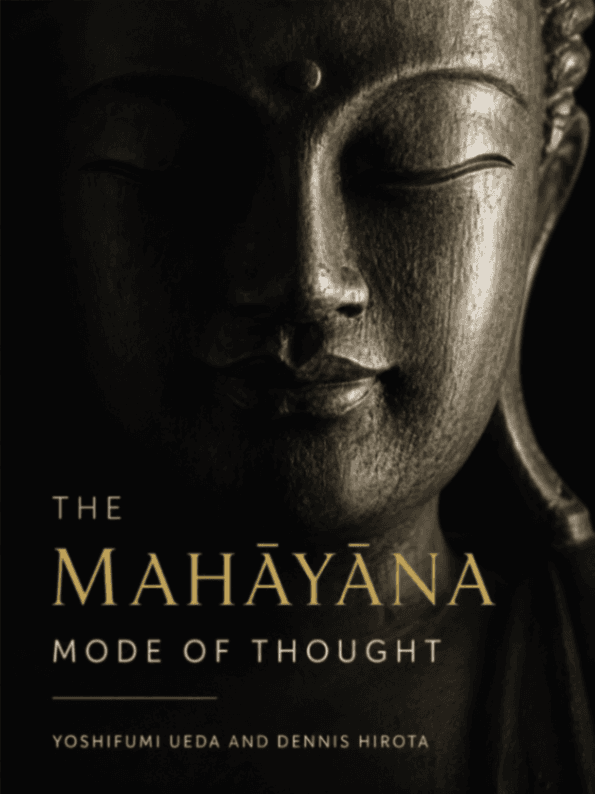
The Mahāyāna Mode of Thought (Chapter 2 of the book: Shinran: An Introduction to His Thought)
Yoshifumi Ueda and Dennis Hirota
English
Book
Kyoto Hongwanji International Center
1989
487 pages
2.3 MB
Introduction
The chapter first presents the human situation through the Four Noble Truths, showing how suffering arises from the delusive construction of a permanent self. It then introduces Mahāyāna wisdom as the transformation of this delusive perception into nondiscriminative awareness, where subject and object are no longer grasped as separate realities. Major concepts include prajñā, emptiness, no-mind, suchness, and the nonduality of samsara and nirvana.
The later sections develop this structure through Prajñāpāramitā and Yogācāra thought. The chapter explains the logic of “form is emptiness,” the three aspects of true reality, subjectivity-only, wisdom as compassion, and the structure of attainment. It concludes by relating these Mahāyāna insights to Pure Land Buddhism, where nonduality is expressed as the Buddha’s activity within samsara, opening the path of awakening for all beings.
Copyright Notice
This material is provided solely for academic research, study, and religious practice purposes under Article 25 of Vietnam's Intellectual Property Law. Reproduction, distribution, or commercial use is strictly prohibited.
If you are the author, translator, publisher, or rights holder and believe this content has been posted without proper authorization, please contact us and we will promptly review and remove or restrict access.
Documents
The Mahāyāna Mode of Thought (Chapter 2 of the book: Shinran: An Introduction to His Thought)
2.3 MB
Keywords
Mahāyāna BuddhismShinranYoshifumi UedaDennis HirotaPrajñāpāramitāEmptinessSuchnessNondiscriminative wisdomYogācāraSubjectivity-onlySamsara and nirvanaPure Land Buddhism.
Sách đọc nhiều nhất
The Buddha’s Ancient Path
Piyadassi Thera
Book·10.7 MB
229 pages1979223
The Questions of King Milinda, Part II
F. Max Müller (Editor)
Book·20.8 MB
427 pages1894208

A Taste of Freedom
Venerable Ajahn Chah / Phra Bodhinyana Thera
Book·1.2 MB
104 pages1980207
Buddhist Meditation: An Anthology of Texts from the Pāli Canon
Sarah Shaw (General Editors: Charles S. Prebish and Damien Keown)
Book·17.5 MB
253 pages2006204