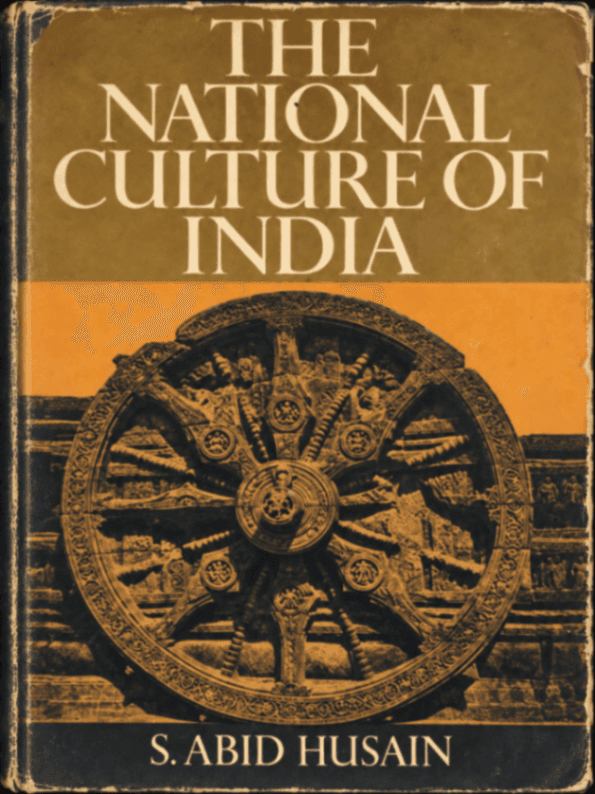
The National Culture of India
Introduction
Husain’s Introduction develops the conceptual framework for the book. He distinguishes culture from both religion and civilization. Culture, in his formulation, includes the ultimate values held by a society, the institutions and customs inspired by those values, and the material objects in which they are embodied. Religion may constitute an important part of culture, but culture is broader than religious doctrine or ritual. Civilization, meanwhile, may represent a higher level of material and institutional organization without necessarily embodying equally high moral or spiritual values.
The historical narrative moves from the Indus Valley civilization and the interaction between Dravidian and Vedic-Aryan cultures to the development of Vedic Hinduism, the Upaniṣadic tradition, Buddhism, Jainism, and the classical schools of Indian philosophy. Husain then examines the emergence of Purāṇic Hindu culture, Bhakti, Islamic civilization, the contact between Hindu and Muslim traditions, and the formation of what he calls Hindustani culture. Particular attention is given to religious thought, philosophy, literature, language, architecture, painting, music, education, political institutions, and social organization.
A central argument is that Indian cultural history repeatedly transformed external influences rather than merely absorbing them. The interaction of Hindu, Buddhist, Jain, Islamic, Persian, and later British cultural forces generated new forms of Indian identity. The later chapters address Western influence, colonialism, communalism, cultural separatism, and the problem of forging a modern national culture while protecting regional, linguistic, religious, and cultural plurality.
Main Headings:
The Bases of Indian Culture
The Fountain-head: The Indus Valley Culture
Two Streams: The Dravidian Culture and the Vedic Culture of the Aryans
The First Confluence: Vedic Hindu Culture
Buddhism—Jainism—Schools of Philosophy—The Great Epics
The Second Confluence: Puranic Hindu Culture
New Winds and New Currents
Muslim Culture before It Came to India
The Contact between Hindu Culture and Muslim Culture in India
The Third Confluence: The Hindustani Culture—1
The Hindustani Culture—2
The Impact of English Culture on India
Reaction against English Culture: Political and Cultural Separatism
Prospects of Cultural Unity: The Present Situation
Towards a New National Culture
Copyright Notice
This material is provided solely for academic research, study, and religious practice purposes under Article 25 of Vietnam's Intellectual Property Law. Reproduction, distribution, or commercial use is strictly prohibited.
If you are the author, translator, publisher, or rights holder and believe this content has been posted without proper authorization, please contact us and we will promptly review and remove or restrict access.
Documents
The National Culture of India
65.3 MB
Keywords
Sách đọc nhiều nhất
The Buddha’s Ancient Path
Piyadassi Thera
The Questions of King Milinda, Part II
F. Max Müller (Editor)
A Taste of Freedom
Venerable Ajahn Chah / Phra Bodhinyana Thera
Buddhist Meditation: An Anthology of Texts from the Pāli Canon
Sarah Shaw (General Editors: Charles S. Prebish and Damien Keown)