
English
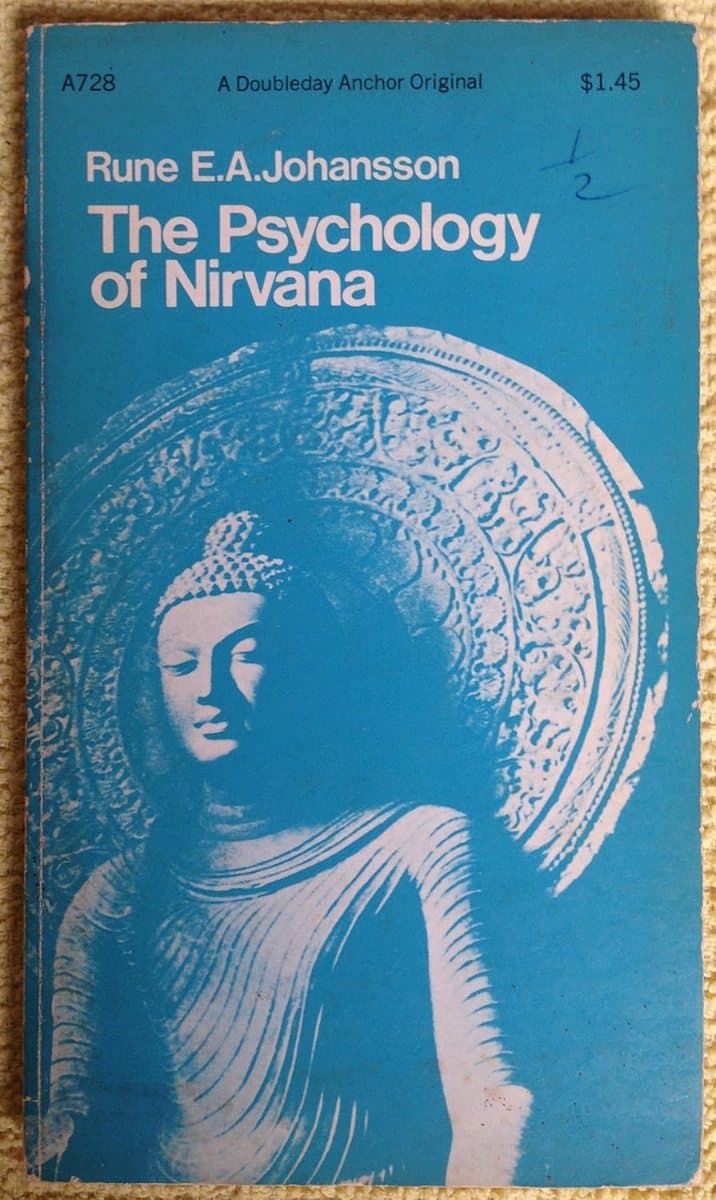
The Psychology of Nirvana
Rune E. A. Johansson
English
Book
George Allen and Unwin Ltd., London
1969
141 pages
35.4 MB
Introduction
The book develops its argument through a sequence of analytical chapters. It first establishes its method and general background by treating nibbāna through early Pāli terminology and psychological interpretation rather than through later speculative systems. It then examines preliminary linguistic and doctrinal observations before turning to the core psychological dimensions of nibbāna: cognitive functions, emotion and feeling, dynamic motivation, personality transformation, emptiness, cessation of rebirth, transcendence, and the famous Udāna passage on the “unborn” and “unconditioned.” The later chapters study the relation between nibbāna and death, the personality factors connected with liberation, the ways leading to nibbāna, the question of consciousness, and the psychological profile of the arahant. The work concludes by presenting nibbāna as neither simple annihilation nor ordinary continued existence, but as a transformed condition marked by freedom from craving, ignorance, affective disturbance, and the processes that sustain rebirth.
Copyright Notice
This material is provided solely for academic research, study, and religious practice purposes under Article 25 of Vietnam's Intellectual Property Law. Reproduction, distribution, or commercial use is strictly prohibited.
If you are the author, translator, publisher, or rights holder and believe this content has been posted without proper authorization, please contact us and we will promptly review and remove or restrict access.
Documents
The Psychology of Nirvana
35.4 MB
Keywords
NirvananibbānaBuddhist psychologyarahantconsciousnessrebirthPāli Buddhism.
Sách cùng tác giả
Sách đọc nhiều nhất
The Buddha’s Ancient Path
Piyadassi Thera
Book·10.7 MB
229 pages1979223
The Questions of King Milinda, Part II
F. Max Müller (Editor)
Book·20.8 MB
427 pages1894208

A Taste of Freedom
Venerable Ajahn Chah / Phra Bodhinyana Thera
Book·1.2 MB
104 pages1980207
Buddhist Meditation: An Anthology of Texts from the Pāli Canon
Sarah Shaw (General Editors: Charles S. Prebish and Damien Keown)
Book·17.5 MB
253 pages2006204