English
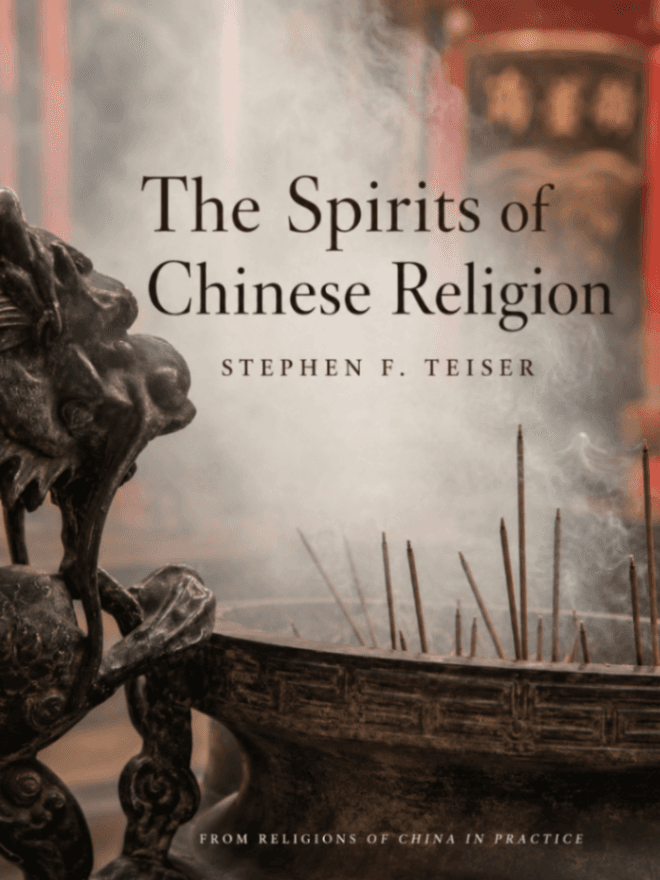
The Spirits of Chinese Religion
Stephen F. Teiser; edited by Donald S. Lopez, Jr.
English
Article
Princeton University Press
1996
33 pages
830 KB
Introduction
The essay begins with the familiar model of the “three teachings” and examines its usefulness and limitations. Teiser first discusses Confucianism as a tradition associated with classical texts, ritual hierarchy, state ideology, moral cultivation, and the later construction of a Confucian lineage. He then turns to Daoism, presenting it as both a philosophical orientation associated with the Dao and a religious tradition involving revelation, priesthood, ritual, immortality, divine bureaucracy, and canonical texts. The third section explains Buddhism as a foreign teaching introduced into China, centered on the Buddha, dharma, saṅgha, karma, rebirth, impermanence, no-self, monastic life, translation, and salvation. After reviewing these three traditions, the essay shifts to the problem of “popular religion,” emphasizing religious practices shared across social groups, including ancestor rites, funerals, New Year rituals, spirit consultation, gods, ghosts, and local cults. Overall, the essay presents Chinese religion not as three isolated systems, but as an integrated and overlapping field of ritual, cosmology, social order, and spiritual exchange.
Copyright Notice
This material is provided solely for academic research, study, and religious practice purposes under Article 25 of Vietnam's Intellectual Property Law. Reproduction, distribution, or commercial use is strictly prohibited.
If you are the author, translator, publisher, or rights holder and believe this content has been posted without proper authorization, please contact us and we will promptly review and remove or restrict access.
Documents
The Spirits of Chinese Religion
830 KB
Keywords
Three TeachingsConfucianismDaoismBuddhismPopular ReligionAncestors and SpiritsChinese Religion.
Sách đọc nhiều nhất
The Buddha’s Ancient Path
Piyadassi Thera
Book·10.7 MB
229 pages1979223
The Questions of King Milinda, Part II
F. Max Müller (Editor)
Book·20.8 MB
427 pages1894208

A Taste of Freedom
Venerable Ajahn Chah / Phra Bodhinyana Thera
Book·1.2 MB
104 pages1980207
Buddhist Meditation: An Anthology of Texts from the Pāli Canon
Sarah Shaw (General Editors: Charles S. Prebish and Damien Keown)
Book·17.5 MB
253 pages2006204