

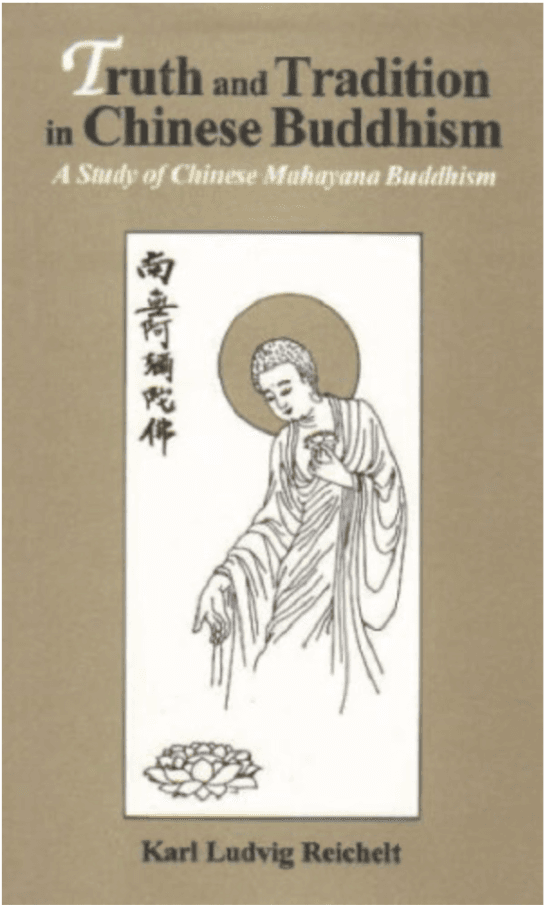
Truth and Tradition in Chinese Buddhism: A Study of Chinese Mahayana Buddhism
Introduction
Introduction: Presents the objectives and methodological orientation of the study, emphasizing the historical development of Chinese Mahayana Buddhism, its religious characteristics, and its relationship with Christianity.
Chapter I. The Introduction of Buddhism into China and Its History There (pp. 9–25)
Early transmission of Buddhism from India into China.
Imperial patronage, Buddhist missionaries, and the establishment of monasteries.
Religious developments under successive Chinese dynasties.
Interactions among Buddhism, Confucianism, Taoism, and Christianity.
Chapter II. The Inner Development of Chinese Buddhism During the Early Centuries (pp. 26–62)
Doctrinal transformation of Indian Buddhism in the Chinese cultural environment.
The influence of Asvaghosha, Nagarjuna, and other Mahayana thinkers.
Development of Buddhist concepts of enlightenment and salvation.
Emergence of the Pure Land, T'ien-t'ai, and meditation traditions.
The religious significance of Amitabha, Avalokitesvara, and Bodhidharma.
Chapter III. “The Journey to the West” (pp. 63–76)
Examination of the Chinese literary narrative Hsi Yu Chi.
Religious symbolism and the pursuit of Buddhist scriptures.
Representations of Buddhist, Taoist, and popular religious traditions.
The spiritual significance of pilgrimage and liberation.
Chapter IV. “The Origin and Development of Masses for the Dead” (pp. 77–126)
Chinese Buddhist conceptions of death, rebirth, karma, and the afterlife.
Ritual practices for the salvation of departed souls.
The role of Ti-ts'ang (Ksitigarbha) in Buddhist devotional traditions.
The Ullambana tradition and filial piety.
Religious ceremonies, monastic participation, and possible Nestorian Christian influences.
Chapter V. The “Pure Land” School (Ching-t'u, 淨土) (from p. 127)
Origins and development of Pure Land Buddhism.
The religious significance of Amitabha Buddha.
The contributions of Asvaghosha and Nagarjuna to Mahayana devotional thought.
Faith and practices directed toward rebirth in the Pure Land.
Chapter VI. The Buddhist Pantheon in China (from p. 171)
Buddhist divine figures and their place in Chinese religious traditions.
Chapter VII. Buddhist Literature in China (from p. 203)
Buddhist literary traditions in China.
Chapter VIII. Monastic Life (from p. 228)
Buddhist monastic life in China.
Chapter IX. Pilgrimages (from p. 284)
Buddhist pilgrimage traditions.
Chapter X. Present-Day Buddhism in China (from p. 298)
Buddhism in contemporary Chinese society as understood in the period of the original work.
Copyright Notice
This material is provided solely for academic research, study, and religious practice purposes under Article 25 of Vietnam's Intellectual Property Law. Reproduction, distribution, or commercial use is strictly prohibited.
If you are the author, translator, publisher, or rights holder and believe this content has been posted without proper authorization, please contact us and we will promptly review and remove or restrict access.
Documents
Truth and Tradition in Chinese Buddhism: A Study of Chinese Mahayana Buddhism
98.6 MB
Keywords
Sách đọc nhiều nhất
The Buddha’s Ancient Path
Piyadassi Thera
The Questions of King Milinda, Part II
F. Max Müller (Editor)

A Taste of Freedom
Venerable Ajahn Chah / Phra Bodhinyana Thera
Buddhist Meditation: An Anthology of Texts from the Pāli Canon
Sarah Shaw (General Editors: Charles S. Prebish and Damien Keown)