English
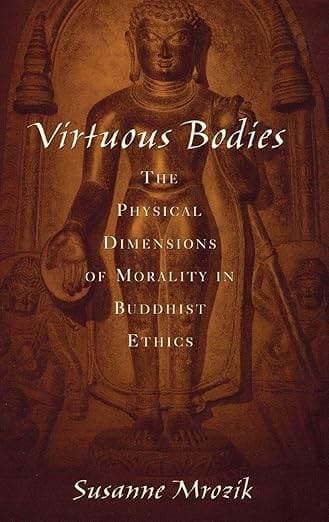
Virtuous Bodies: The Physical Dimensions of Morality in Buddhist Ethics
Susanne Mrozik
English
Book
Oxford University Press, New York, United States
2007
195 pages
1.8 MB
Introduction
The book opens by identifying its core intervention: Buddhist ethics should not be studied only through intention, volition, compassion, wisdom, or mental cultivation. Mrozik argues that Buddhist ethical discourse also gives sustained attention to bodies. In Buddhist literature, bodies may be marked by sin, merit, virtue, beauty, deformity, fragrance, foulness, health, disability, gender, caste, and rebirth status. The ethical person is therefore formed through both moral and physical transformation.
Chapter 1: Introduction to the Compendium of Training
This chapter introduces the Śikṣāsamuccaya as the primary textual case study. The text is described as a Sanskrit compendium of bodhisattva training, traditionally attributed to Śāntideva, and composed by drawing extensively from approximately one hundred Buddhist sources. Mrozik explains that the Compendium of Training is addressed mainly, though not exclusively, to monastic bodhisattvas. It advocates a disciplined bodhisattva life in which study, confession, meditation, ethical conduct, monastic etiquette, deportment, and bodily discipline all contribute to moral development.
The chapter sets out the book’s two major goals. First, it corrects the assumption that South Asian Buddhists had little positive interest in bodies apart from tantric traditions. Second, it explores the ethical implications of Buddhist body discourse for both medieval and contemporary audiences. Mrozik introduces two key categories: ascetic discourse, which presents bodies as impermanent, foul, and unreliable; and physiomoral discourse, which presents bodies as morally meaningful and ethically transformative.
Chapter 2: The Vital Points of the Bodhisattva Discipline
This chapter analyzes what the Compendium of Training calls the “vital points” of bodhisattva discipline. Mrozik explains that bodhisattva practice is organized around giving away, protecting, purifying, and increasing three things: bodied being, goods, and merit. The Sanskrit term ātmabhāva, translated by Mrozik as “bodied being,” is especially important. It does not refer merely to a physical body in isolation, but to the whole embodied person: body, feelings, thoughts, and moral condition.
Mrozik shows that the text gives extraordinary attention to bodied being. Twelve of its nineteen chapters concern bodied being directly, and additional chapters address bodied being together with goods and merit. This reveals that the bodhisattva path is not only mental or doctrinal but deeply embodied. The chapter also discusses the ideal of giving away one’s body for others, while clarifying that literal bodily sacrifice is appropriate only for advanced bodhisattvas, not beginners. Beginner bodhisattvas, however, can still use their bodies ethically through disciplined conduct, restraint, deportment, and service to others.
Chapter 3: Ripening Living Beings
This chapter examines how bodhisattva bodies contribute to the ethical maturation, or “ripening,” of other living beings. In the Compendium of Training, bodhisattva bodies are not passive instruments. They actively transform others through their visible serenity, disciplined comportment, moral purity, and compassionate availability. Mrozik emphasizes that the sight, sound, touch, and even remains of bodhisattva bodies may have beneficial effects. For example, the text suggests that animals who consume the corpse of a bodhisattva may receive karmic benefit and attain better rebirth.
The chapter is important because it shows that bodhisattvas use their bodies as much as their minds to benefit beings. Ethical influence is not limited to verbal teaching or doctrinal instruction. A bodhisattva’s body itself becomes a field of moral power, pedagogical influence, and compassionate transformation.
Chapter 4: Virtuous Bodies: A Physiomoral Discourse on Bodies
This chapter develops the concept of physiomoral discourse, one of the book’s central analytical contributions. A physiomoral discourse assumes that physical qualities and moral qualities are closely related. In this framework, bodily appearance, posture, movement, beauty, serenity, fragrance, health, and radiance may indicate ethical cultivation and accumulated merit.
Mrozik situates this discourse within broader South Asian patterns of thought, where the natural, physical, moral, and spiritual orders are often interconnected rather than sharply separated. In Buddhist contexts, bodily excellence may result from past virtuous action, and disciplined bodily conduct may cultivate future moral and physical excellence. The bodhisattva’s body becomes a visible sign of moral discipline and a medium through which others encounter virtue.
Chapter 5: Foul Bodies: An Ascetic Discourse on Bodies
This chapter turns to the negative discourse on bodies. Buddhist texts often describe bodies as foul, impermanent, decaying, vulnerable, and without intrinsic essence. Mrozik argues that this does not mean Buddhists were uninterested in bodies. On the contrary, ascetic discourse reflects intense concern with the body as a site of attachment, desire, discipline, and transformation.
The chapter shows that the Compendium of Training uses ascetic contemplation of bodily foulness not to reject the body entirely, but to discipline attachment and produce bodhisattvas capable of ethical service. The ascetic discourse is therefore subordinated to the physiomoral goal: the cultivation of bodhisattvas whose bodies and heartminds benefit others. The body is not simply despised; it is analyzed, disciplined, purified, and redirected toward compassion.
Chapter 6: Revisioning Virtue
The final chapter reflects on the ethical implications of the study. Mrozik employs a feminist hermeneutics of both recovery and suspicion. On the one hand, the Compendium of Training offers valuable resources for contemporary ethics by refusing to separate body from morality and by recognizing that ethical persons are embodied beings. On the other hand, the text also reflects problematic hierarchies, including the ranking of humans over animals, high castes over low castes, and men over women.
This chapter is especially important for contemporary Buddhist ethics because it asks how scholars and practitioners can learn from medieval Buddhist body discourse without uncritically accepting its hierarchical assumptions. Mrozik suggests that the text can help modern readers think more deeply about embodied ethics, moral formation, vulnerability, difference, and the physical presence of virtue.
The book concludes with Notes, Bibliography, and Index, making it a valuable research resource for scholars of Buddhist ethics, Śāntideva, Mahāyāna literature, gender studies, body theory, and South Asian religious thought.
Overall, Virtuous Bodies is a significant contribution to Buddhist ethical studies. Its core insight is that Buddhist morality is not merely a matter of mind or intention; it is also embodied, visible, disciplined, relational, and transformative. For research on bodhisattva ethics, dāna, bodily sacrifice, and Mahāyāna moral cultivation, this work is especially useful because it shows how the bodhisattva gives, protects, purifies, and increases not only merit and material goods, but also embodied existence itself.
Copyright Notice
This material is provided solely for academic research, study, and religious practice purposes under Article 25 of Vietnam's Intellectual Property Law. Reproduction, distribution, or commercial use is strictly prohibited.
If you are the author, translator, publisher, or rights holder and believe this content has been posted without proper authorization, please contact us and we will promptly review and remove or restrict access.
Documents
Virtuous Bodies: The Physical Dimensions of Morality in Buddhist Ethics
1.8 MB
Keywords
Buddhist EthicsŚikṣāsamuccayaŚāntidevaBodhisattva BodiesEmbodied Morality.
Sách đọc nhiều nhất
The Buddha’s Ancient Path
Piyadassi Thera
Book·10.7 MB
229 pages1979223
The Questions of King Milinda, Part II
F. Max Müller (Editor)
Book·20.8 MB
427 pages1894208

A Taste of Freedom
Venerable Ajahn Chah / Phra Bodhinyana Thera
Book·1.2 MB
104 pages1980207
Buddhist Meditation: An Anthology of Texts from the Pāli Canon
Sarah Shaw (General Editors: Charles S. Prebish and Damien Keown)
Book·17.5 MB
253 pages2006204