English
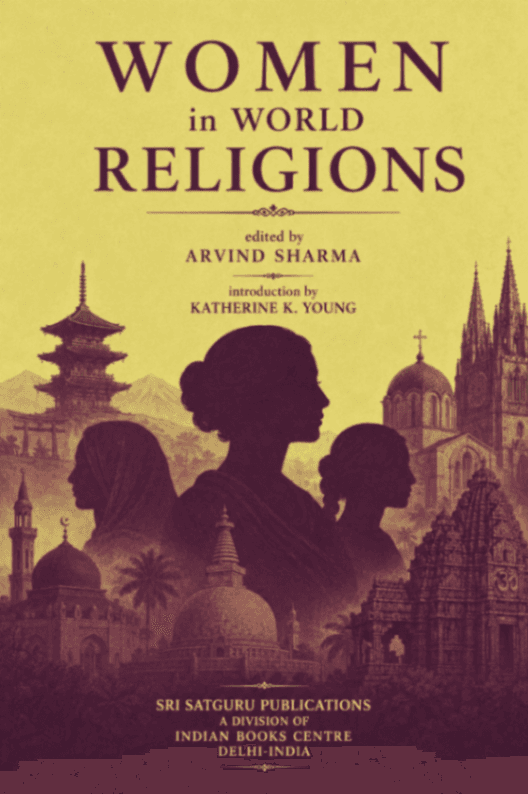
Women in World Religions
Edited by Arvind Sharma; Introduction by Katherine K. Young
English
Book
Indian Books Centre, Delhi, India
1995
283 pages
239.1 MB
Introduction
The book opens with Arvind Sharma’s preface, which frames the project as a collaborative scholarly enterprise written by women scholars and grounded in a phenomenological respect for the insider’s perspective. Katherine K. Young’s introduction establishes the methodological foundation of the volume, explaining the development of women’s studies in religion, the need to move beyond purely androcentric sources, and the importance of examining both textual traditions and lived religious experience. The chapter on Tribal Religions: Aboriginal Australia by Rita M. Gross provides a comparative baseline by showing how gender complementarity, ritual life, and women’s ceremonies may function differently from patriarchal world religions. Katherine K. Young’s chapter on Hinduism analyzes women through the lenses of domestic ritual, motherhood, goddess symbolism, caste, marriage, asceticism, and reform. Nancy Schuster Barnes’s chapter on Buddhism examines doctrinal equality, the admission of women into the monastic order, the authority of monks over nuns, and later developments in Buddhist traditions. Theresa Kelleher’s chapter on Confucianism studies family order, filial piety, ancestor worship, ritual hierarchy, and women’s roles within the moral-political structure of Chinese society. Barbara Reed’s chapter on Taoism explores yin-yang symbolism, female spiritual power, nature imagery, and Taoist spaces that allowed more flexible possibilities for women. Denise L. Carmody’s chapter on Judaism focuses on covenant, family, purity, Torah, domestic religion, and the tension between exclusion from formal authority and religious power within the home. Rosemary R. Ruether’s chapter on Christianity traces women from the Jesus movement through church history, monasticism, Protestantism, reform, and feminist critique. Jane I. Smith’s chapter on Islam addresses Qur’anic teachings, social stereotypes, marriage, modesty, law, women’s piety, and the complexity of Muslim women’s historical experience. The volume closes with notes on contributors, notes, bibliography, and index, making it a structured reference work for comparative study.
Copyright Notice
This material is provided solely for academic research, study, and religious practice purposes under Article 25 of Vietnam's Intellectual Property Law. Reproduction, distribution, or commercial use is strictly prohibited.
If you are the author, translator, publisher, or rights holder and believe this content has been posted without proper authorization, please contact us and we will promptly review and remove or restrict access.
Documents
Women in World Religions
239.1 MB
Sách đọc nhiều nhất
The Buddha’s Ancient Path
Piyadassi Thera
Book·10.7 MB
229 pages1979223
The Questions of King Milinda, Part II
F. Max Müller (Editor)
Book·20.8 MB
427 pages1894208

A Taste of Freedom
Venerable Ajahn Chah / Phra Bodhinyana Thera
Book·1.2 MB
104 pages1980207
Buddhist Meditation: An Anthology of Texts from the Pāli Canon
Sarah Shaw (General Editors: Charles S. Prebish and Damien Keown)
Book·17.5 MB
253 pages2006204