English
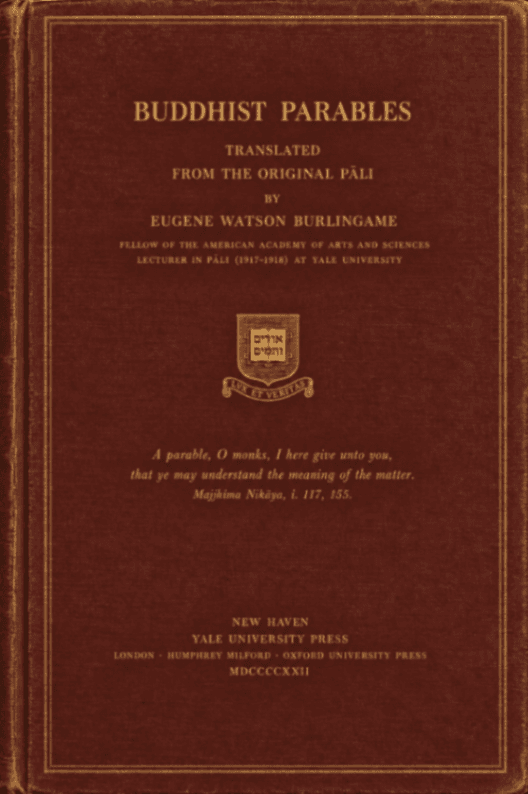
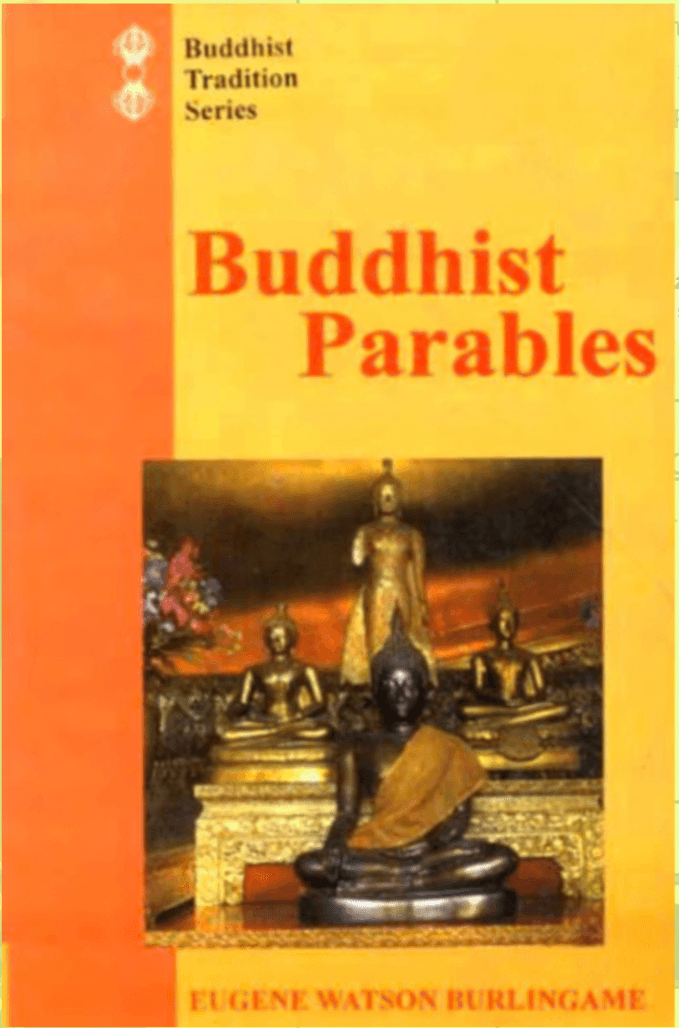
Buddhist Parables
Eugene Watson Burlingame
English
Book
Oxford University Press
1922
348 pages
21.4 MB
Introduction
Buddhist Parables, translated from the original Pāli by Eugene Watson Burlingame and published by Yale University Press in 1922, is an important early English-language anthology of Buddhist similes, allegories, parables, fables, and illustrative narratives drawn from Pāli Buddhist literature. According to Burlingame’s preface, the volume contains more than two hundred such narratives, traditionally used by the Buddha or his followers to communicate religious teachings, ethical principles, and practical wisdom; a substantial portion of this material had not previously appeared in English.
The collection draws upon a remarkably wide range of early Buddhist sources. The opening chapters make extensive use of the Jātaka, the stories of the Buddha’s previous existences, together with material from the Vinaya. Other sections include parables concerning unity and conflict, gratitude and ingratitude, death, moral conduct, meditation, sensual desire, karma, rebirth, and liberation. The work also preserves narrative materials associated with the Dīgha Nikāya, Majjhima Nikāya, Saṃyutta Nikāya, Aṅguttara Nikāya, Udāna, Sutta Nipāta, and later commentarial literature.
Of particular philosophical importance is the extensive section derived from the Milindapañha, presenting memorable similes used in the dialogue between King Menander (Milinda) and the Buddhist monk Nāgasena. These passages address such major Buddhist questions as personal identity, rebirth, non-self, and Nibbāna. Burlingame regarded these explanations as especially important for students of the history of religions. The chapters based on the Long and Middle-Length Discourses also illuminate Buddhist meditation as a path to liberation and explore the ethical consequences of human conduct.
The final portion broadens the collection beyond the Pāli canon by including stories concerning self-sacrifice, the Bodhisattva ideal, and the early development of Mahāyāna themes, drawing upon Buddhist Sanskrit, Chinese, and related narrative traditions, including the Divyāvadāna.
More than a collection of entertaining stories, Buddhist Parables is therefore a valuable source for the study of early Buddhist literature, Buddhist ethics, doctrine, narrative pedagogy, comparative religion, and the transmission of Buddhist stories across cultures. Burlingame himself characterizes the volume simultaneously as a collection of literary specimens, a presentation of the Buddha’s teaching through discourse and example, and a treasury of compelling stories capable of engaging both ordinary readers and serious philosophers.
Copyright Notice
This material is provided solely for academic research, study, and religious practice purposes under Article 25 of Vietnam's Intellectual Property Law. Reproduction, distribution, or commercial use is strictly prohibited.
If you are the author, translator, publisher, or rights holder and believe this content has been posted without proper authorization, please contact us and we will promptly review and remove or restrict access.
Documents
Buddhist Parables
21.4 MB
Keywords
Buddhist ParablesEugene Watson BurlingamePāli BuddhismEarly BuddhismBuddhist LiteratureBuddhist NarrativesBuddhist SimilesBuddhist AllegoriesBuddhist FablesJātakaJātaka TalesPāli CanonTipiṭakaVinayaDīgha NikāyaMajjhima NikāyaSaṃyutta NikāyaAṅguttara NikāyaUdānaSutta NipātaMilindapañhaNāgasenaKing MilindaBuddhaghosaDhammapada CommentaryBuddhist EthicsBuddhist MoralityKarmaRebirthAnattāNibbānaBuddhist MeditationBuddhist PhilosophyBuddhist DoctrineBodhisattvaMahāyāna BuddhismBuddhist StorytellingBuddhist PedagogyComparative ReligionHistory of ReligionsIndian Buddhist LiteraturePāli StudiesBuddhist FolkloreReligious NarrativesBuddhist Studies.
Sách cùng tác giả
Sách đọc nhiều nhất
The Buddha’s Ancient Path
Piyadassi Thera
Book·10.7 MB
229 pages1979223
The Questions of King Milinda, Part II
F. Max Müller (Editor)
Book·20.8 MB
427 pages1894208

A Taste of Freedom
Venerable Ajahn Chah / Phra Bodhinyana Thera
Book·1.2 MB
104 pages1980207
Buddhist Meditation: An Anthology of Texts from the Pāli Canon
Sarah Shaw (General Editors: Charles S. Prebish and Damien Keown)
Book·17.5 MB
253 pages2006204